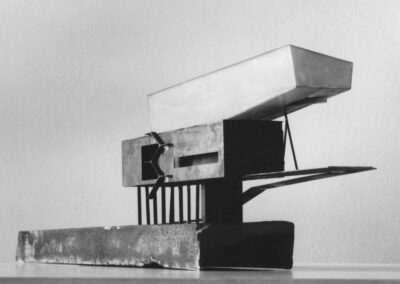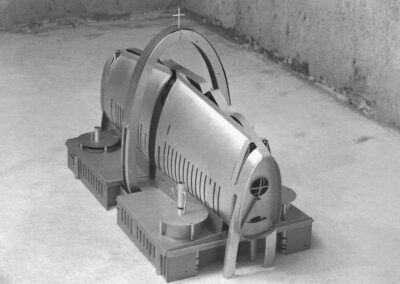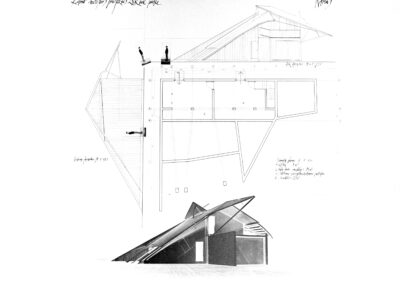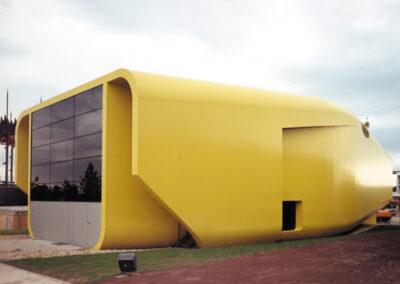
Vila Jogaila, 1994
In December 2003, Edith Farnsworth’s house was sold at a Sotheby’s auction in New York for USD 7.5 million. It was purchased by the National Trust for Historic Preservation together with the Landmarks Preservation Council of Illinois, thus protecting the property from disappearing into private ownership and becoming inaccessible to the public. Notably, the house was sold as an artwork rather than as a piece of real estate.
In a 1994 explanatory note for the house designed for Jogaila Morkūnas by Valdas Ozarinskas and Aida Čeponytė, the authors wrote:
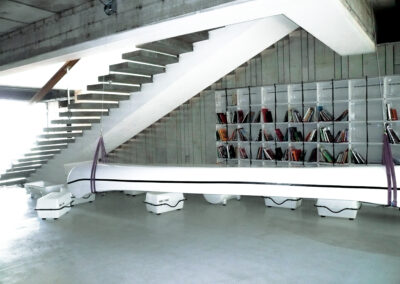
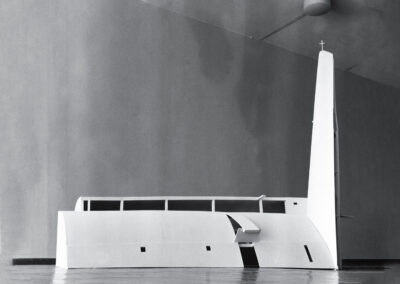
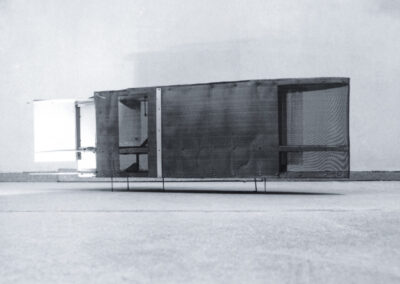
The image of the house is that of a ship on dry land, theatrical in its stable stance; the slogan of the project is And the Ship Sails On (Federico Fellini). The architecture – lacking any principle of uniqueness, laconic and simple in form – will, depending on the architecture that emerges around it, either gain significance or disappear as an object.[1]
These statements can hardly be read as anything other than an attempt to give the building an aura of artistry.
Two episodes from the history of the design and life of a private residential house – though separated by different times and distinct geographical and sociocultural contexts – ultimately say the same thing: architecture is art. It is a field in which one may look for allusions, cultural inspiration, intuition, and perhaps even catharsis.
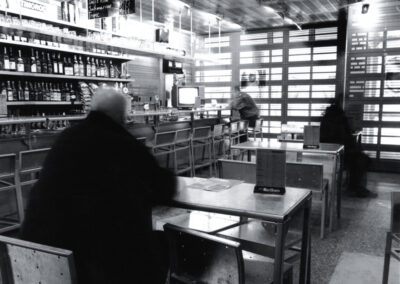
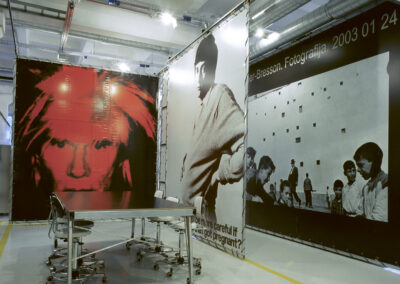
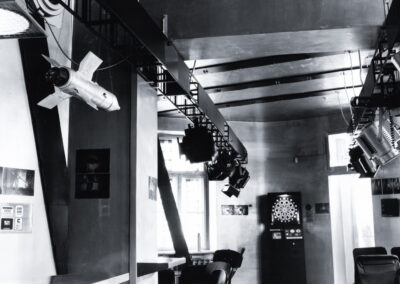
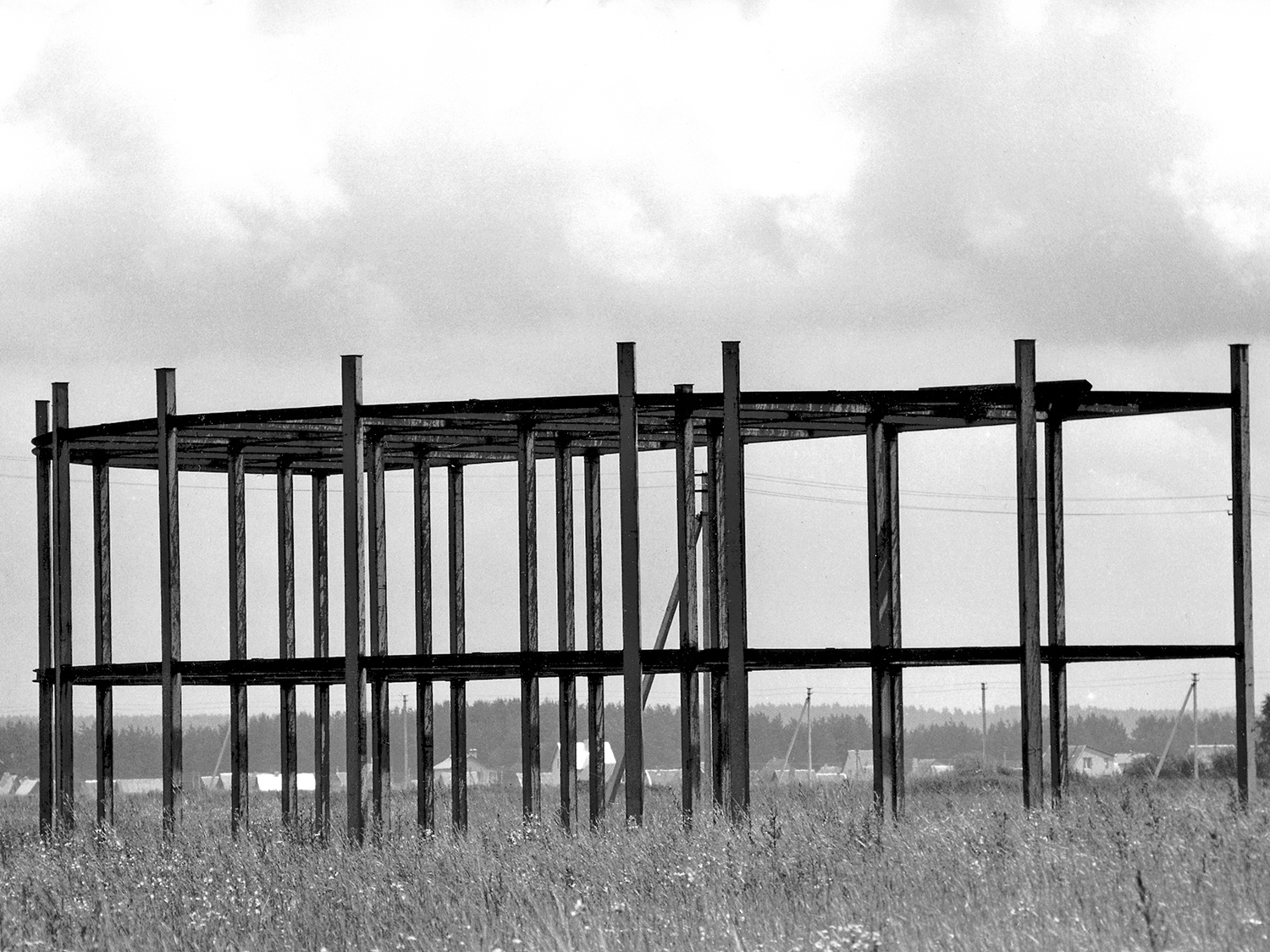
The commissioner of Villa Jogaila, a prominent figure in popular culture at the time, had a ‘desire for a jet-set lifestyle. Of course, he needed a chic, modern home, where the rest of the local pop world would be blown away, not only by the grandiosity of being invited, but also by the architectural gesture.'[2] At first glance, the client’s expectations and the architects’ ambitions appeared to align perfectly. Yet, as often happened in an era of rapidly shifting fortunes, the project was never fully realised. What remains are fragments of construction, photographs, drawings, sketches, and notes.
As Ozarinskas himself wrote:
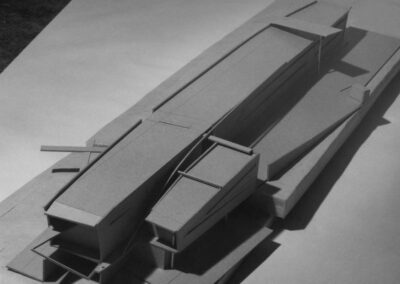
The villa is closed on three sides, opening only to the south, towards its own plot. The showcase [façade] opens a view of the environment created for it, because the environment created by other neighbours does not meet the owner’s ideals (the desire to feel safe, inviolable, and, of course, unrestricted in one’s own space).[3]
The building was conceived as a harbour – a place where a ‘ship’ returning from a stormy voyage could settle.
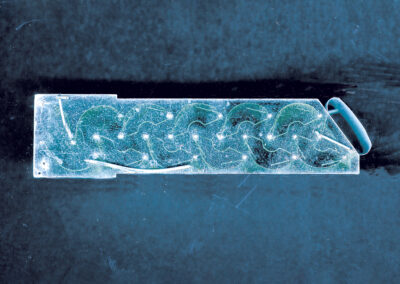
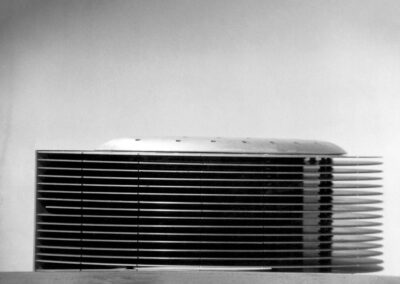
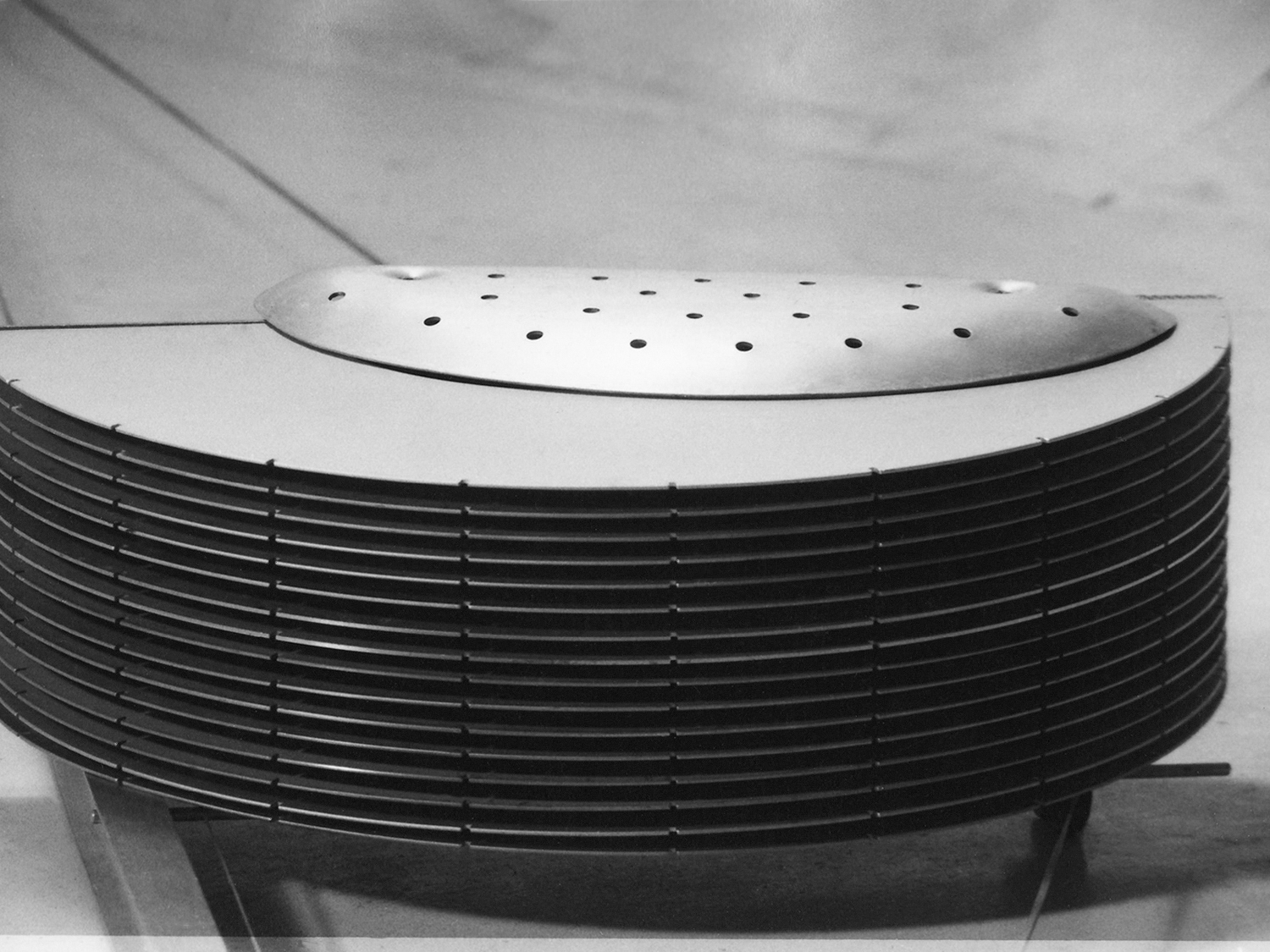
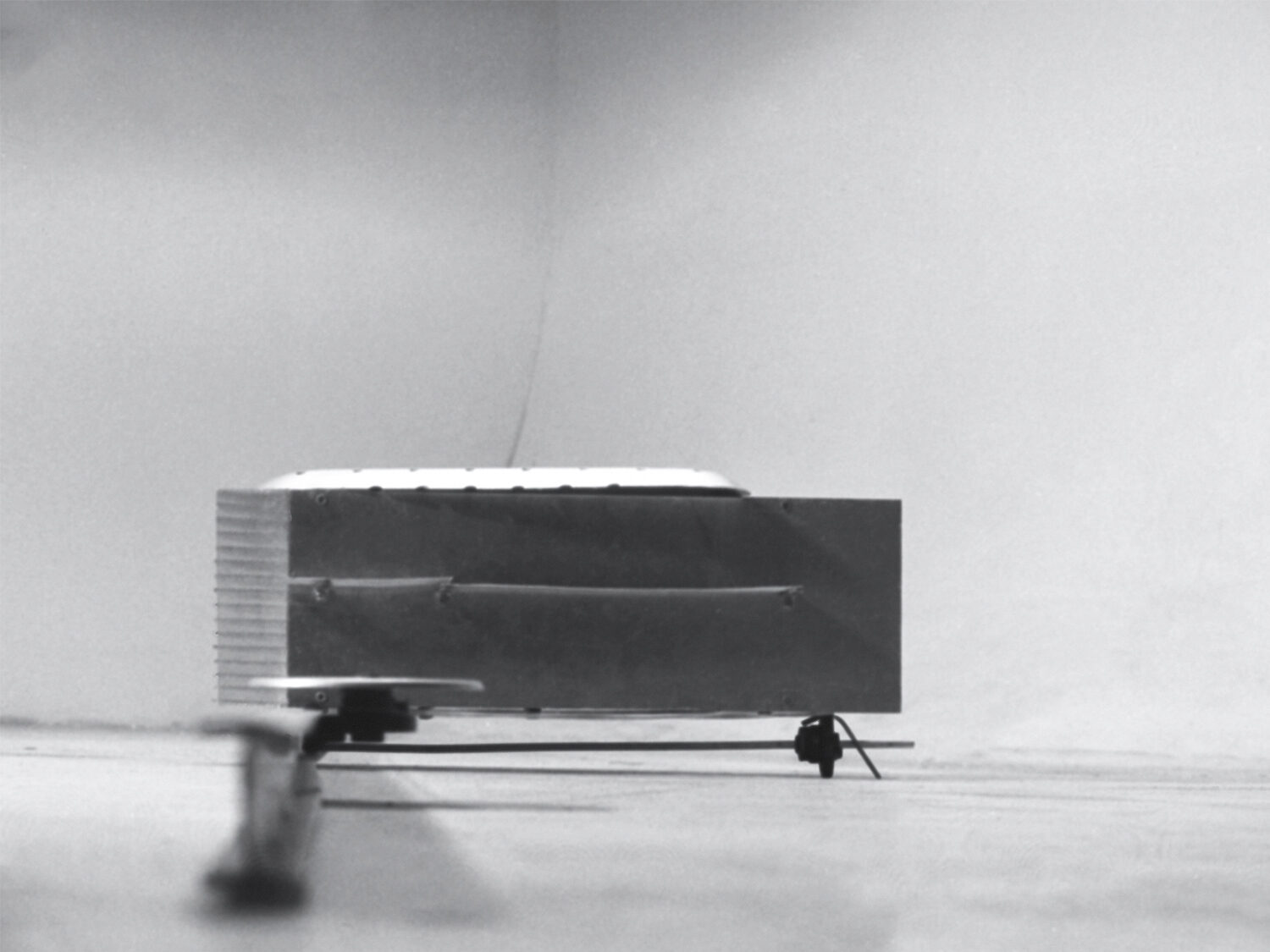
The idea of closing oneself off from the outside world in residential architecture is not new, yet Ozarinskas’s distinctive synthesis of modernist elements and architectural collage brought original solutions. One of the project’s main principles was to create an open interior layout divided only by transparent plastic (sic!) and glass block partitions. Even the garage, integrated into the interior, followed this logic. The model of the house, built using washing machine parts, became a work of art in its own right. The use of ready-made elements extended into the building itself: Ozarinskas proposed constructing the curved wall from ‘the metal cover of an aircraft hangar, turned on its side.'[4]
In this project, Ozarinskas and Čeponytė combined, with characteristic precision, the minimalist interior divisions of Mies van der Rohe, a paraphrase of Frank Lloyd Wright’s building-as-ship idea, and the readymade aesthetics cultivated by the ‘hippie of architecture’, Bruce Goff.
[1] Explanatory note, 1994. From the archive of the Valdas Ozarinskas Foundation
[2] Malašauskas, R. 2002, ‘A Waiter of the Restaurant at Vilnius Train Station Made the Most Colourful Statement at EXPO 2000’, NU: The Nordic Art Review. https://sunvysne.tumblr.com/post/105686207740/valdas-died
[3] Aiškinamasis raštas [Explanatory note], 1994. From the archive of the Valdas Ozarinskas Foundation
[4] Januškevičiūtė, V. 2018, ‘Interiors’, An Architect without Architecture? Valdas Ozarinskas Retrospective: Exhibition Guide, Vilnius: Contemporary Art Centre, 2018, p. 17.
– Vaidas Petrulis
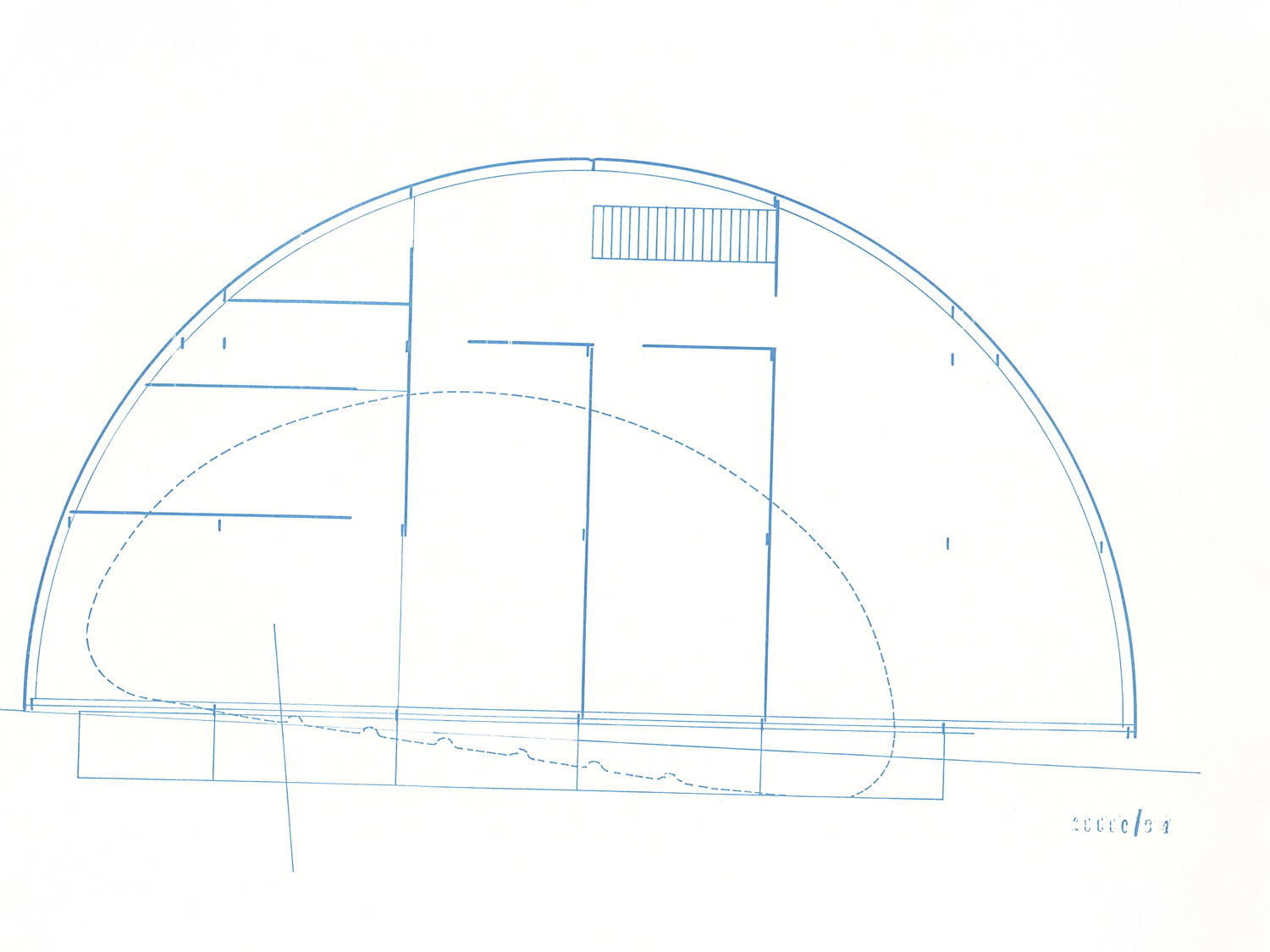
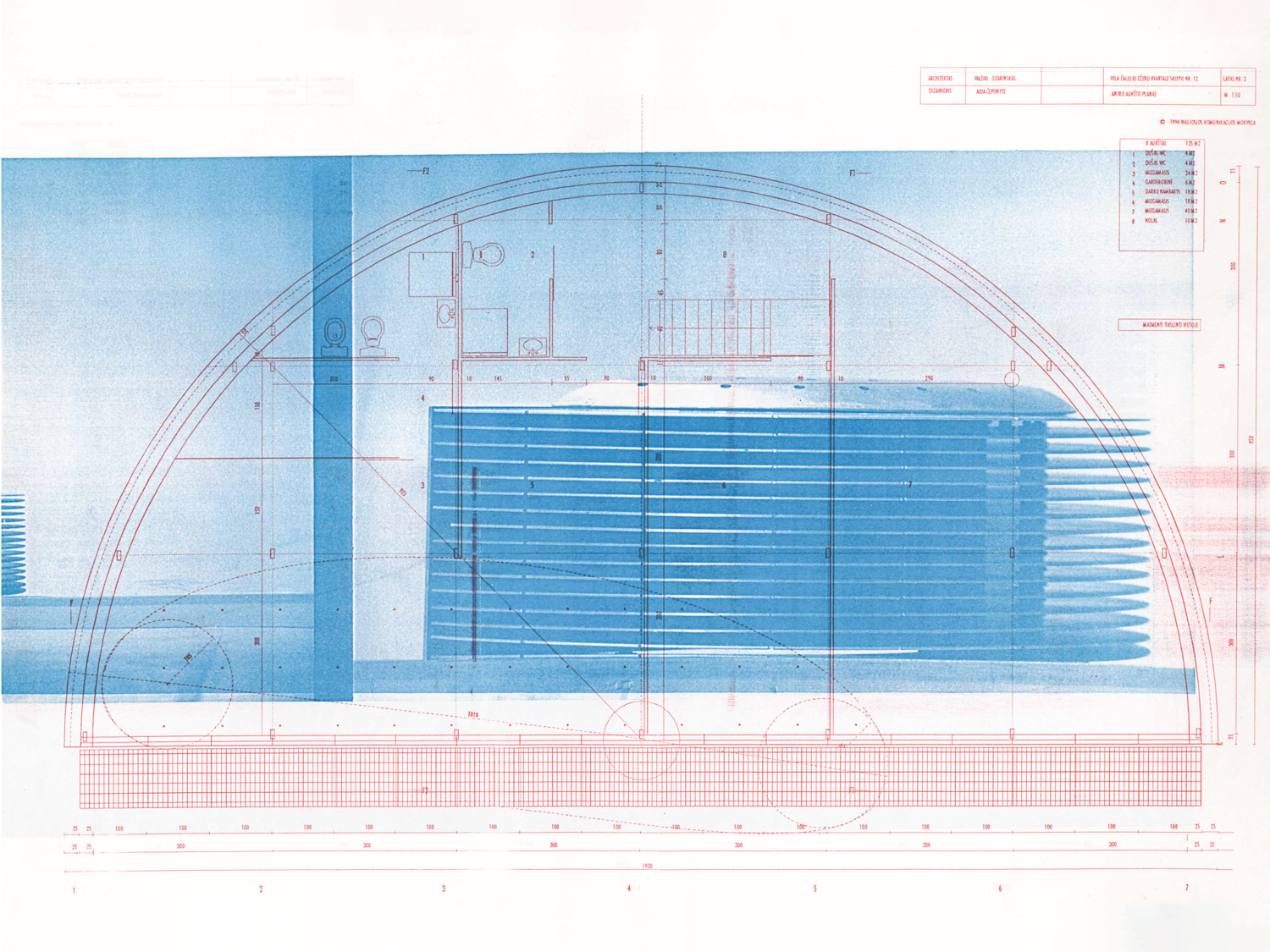
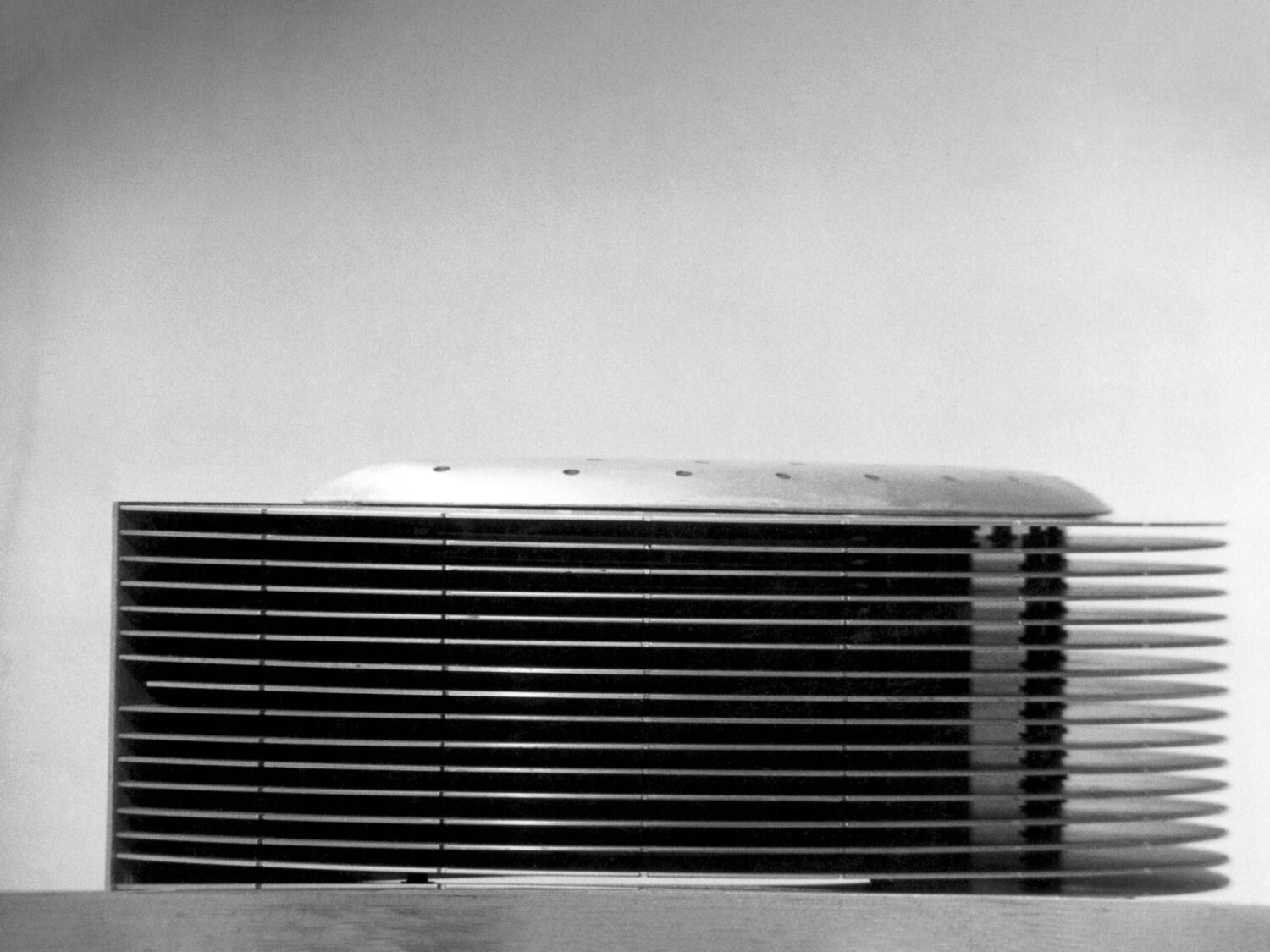
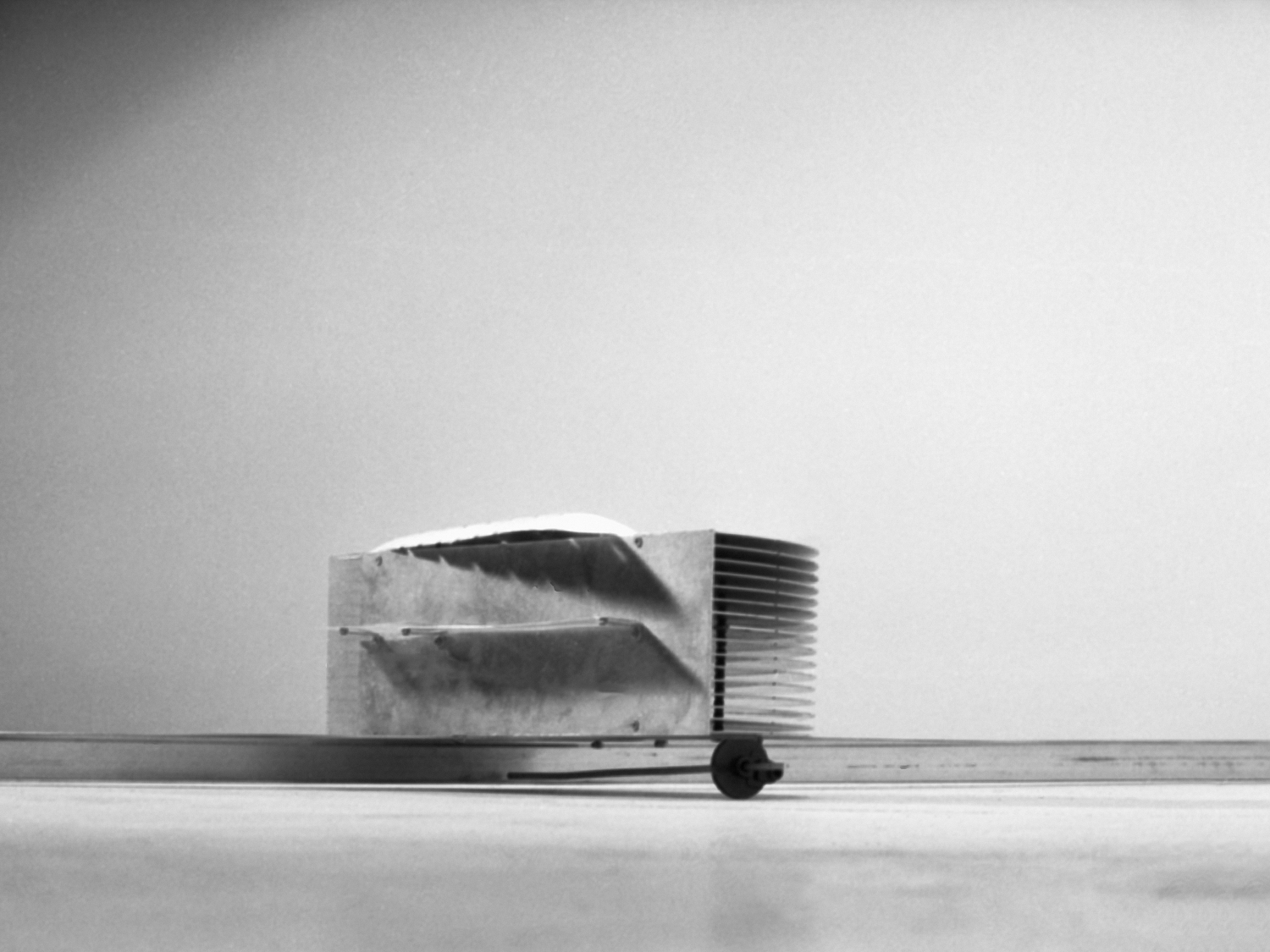
Authors: Aida Čeponytė, Valdas Ozarinskas
Photographer: Gintautas Trimakas
Construction began in the Žaliųjų ežerų district. The project was not completed.
Sources:
Ground Control / Valdymas iš žemės, exhibition catalogue, 1995.
Raimundas Malašauskas, ‘Valdas Ozarinskas: Utopia Interrupted’, Nu: The Nordic Art Review, vol. IV, 2002, nos. 1–2, pp. 122–129, https://www.7md.lt/daile/2014-11-07/Ivairiai-nebaigti-projektai
Neįgyvendintas Vilnius, Lapas Publishing House, 2021 (Marija Drėmaitė, Rasa Antanavičiūtė), pp. 200–201.
Architecture