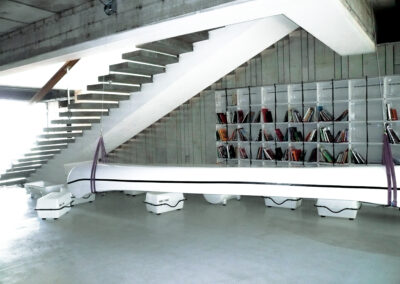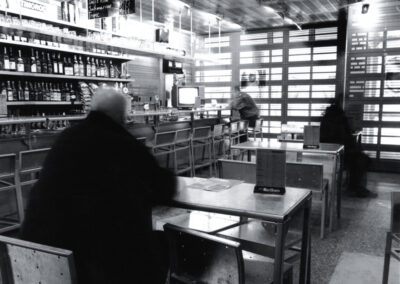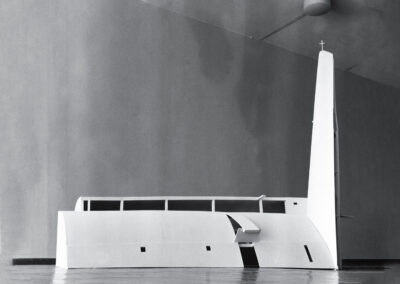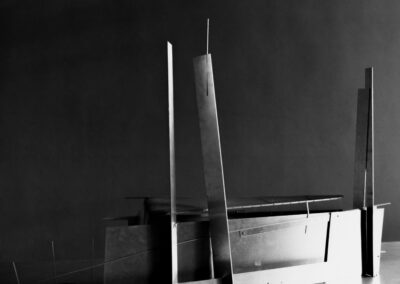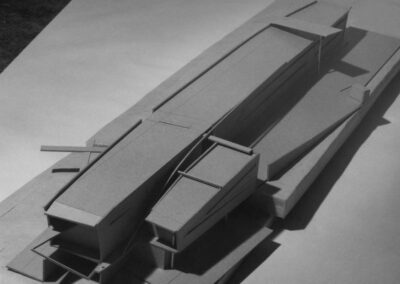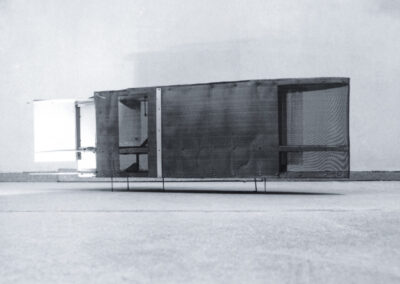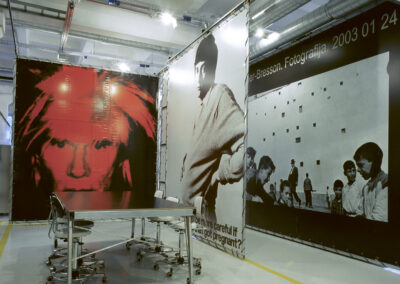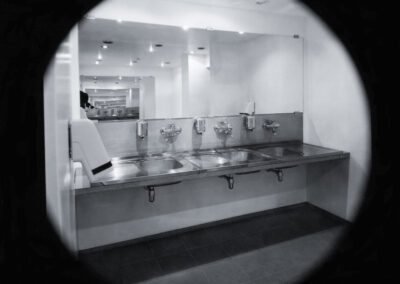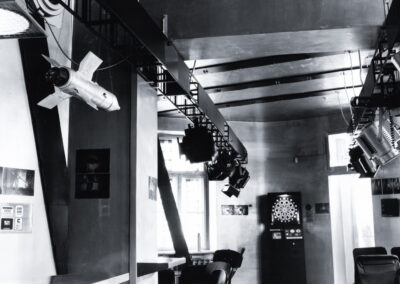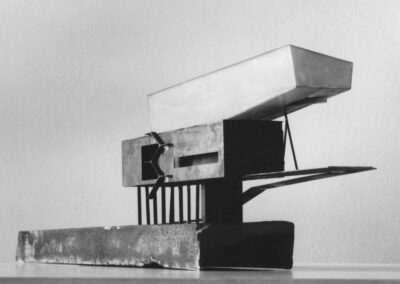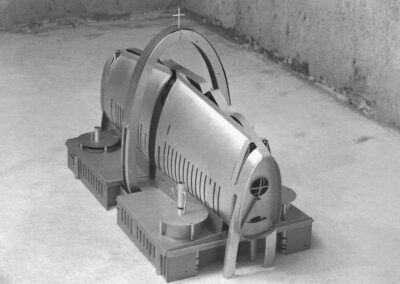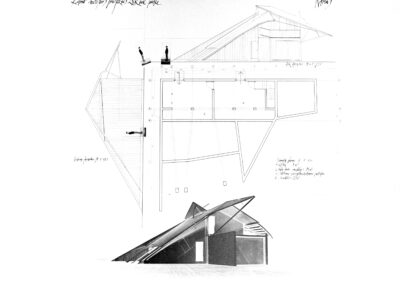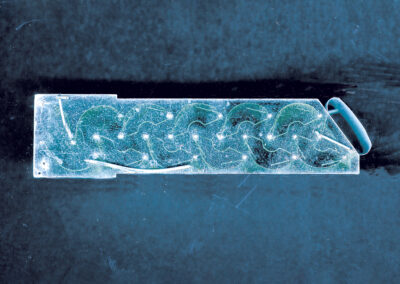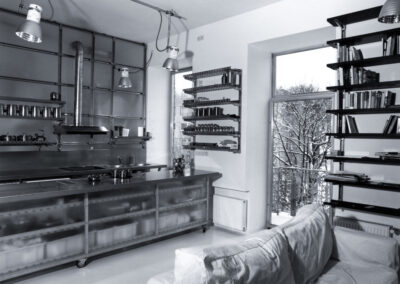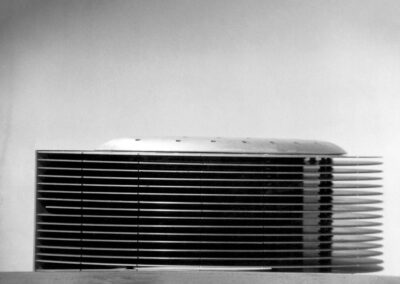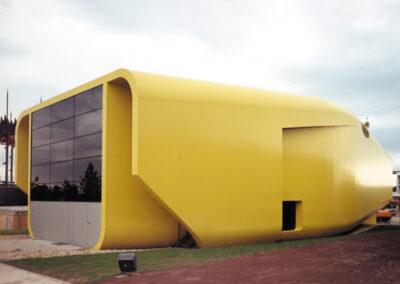
Right Bank of the River / Left Bank of the River, 1993
The project submitted by Valdas Ozarinskas, Viktoras Kormilcevas, and Aida Čeponytė for the 1992 commercial building competition, intended to complement the layout of Žygimantų Street, marked the beginning of a new wave of construction in Vilnius’s historic centre following independence. One of these new buildings – the former headquarters of Hermis Bank – is now listed in the Cultural Heritage Register.[1]
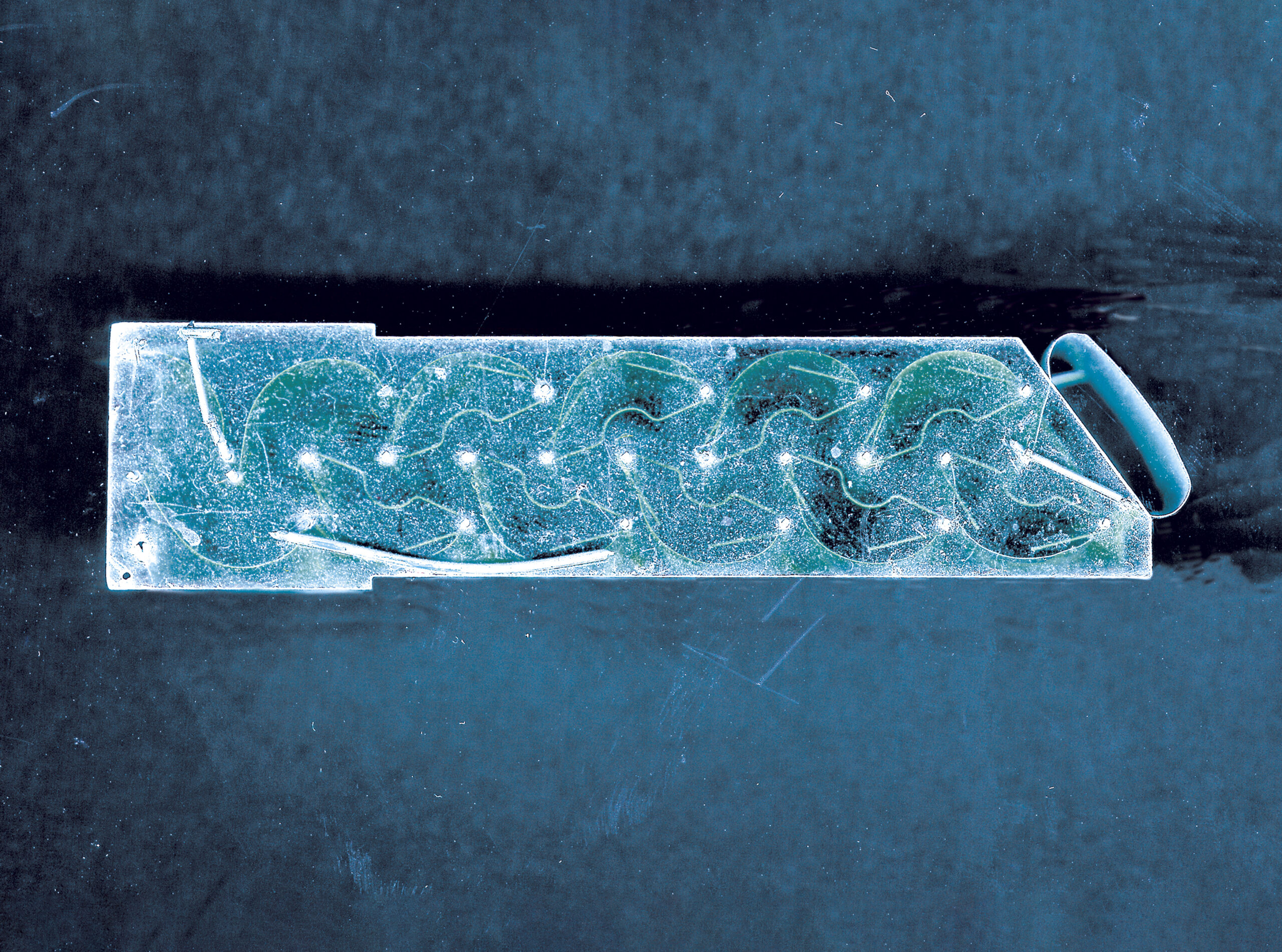
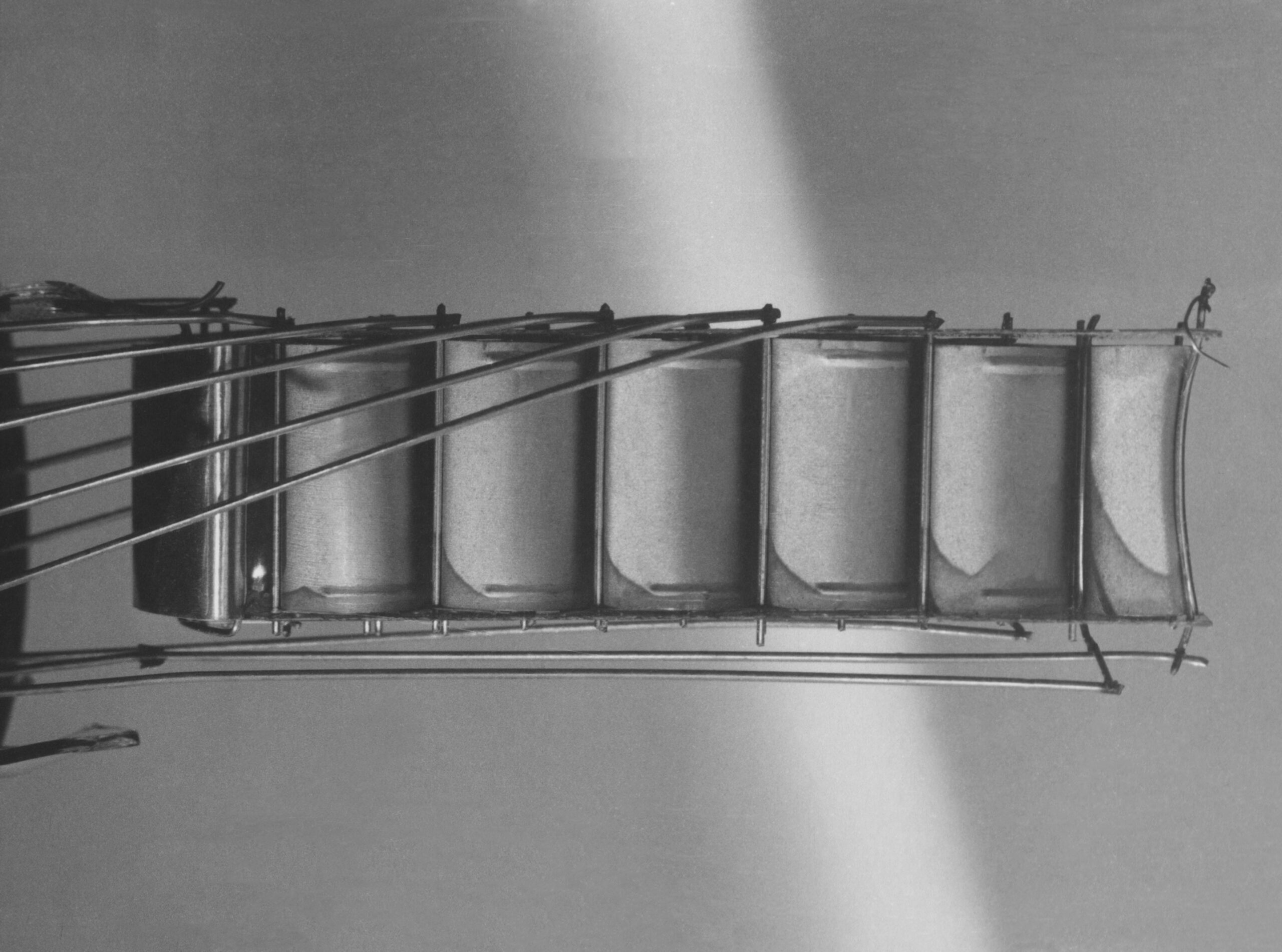
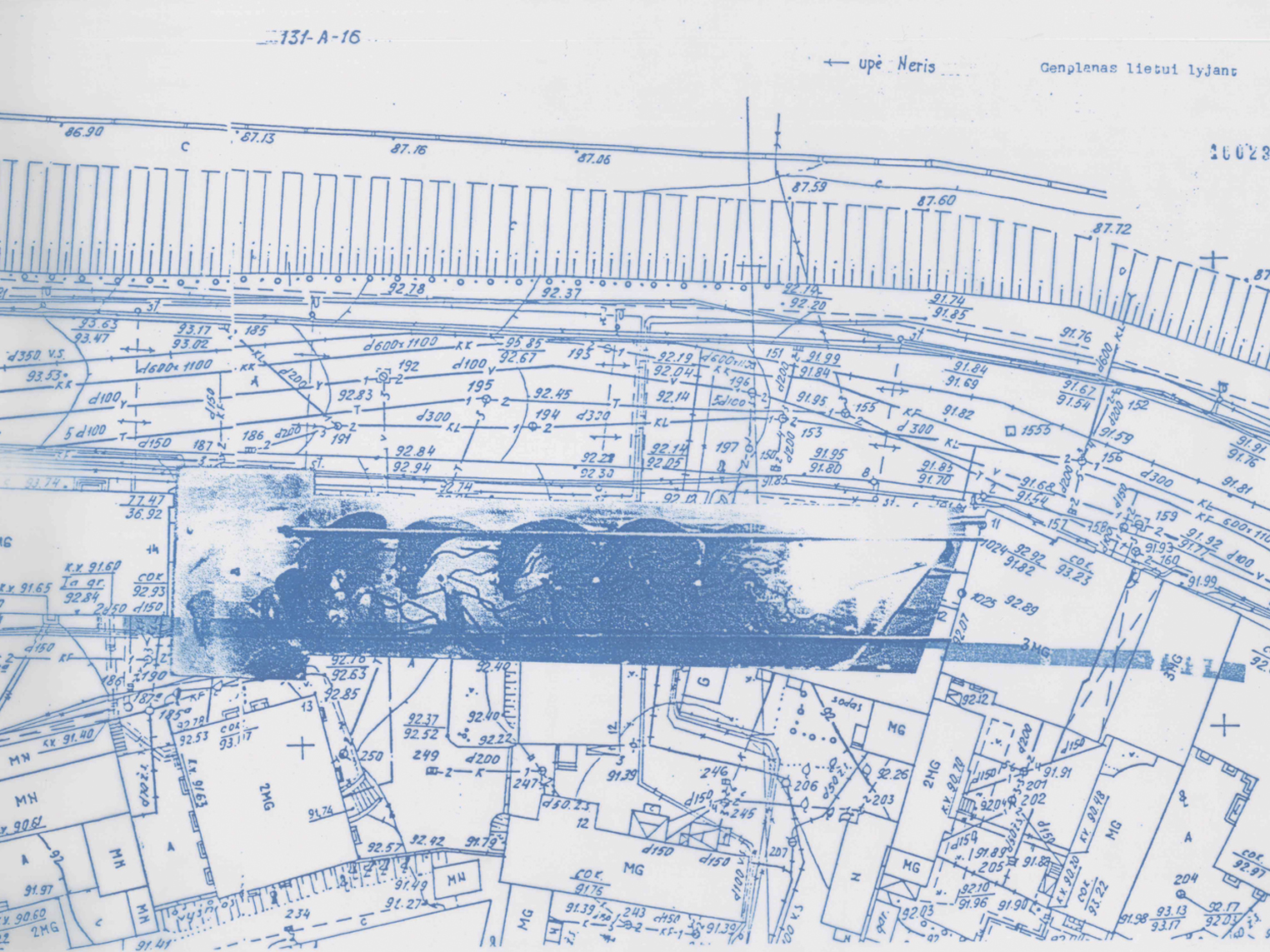
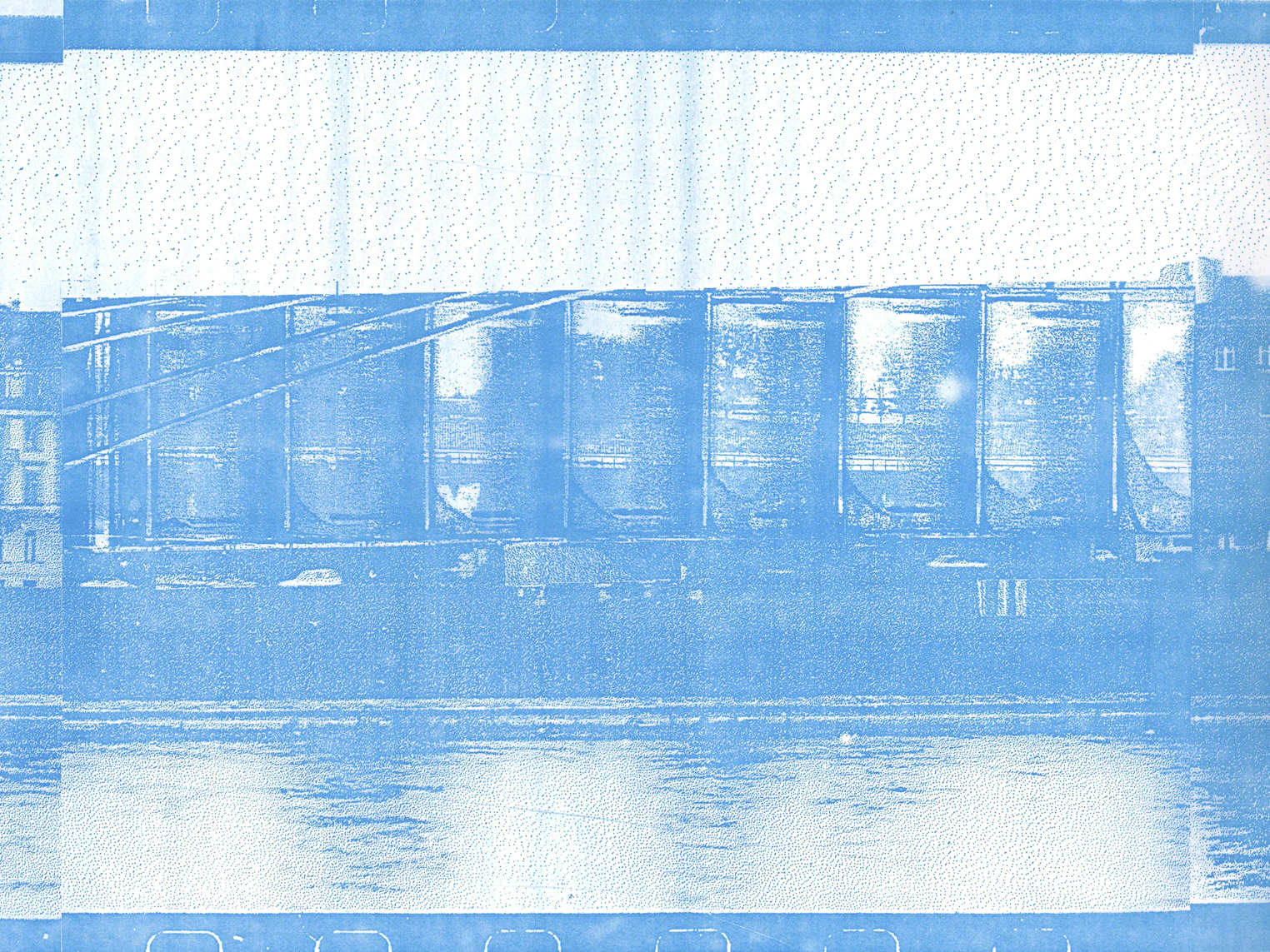
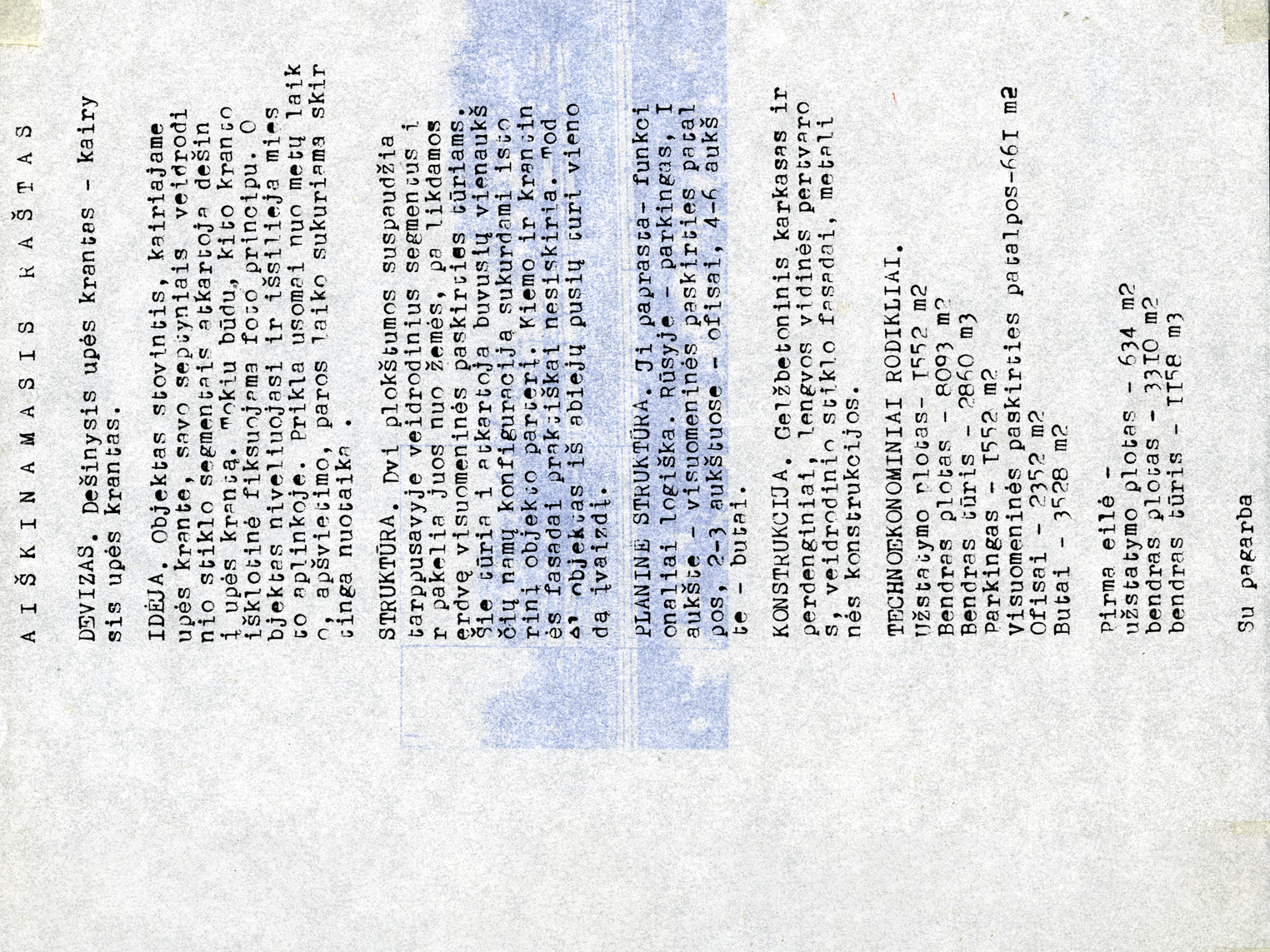
The proximity of the river, although separated from the site by a busy street, inspired the idea of a dynamic building that would echo the flow of water. The authors chose to complement the river’s longitudinal axis with a crossing axis: ‘the object, standing on the left bank of the river, mirrors the right bank with its seven mirrored glass segments.'[2] This visual connection between the two banks was significant not only as an enhancement of the multidirectional spatial relationships characteristic of the urban environment, but also as a means of harmoniously integrating the new building into its surroundings. Through reflection, ‘the object levels out and blends into the urban environment; depending on the season, lighting, and time of day, a different mood is created.'[3]
The project engages not only with the natural context. Although inserted into an established streetscape, the relatively massive six-storey tower was divided into separate segments that ‘echo the configuration of the former single-story houses, creating a historical parterre for the object.'[4] This conceptual approach – combining contextual sensitivity with contemporary materiality – can be understood as an example of balanced contrast: while the volume logically complements the urban structure, its material expression introduces a degree of tension.
In later interviews, Ozarinskas reflected on the historical environment in a far more pointed and provocative manner:
I would rather like to free imagination from its dependence on pragmatism. I would like someone not to be afraid of being drastic and to present – if not a vision of demolishing Vilnius’s Old Town (Le Corbusier once showed no mercy toward Paris’s historic centre, proposing its demolition together with the Cathedral of Notre Dame [5]) – then at least the product of an unsuccessful fantasy: the Palace of the Grand Dukes of Lithuania. [6]
Although the development of Žygimantų Street did not envision a radical intervention, this building – through its creative interpretation of the surrounding context and its recognisable technological aesthetic – would have significantly enriched the architectural landscape of the early independence period.
[1] Hermis Bank building, Register of Cultural Values, https://kvr.kpd.lt/#/static-heritage-detail/848DDCAA-1DB8-4A08-9CC2-8DF6B5ED2614.
[2] Aiškinamasis raštas (Explanatory note), 1992. From the Valdas Ozarinskas Foundation archive
[3] Ibid.
[4] Ibid.
[5] In fact, Le Corbusier did not propose demolishing the Île de la Cité or the Cathedral of Notre Dame; however, he approached the historical environment without scruples and planned the demolition of the adjacent Le Marais district.
[6] Valdas Ozarinskas, ‘Valdas Ozarinskas ant psichoanalitiko kušetės’ (‘Valdas Ozarinskas on the Psychoanalyst’s Couch’) (interview transcribed by Valentinas Klimašauskas), Literatūra ir menas, February 9, 2007, p. 2
– Vaidas Petrulis
Authors: Aida Čeponytė, Viktoras Kormilcevas, Valdas Ozarinskas
Photographer: Gintautas Trimakas
Drawings: Valdas Ozarinskas Foundation Archive
Architecture