Filters, 2014
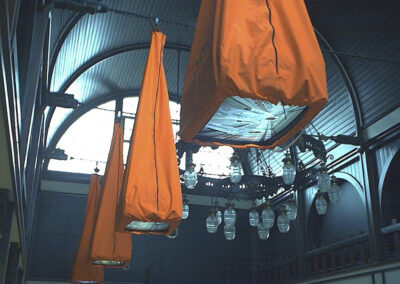
Ozarinskas was fascinated with colours, or, more precisely, he had a tendency to embrace one specific colour for a long time. The colour of his choosing would be strongly present in his work as well as his personal life and would later give way to another. Photographs from the opening of the exhibition “Painterly” at the CAC in 2000 show Ozarinskas dressed from head to toe in bright orange, which stood in sharp contrast to the prevailing aesthetics of the paintings on show, but was identical to the colour of the pre-fabricated camping tent that housed the exhibition “Four Architectures” in Paris. Red, the colour of the Porsche that Ozarinskas and Aida Čeponytė owned for a long time, became the official excuse for the selection committee of the first competition for the Hannover pavilion to dismiss their proposal due to “the lack of a colour solution”. Yellow — the colour said to appear brightest to the human eye. White, which he admitted he grew to like as a result of working with the white cube aesthetics at the CAC, became the title of a video portrait of Ozarinskas’ dying mother. Uncoated steel, which he used for architectural models and in interior design. Blue — light blue at first, then dark blue, both picked up from the tradition of workwear. Later on there were more and more “dark” outfits and works, such as “Black Pillow” and 250 “invisible” black chairs that Ozarinskas designed and which the CAC still uses in most of its exhibitions and events.
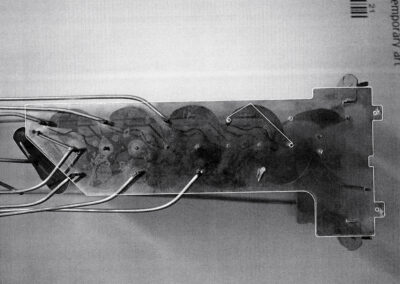
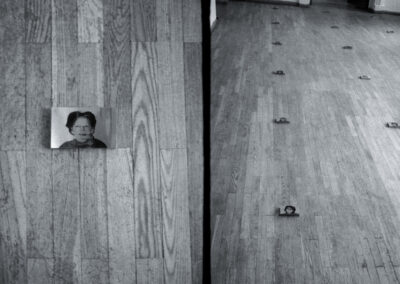
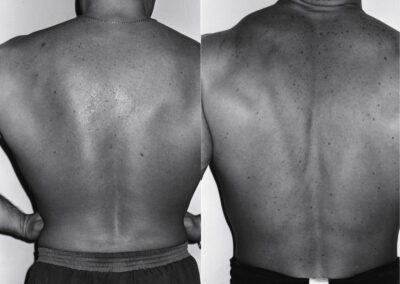
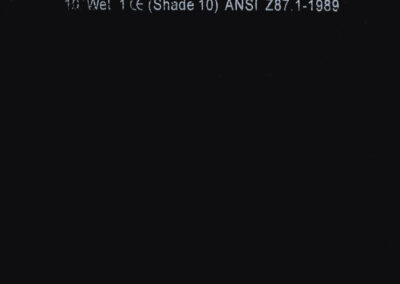
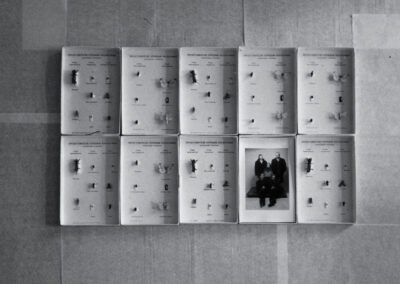
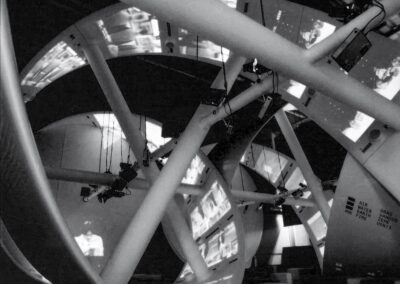
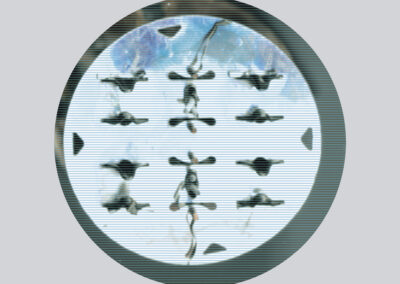
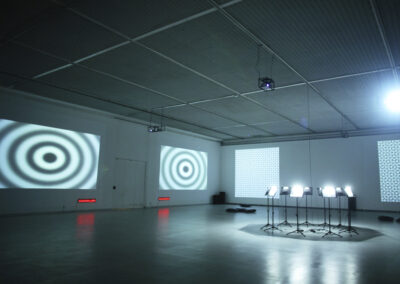
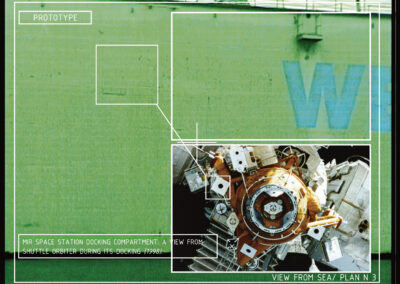
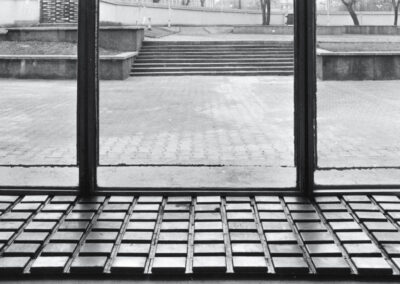
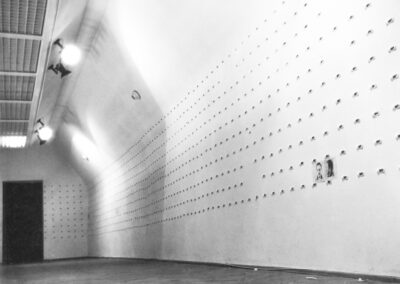
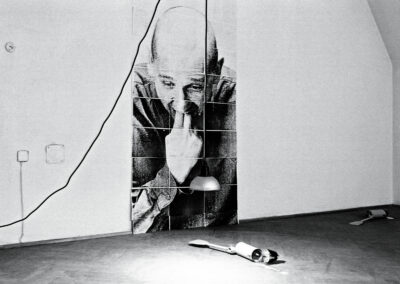
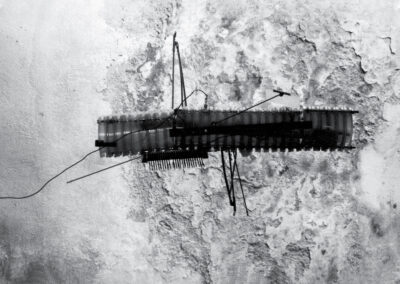
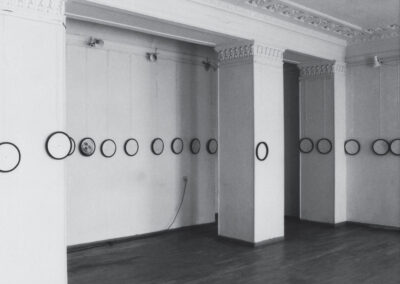
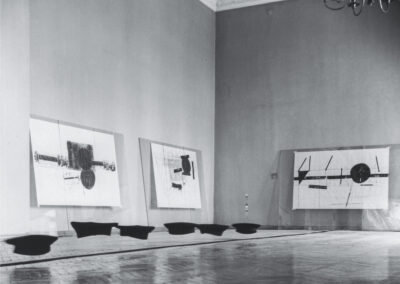
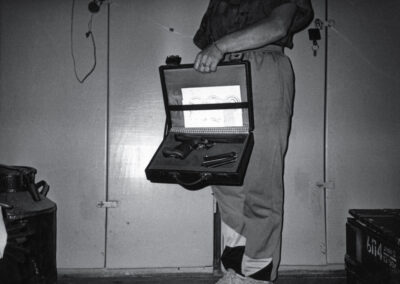
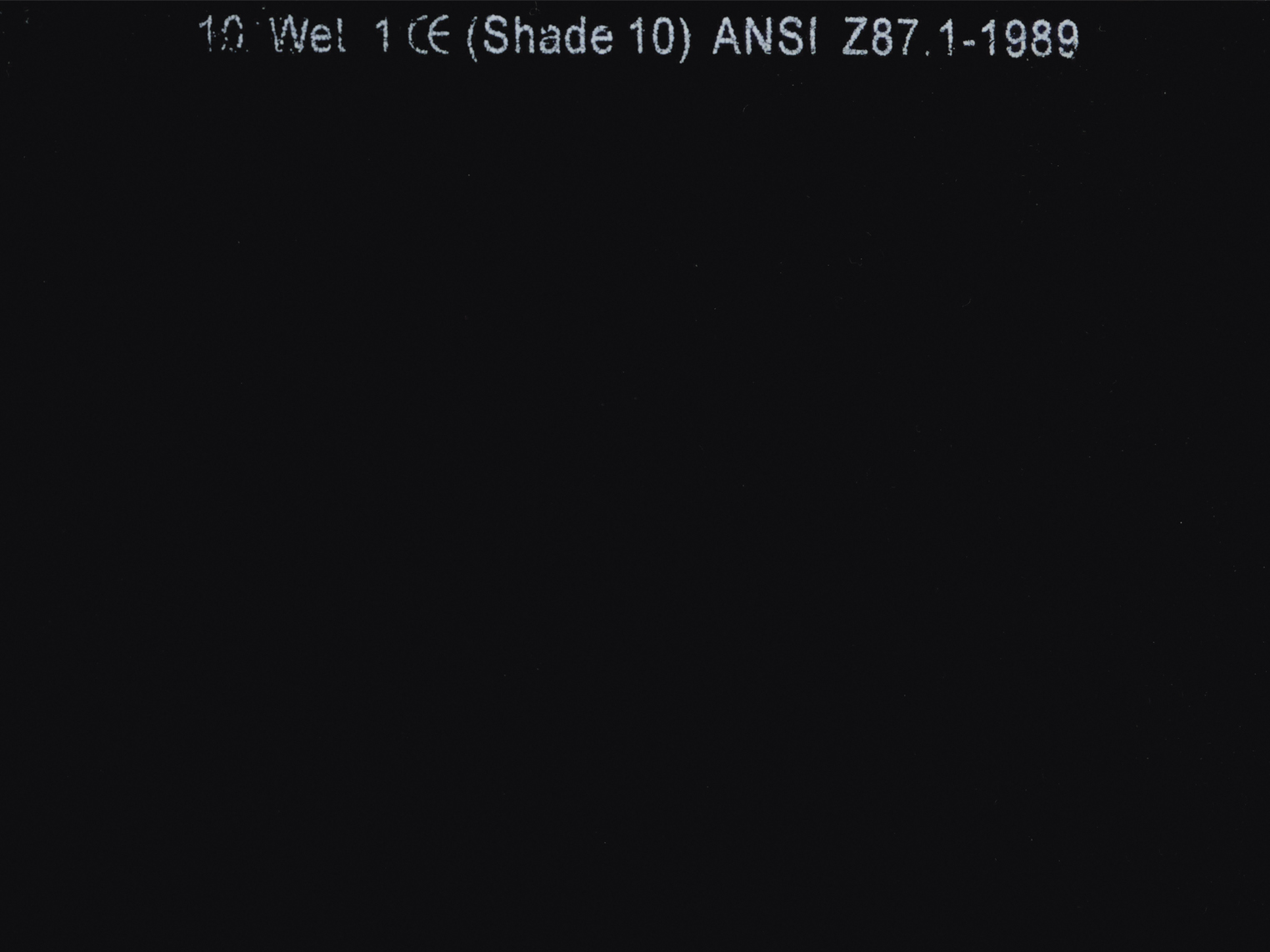
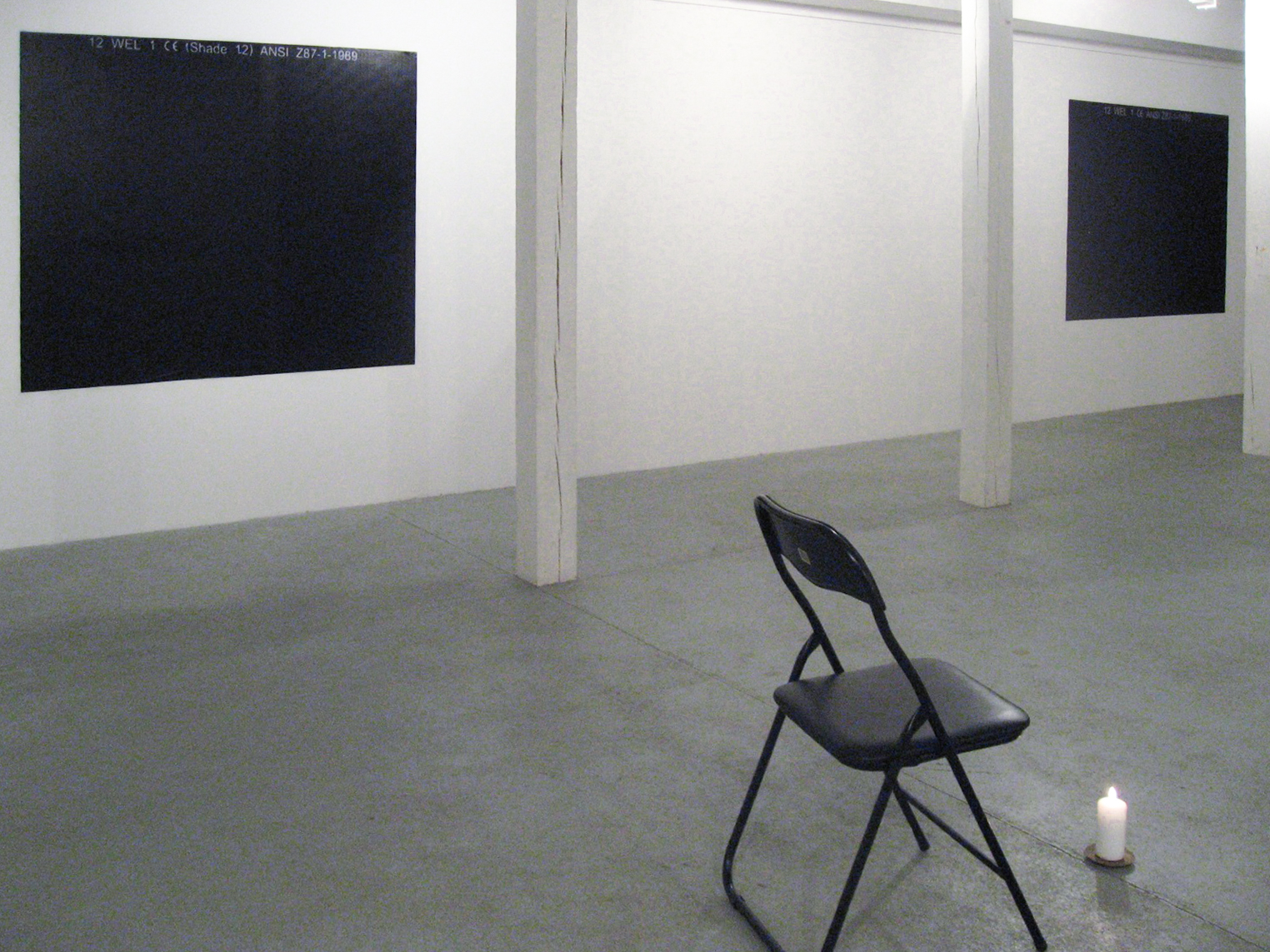
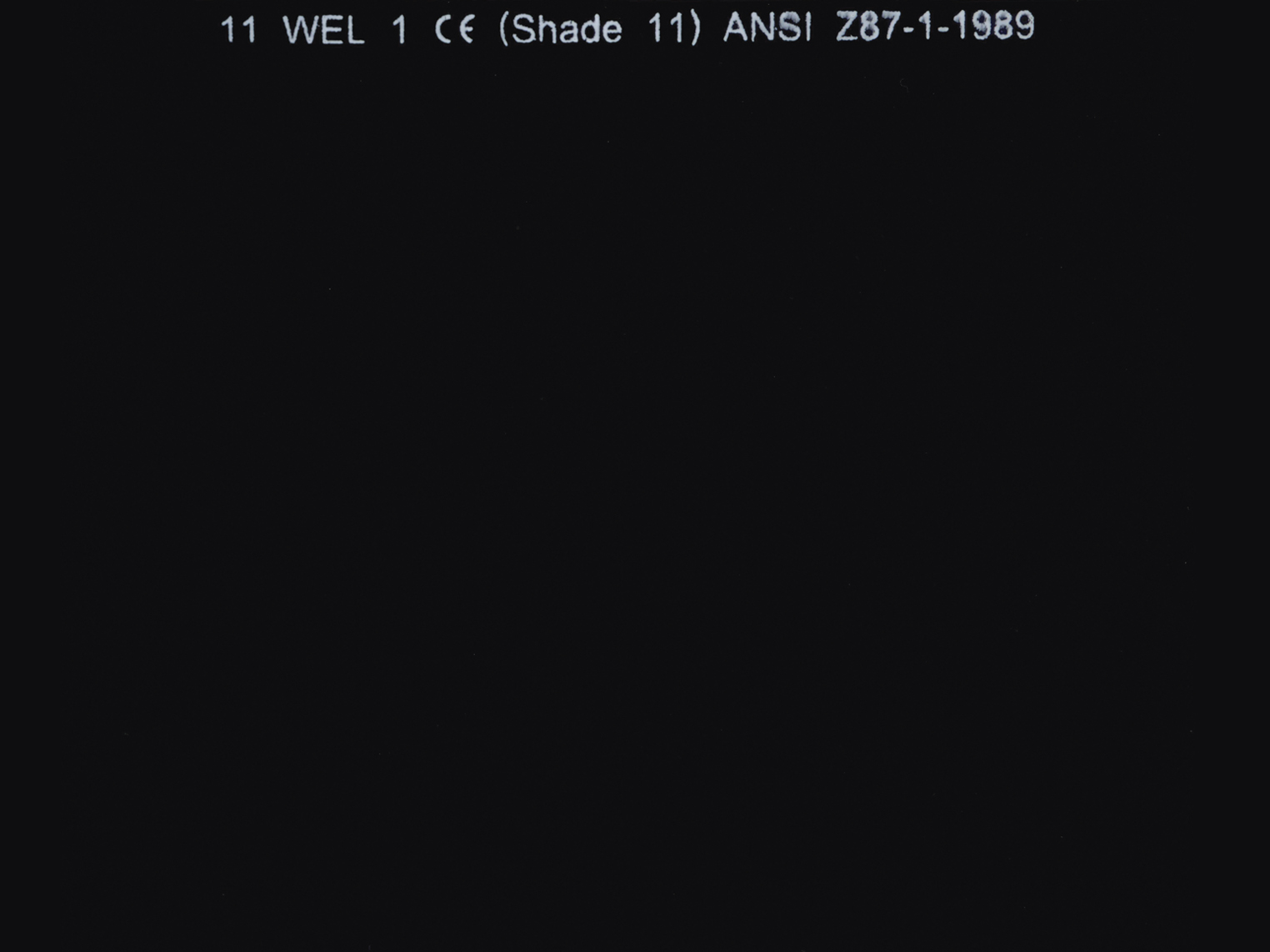
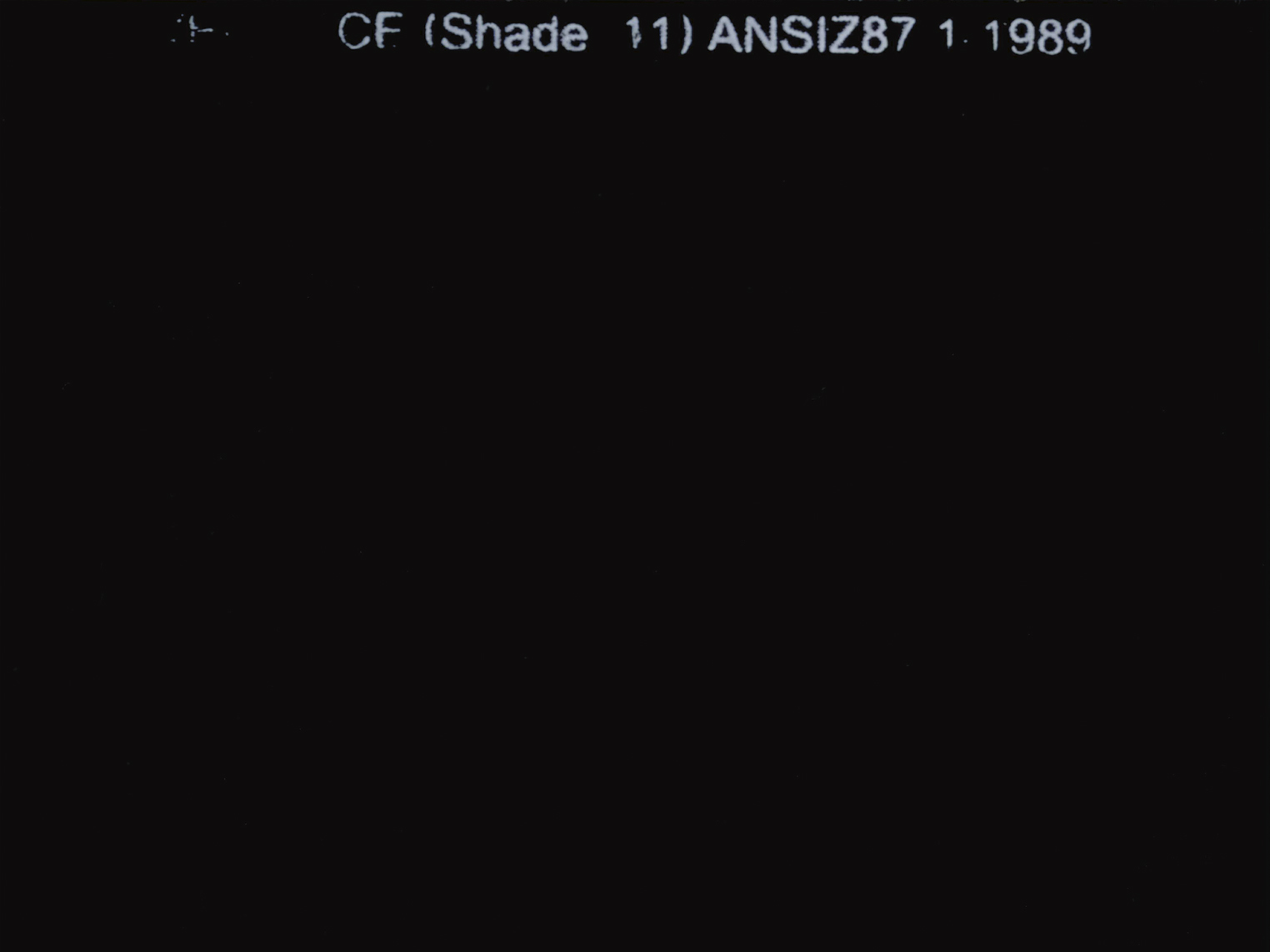
The last exhibition by Ozarinskas, “Filters”, was made up of almost entirely black photographs, but the colour was not the only dark thing about the exhibition. “I took photographs using welding filters. At first glance, these images appear to be black. But on closer inspection you can see that the black is not a pure black: it has nuances, and slight hints of other colours. It is not for nothing that gradations of the colour black are thought to be in the thousands …” Ozarinskas described it as “a bit of a socialised project: after all, we each have our own filter, and we see life each in our own way. This time my works will be almost black, and most of their eyes closed.”
In the monotonous movements of bodies in the films he made with [Aida] Čeponytė, in his architectural gestures, even in his pranks, and above all, in his art events there is always a deep, almost existential, or perhaps cosmic, underlying darkness. His project “The Sun in Vilnius Never Sets”, which Ozarinskas proposed in 2009 for one of the main squares of Vilnius and which was supposed to be carried out in cooperation with NASA, is nothing else than a confrontation with darkness to the greatest extent possible for a city.
– Virginija Januškevičiūtė, “Darkness”, in Architect without Architecture? A Retrospective of Valdas Ozarinskas: exhibition guide, ed.: Virginija Januškevičiūtė, Vilnius: Contemporary Art Centre, 2018, p. 36.
What grows between filters does not necessarily survive.
The filter cannot see itself, unless its pupils close.
Between a filter and filter, only fog can endure.
The mousetrap of a filter can catch even foxes.
If you grow into one with a filter, you won’t know where the
door is.
Women’s filters are different to those of ficuses.
God is an impenetrable filter.
In the dark, all filters are the same.
The filter is a skin that is not visible to anyone.
Sunlight filters everything except for love.
– Julius Keleras, text for Valdas Ozarinskas’ solo exhibition “Filters” at Antanas Mončys House-Museum in Palanga.
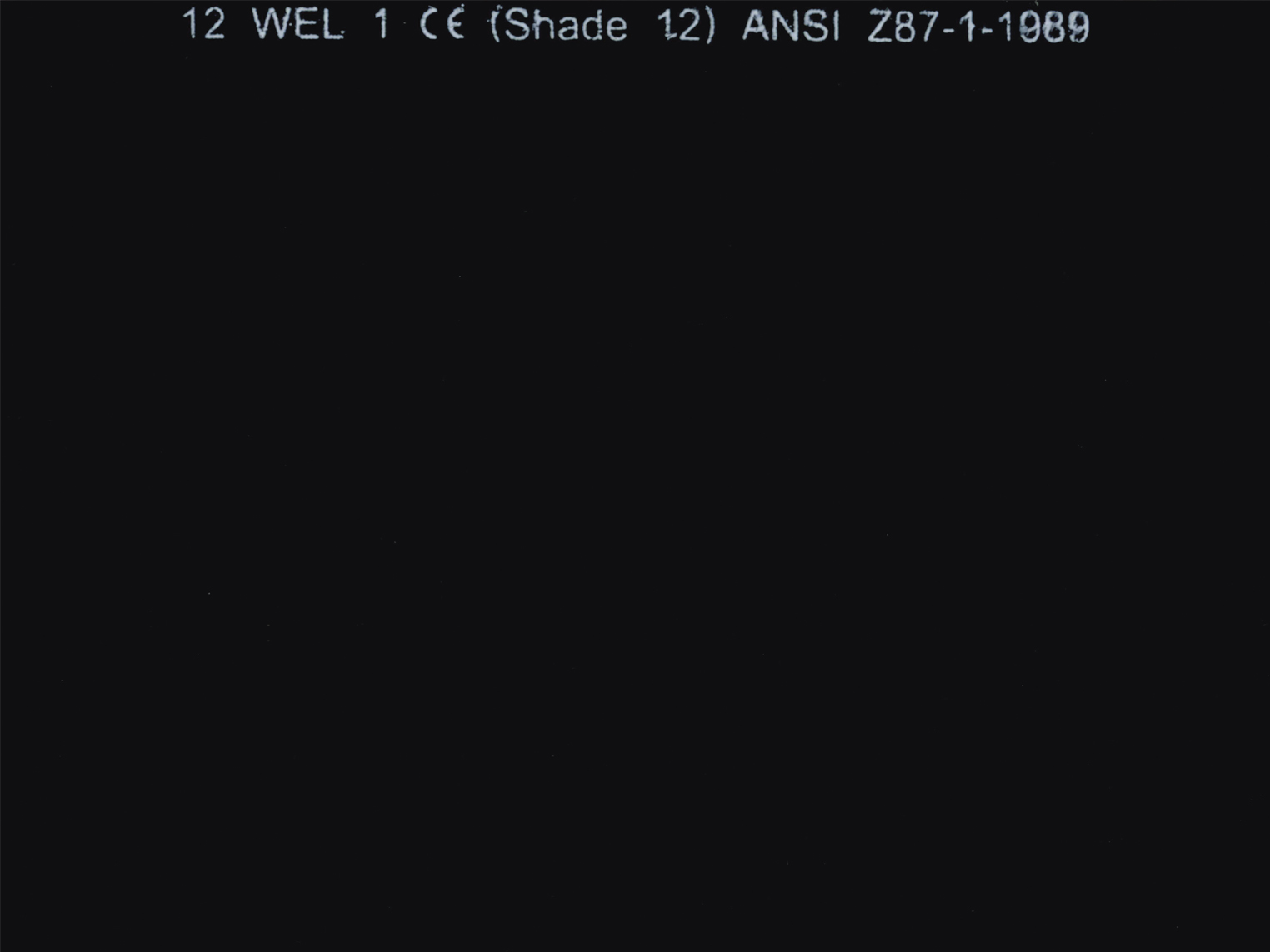
Author: Valdas Ozarinskas
Exhibited at the Antanas Mončys House-Museum, Palanga, Lithuania
Photos: Valdas Ozarinskas Foundation Archive
Other sources:
Architect without Architecture? A Retrospective of Valdas Ozarinskas: exhibition guide, ed.: Virginija Januškevičiūtė, Vilnius: Contemporary Art Centre, 2018
‘V. Ozarinsko „Filtrų“ testas’, Klaipėda, 12 December 2014, https://klaipeda.diena.lt/naujienos/klaipeda/menas-ir-pramogos/v-ozarinsko-filtru-testas-664669
https://www.bernardinai.lt/2015-01-07-palangoje-vieno-geriausiu-pasaulio-architektu-paroda/
Art Projects