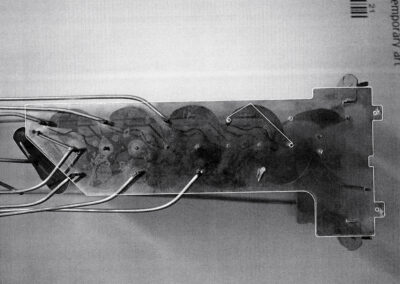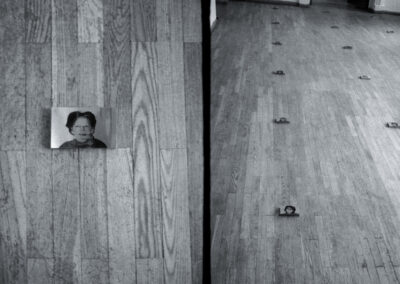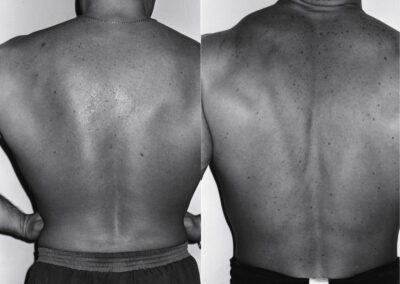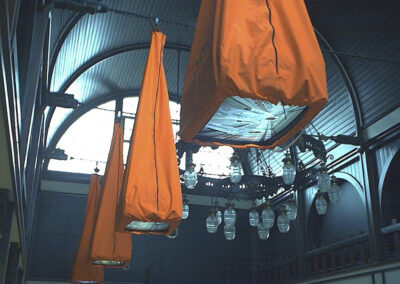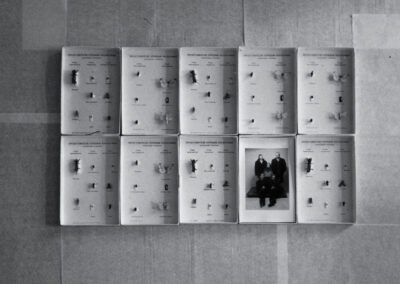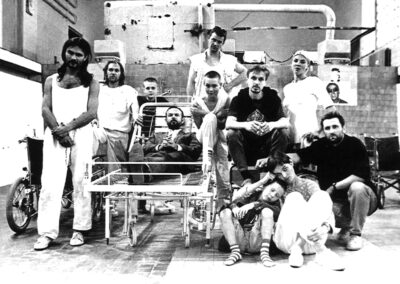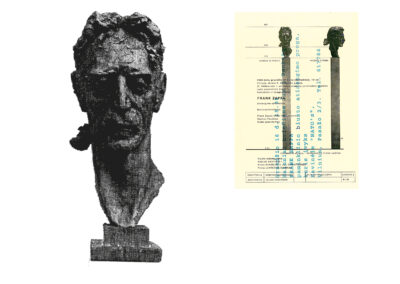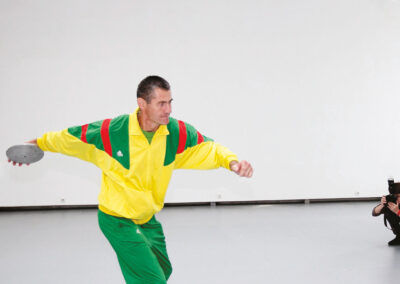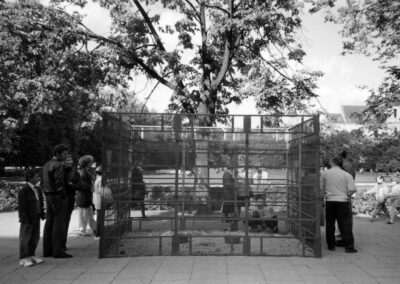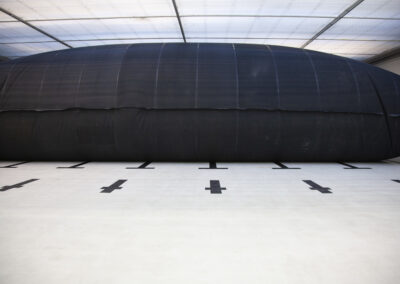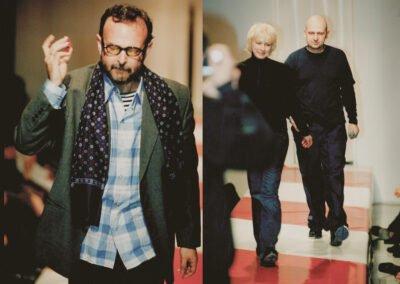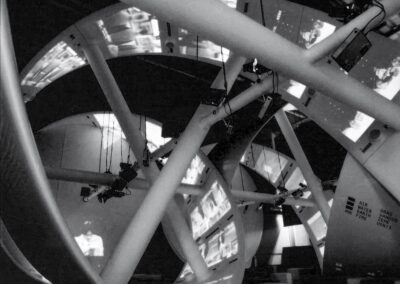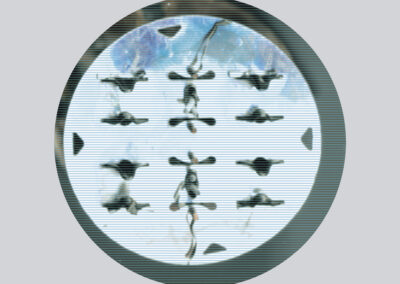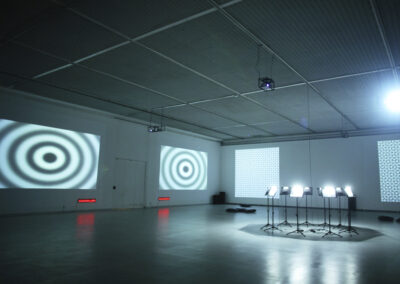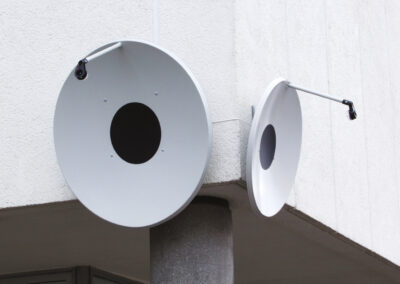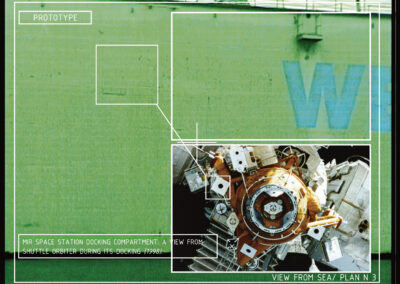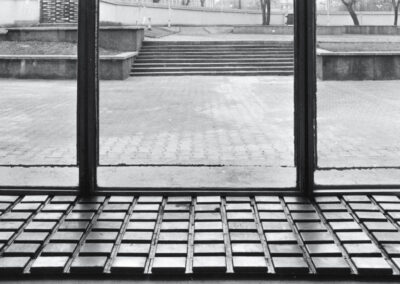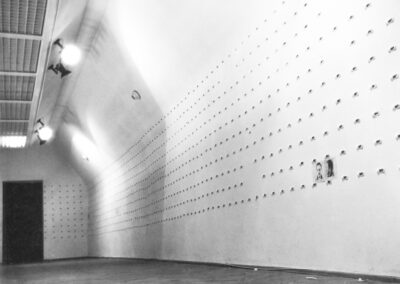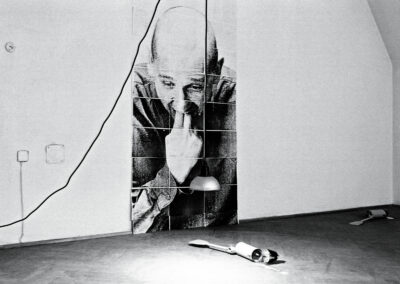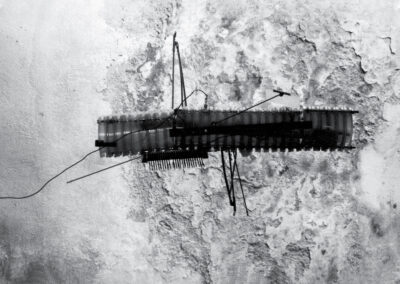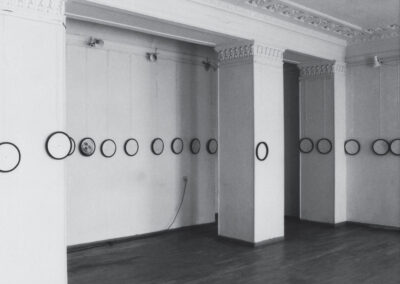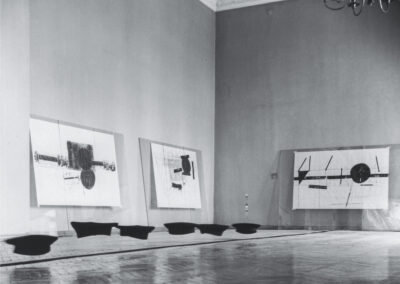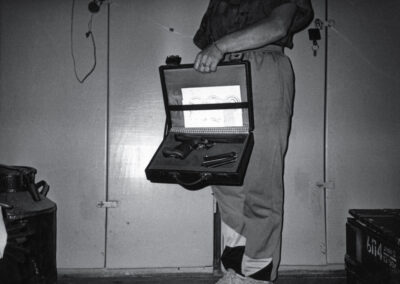
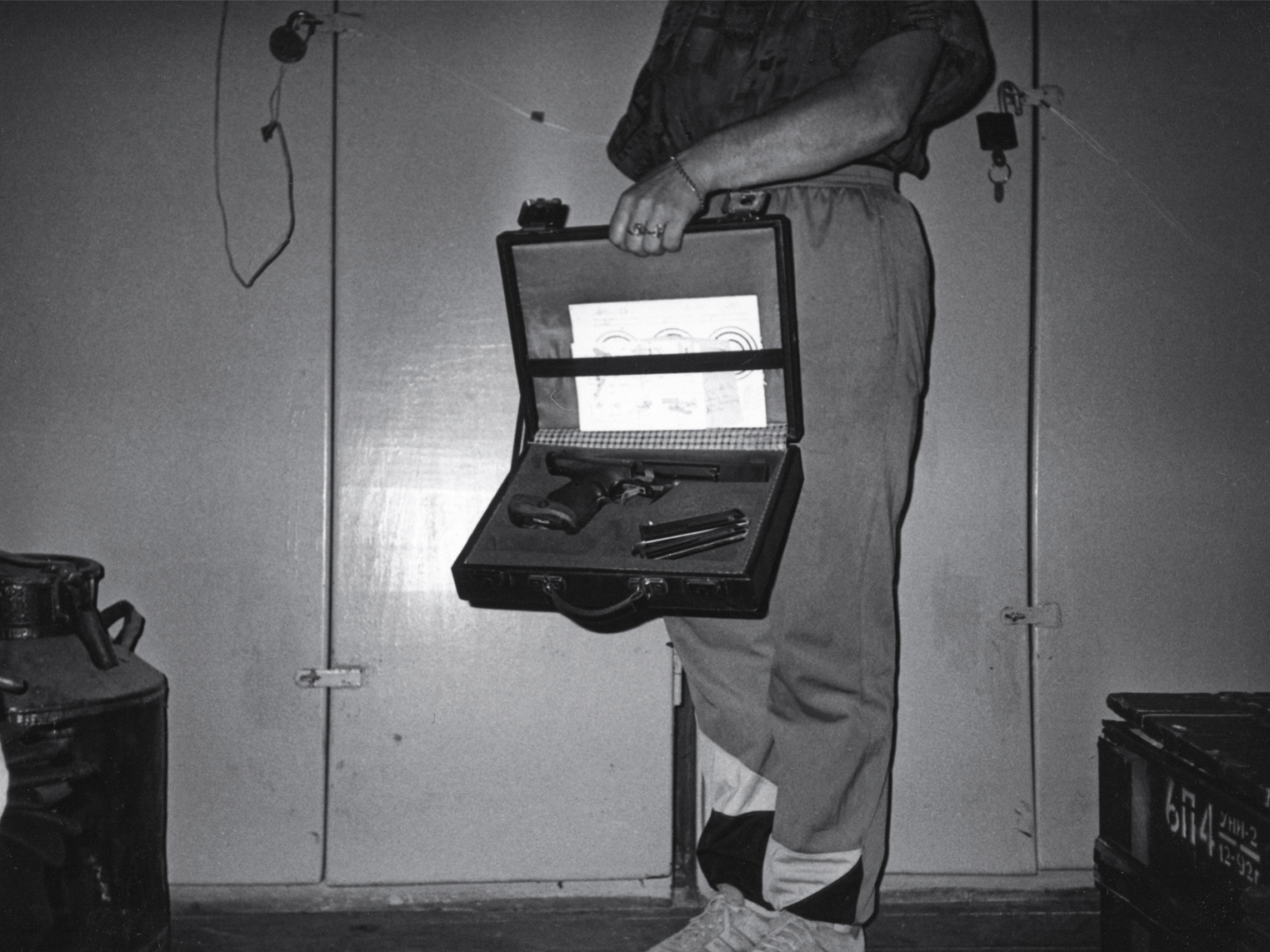
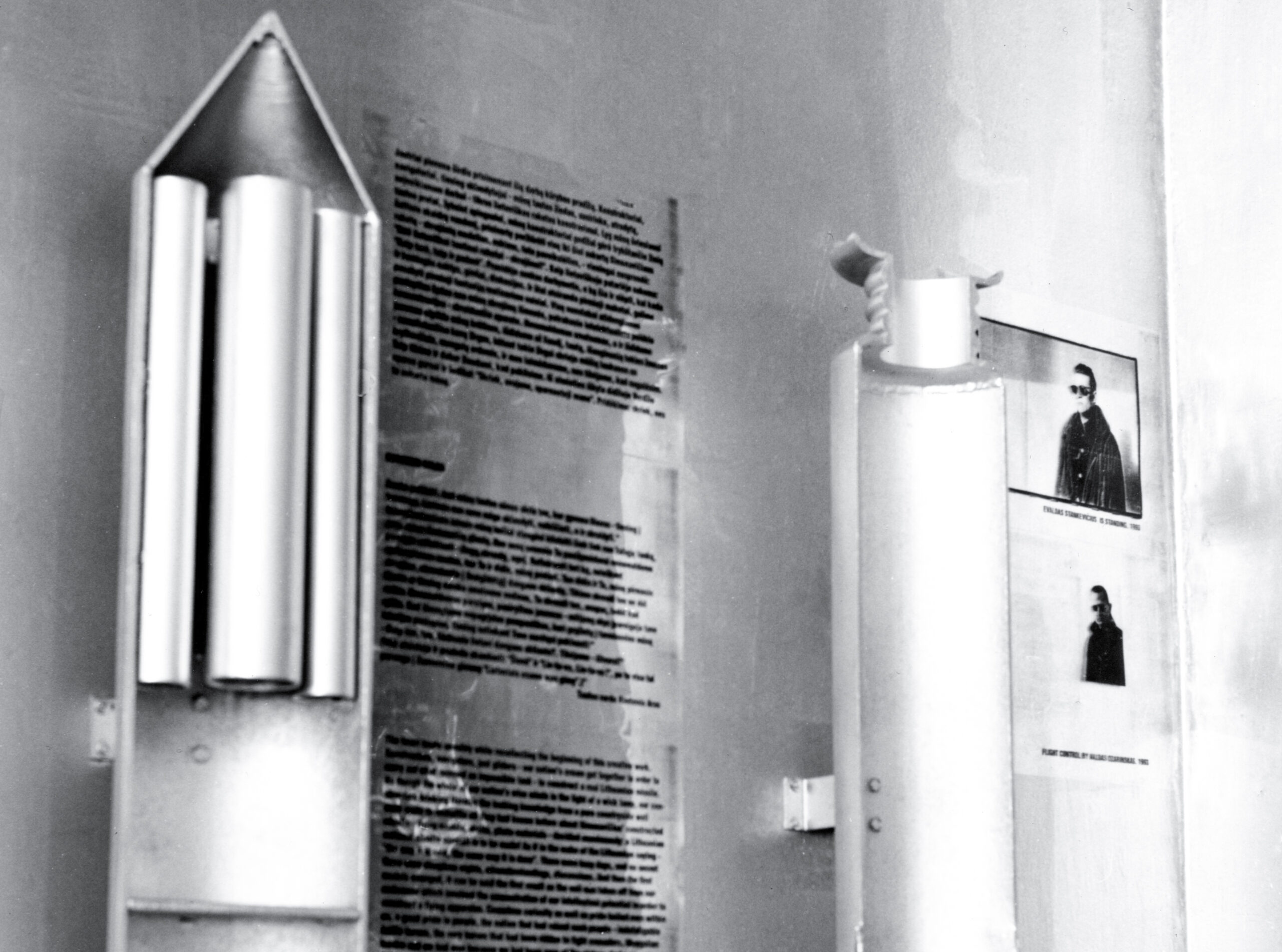
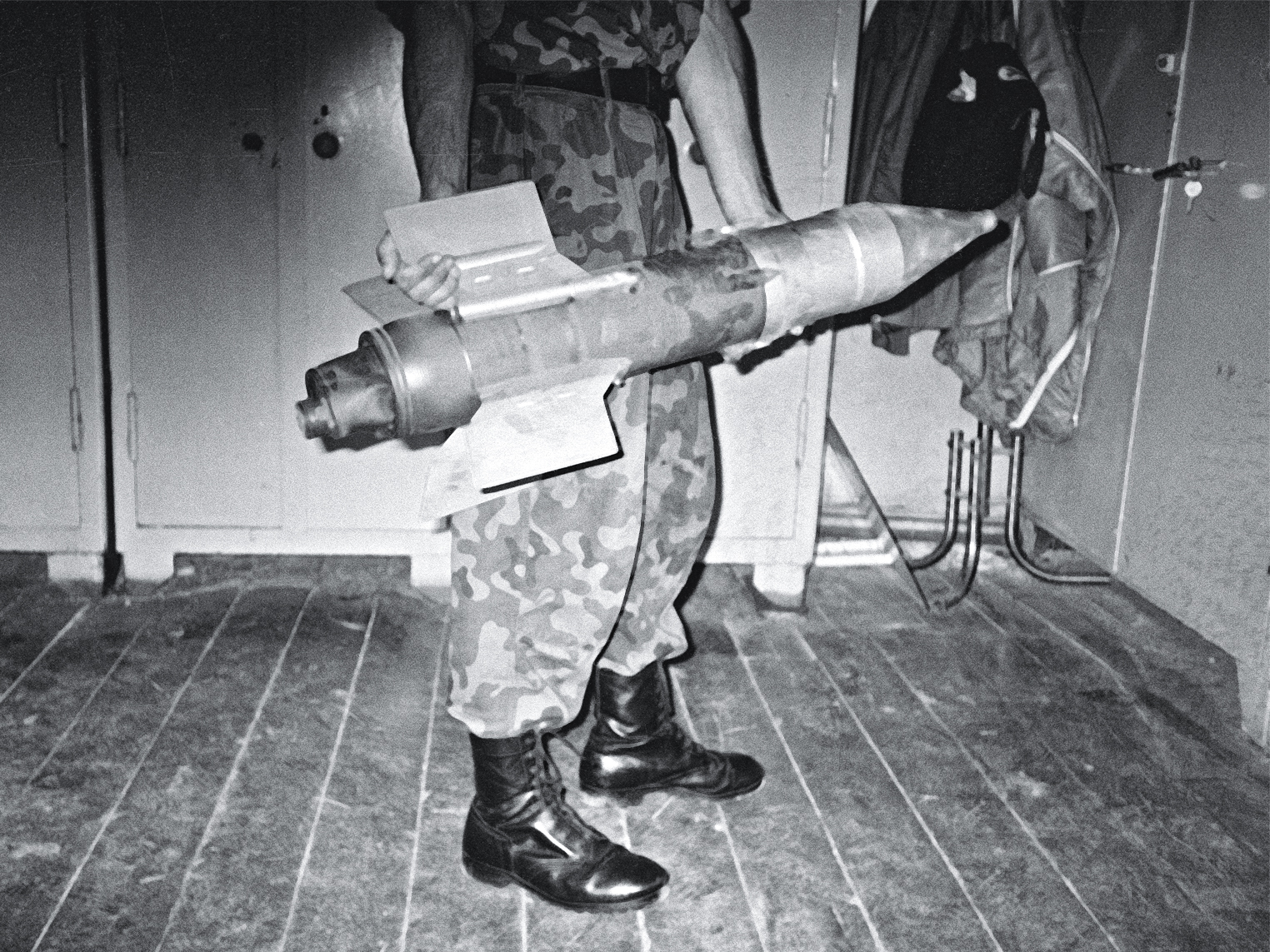
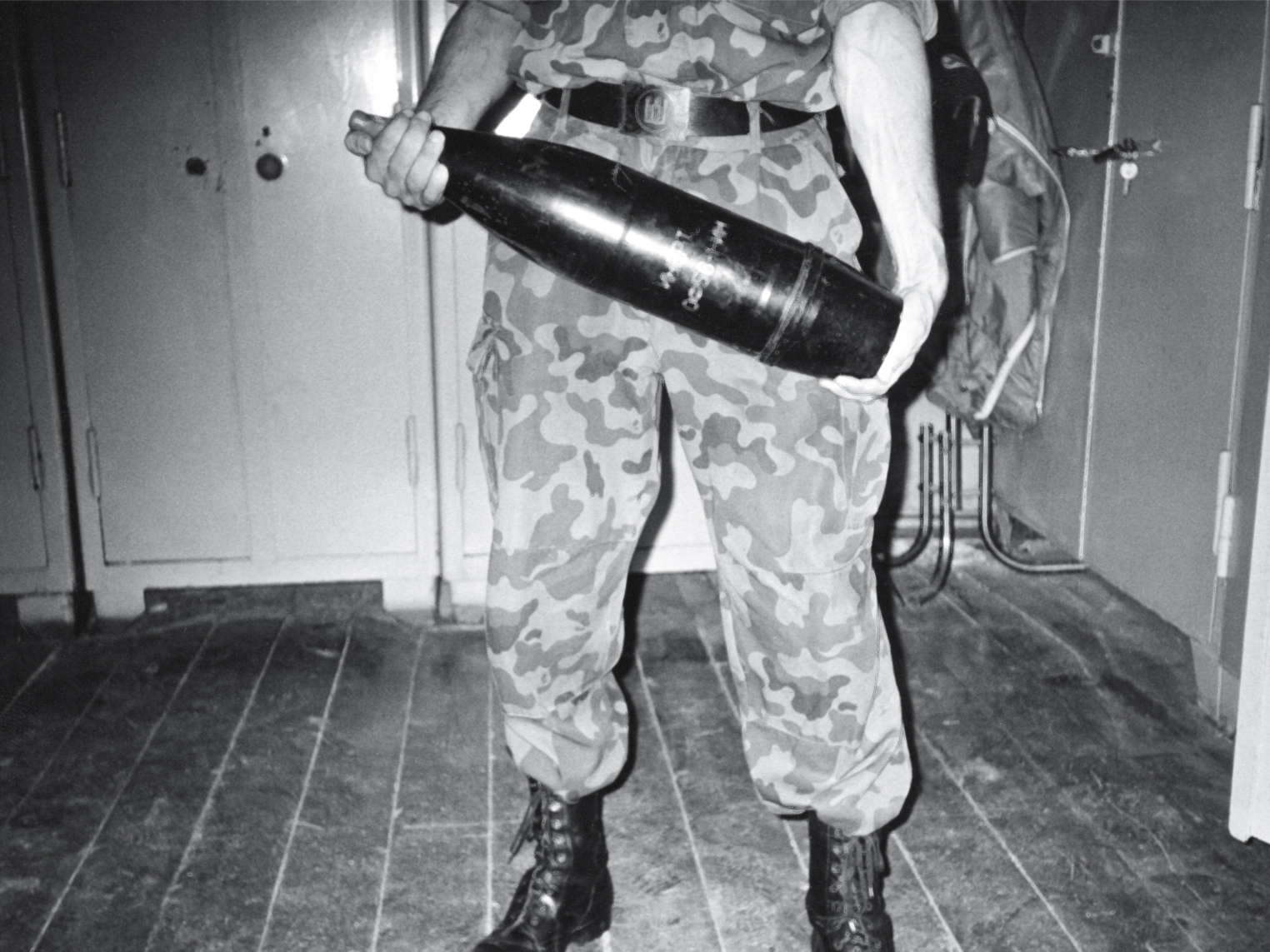
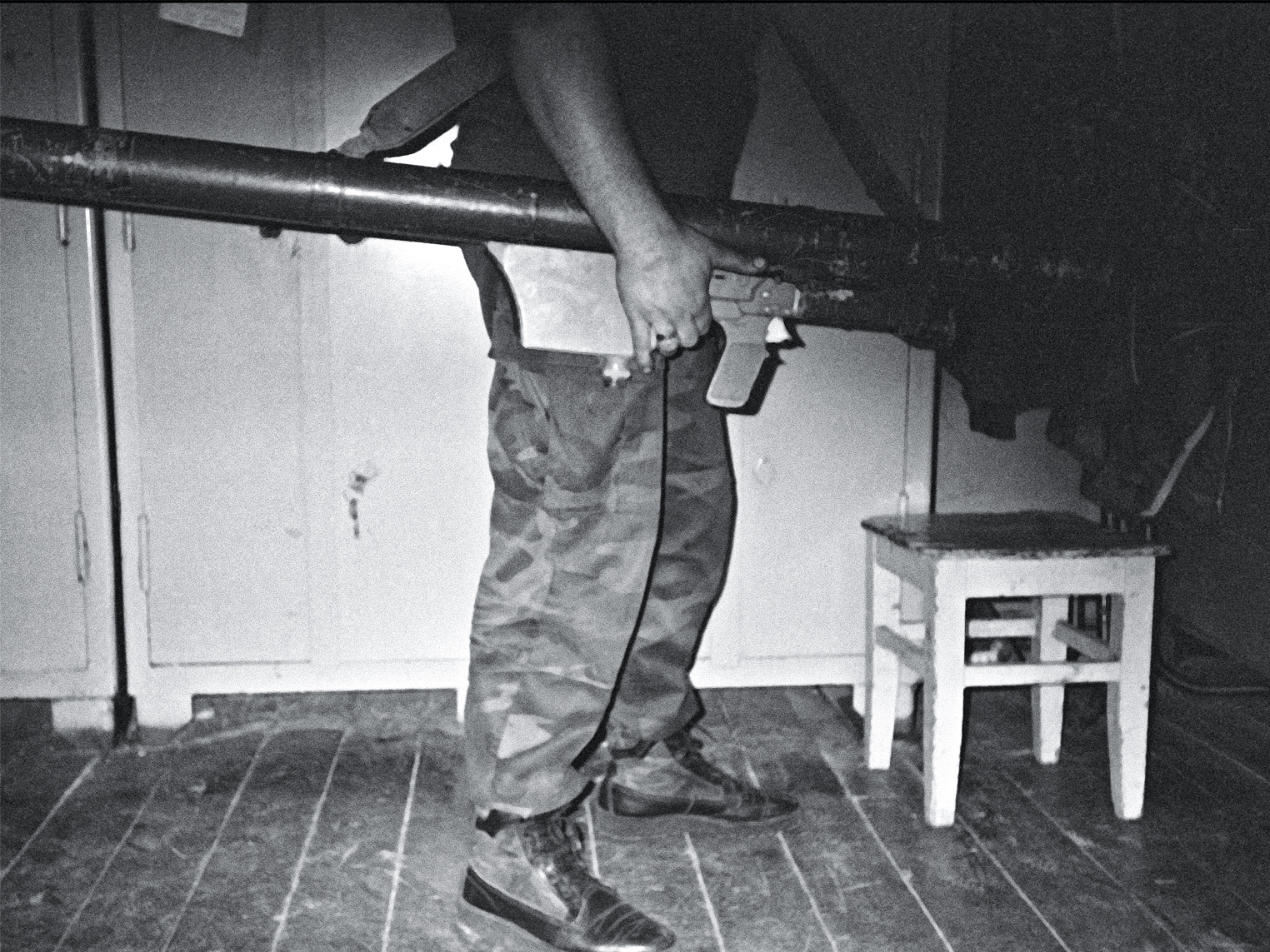
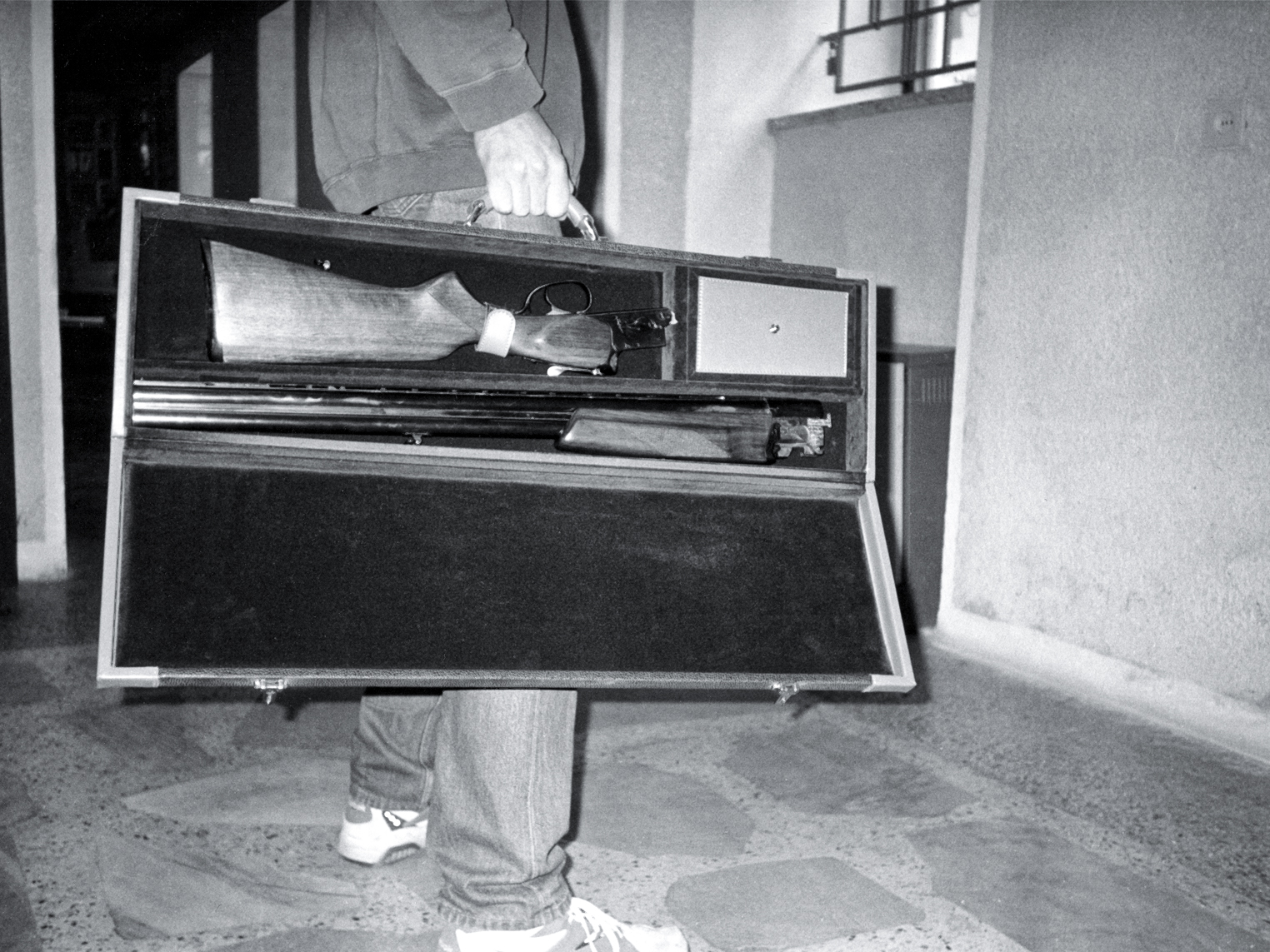
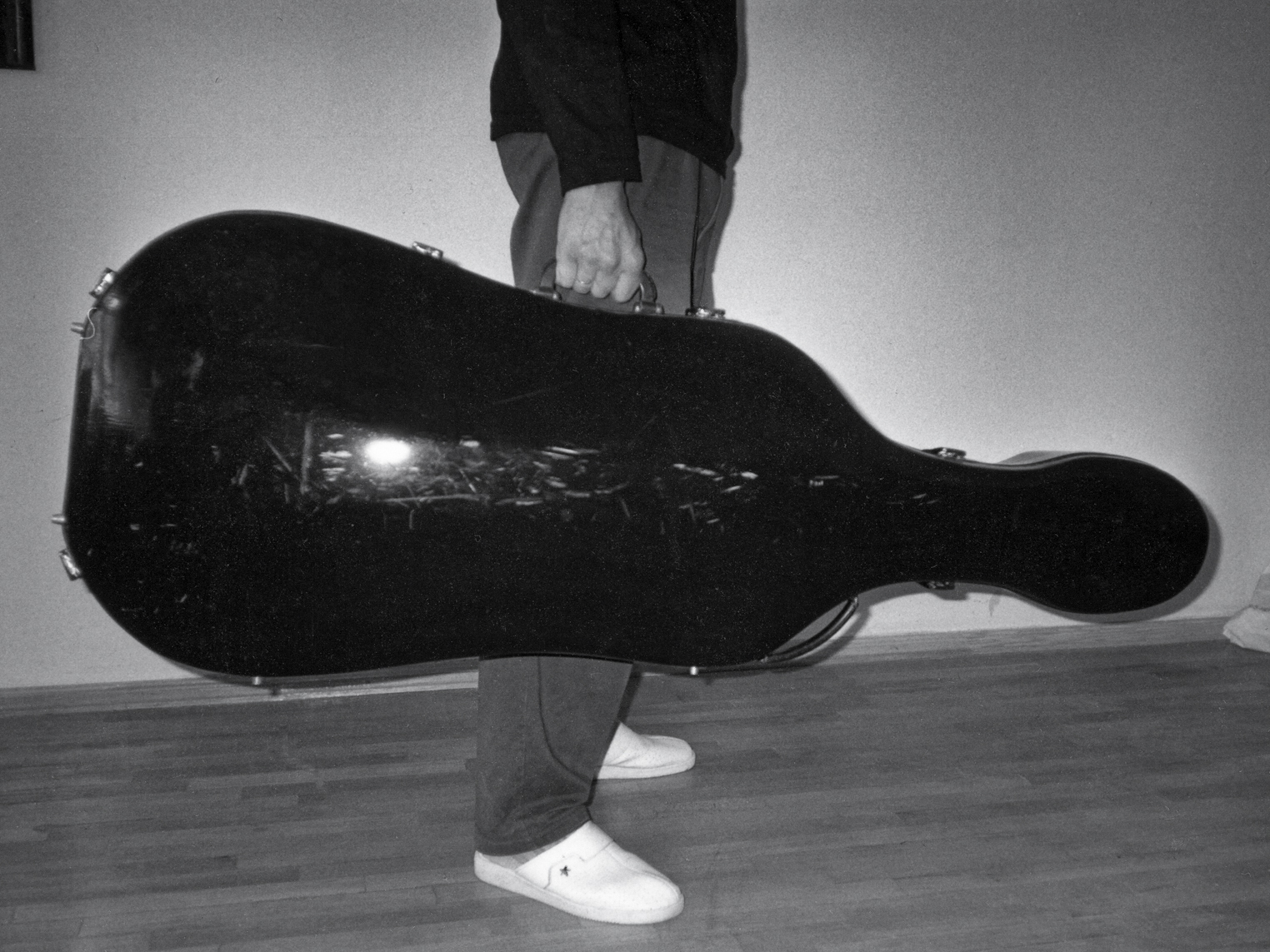
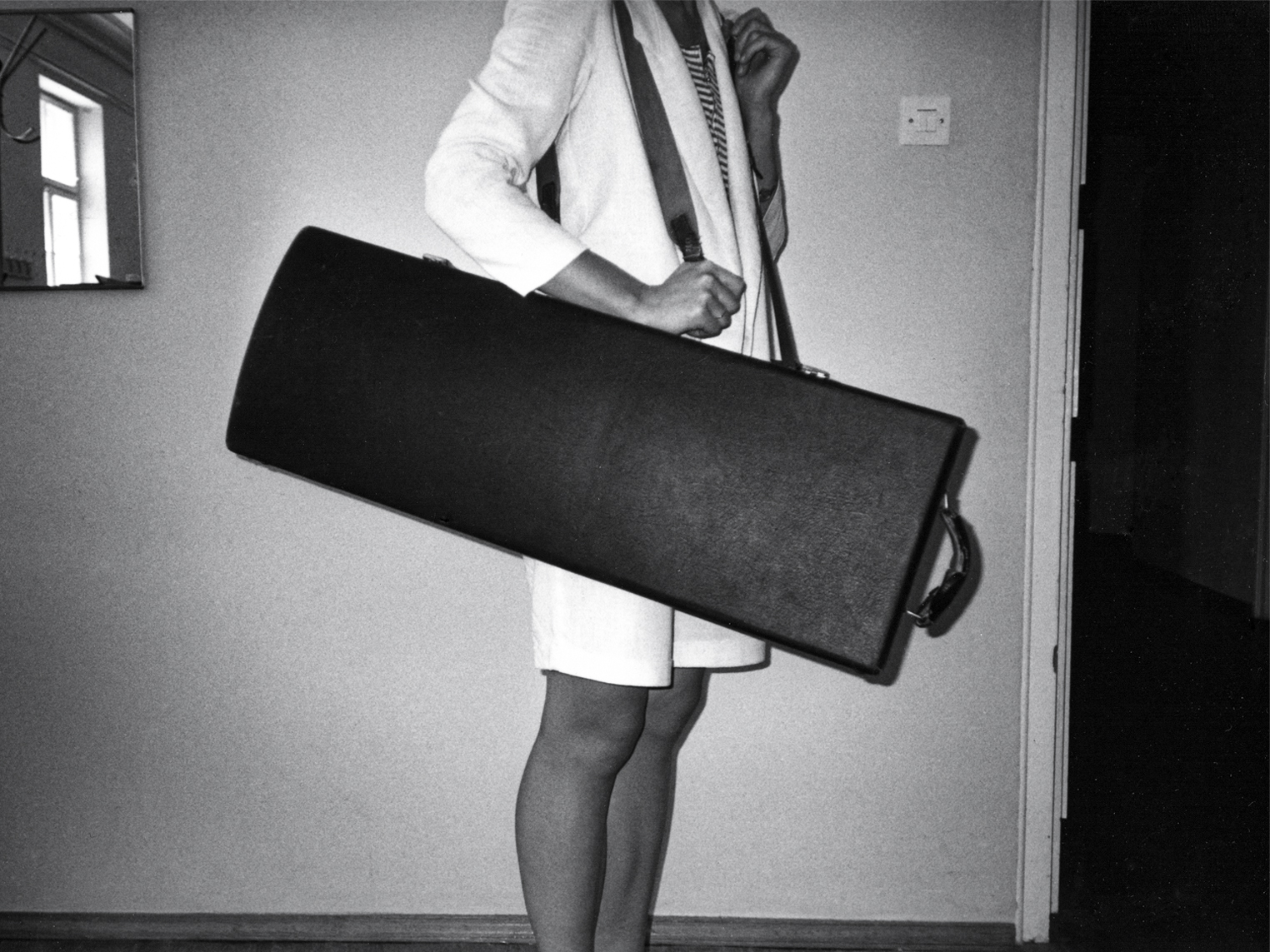
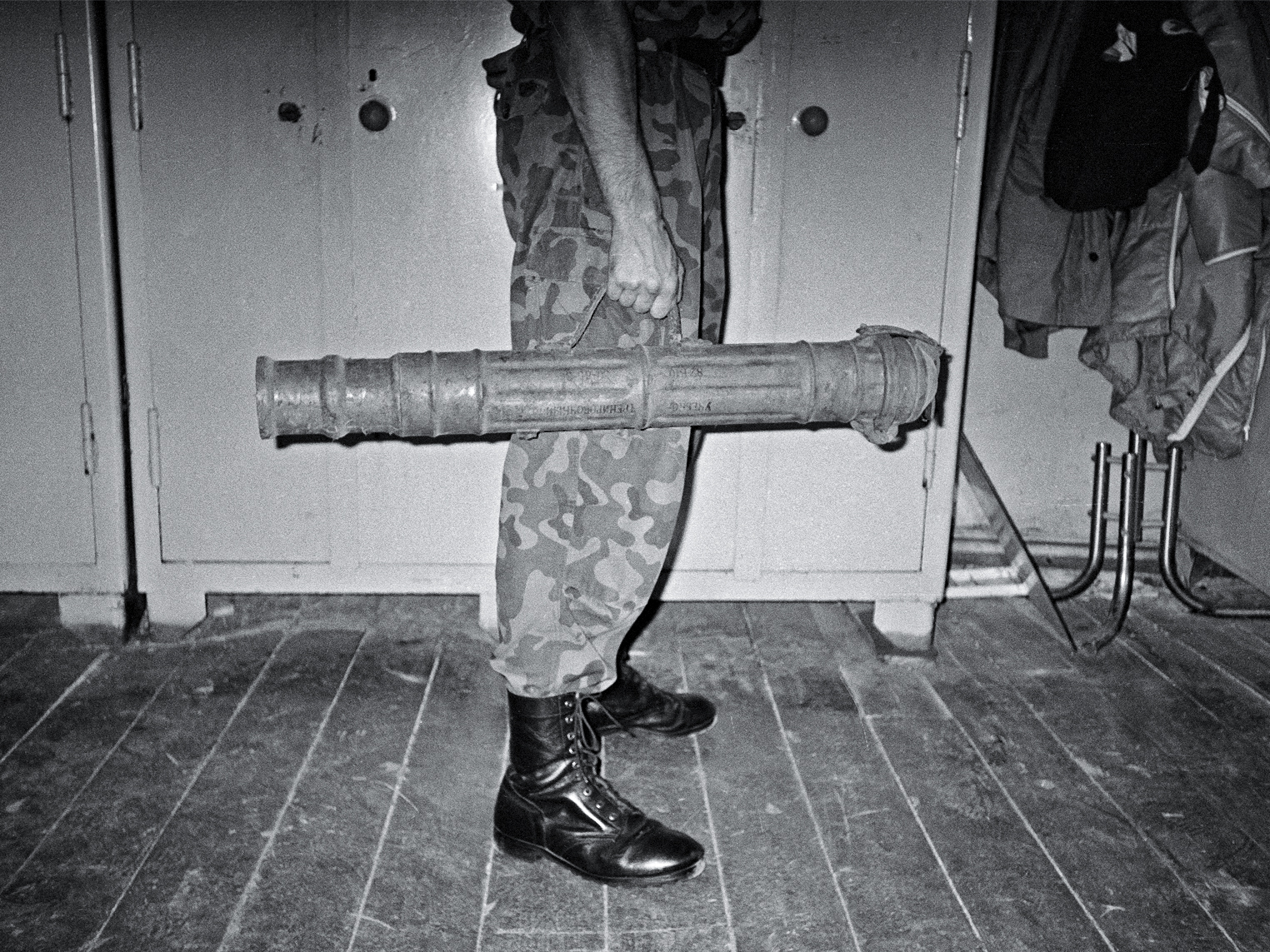
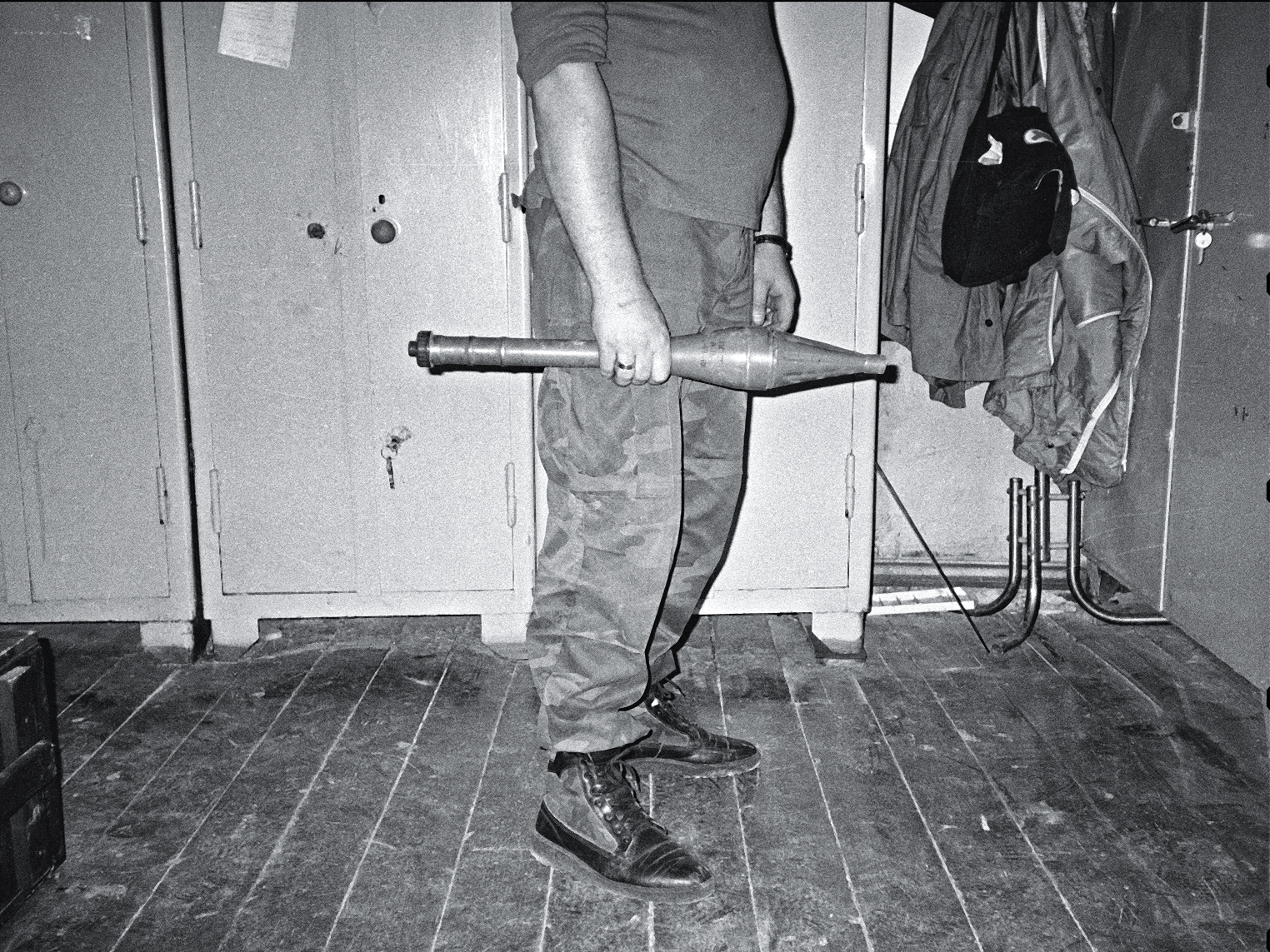
Series of photographs of the interior of the NATO’s bar, 1995
Since the military gear is an example of the most advanced functionality, 100% utilitarian design with no decorative patterns involved except the Hollywood-style spectacularity of a shot or an explosion, it is the perfect functionality of machine guns and rockets in particular that caught Oze’s attention.
– Raimundas Malašauskas, „A Waiter from the Restaurant of Vilnius Bahnhof Made the Most Colourful Statement in EXPO 2000“, in Nu, 2002.
The NATO’s bar, which operated in the mid-1990s on Pasažo skersgatvis in Vilnius, and several of the photographs exhibited there embodied Ozarinskas’s deep fascination with weapons – more precisely, with their forms and the effects they produce. In his view, modern weapons marked a complete departure from everything created ‘for beauty’. The bar’s interior thus emphasised functionality and the aesthetics of militarism, incorporating elements such as military rocket replicas and steel sinks. Yet it was precisely the photographs depicting cases for various musical instruments that revealed that Ozarinskas was not interested in weapons as such, but rather in functionality understood in its broadest sense.
When designing interiors, furniture, or jewellery, Ozarinskas often searched for an appropriate form for a given function by examining objects intended for entirely different purposes. He proposed using transparent-door refrigerators as bookshelves, protective road barriers as lampshades, advertising posters as partitions between workplaces, and screws and coils as rings and bracelets. The discrepancy between an object’s original function and its newly assigned purpose was always, for him, a form of achievement – a little victory. Weapons and musical instrument cases, however, constituted a realm where such victories were not possible: their purposes were too specific to be reassigned. They corresponded to what Ozarinskas sought in his own creations – a certain inflexibility and a distinctive, individual system of meaning. The photographs function almost as trophies of industrial design, collected with a sense of respect.
The way in which these objects were photographed deserves special attention, linking the series to another collaborative work by Ozarinskas and Aida Čeponytė, the conceptual fashion collection Central European Men (2001). While this is a broad topic, one of the most interesting questions is whether such a series would be possible to create today.
– Virginija Januškevičiūtė
Photographic series by: Valdas Ozarinskas
Interior photographer: Arūnas Baltėnas
Art Projects