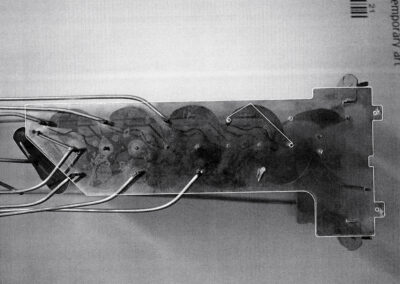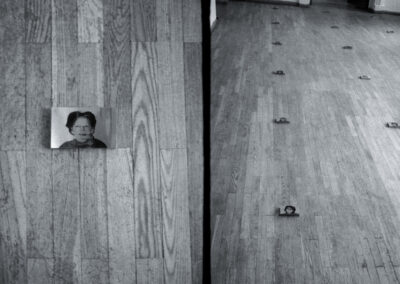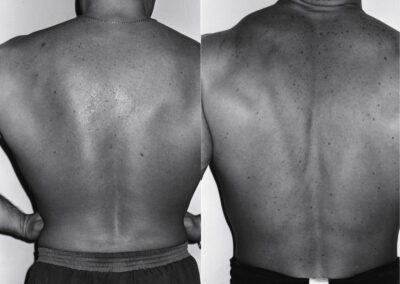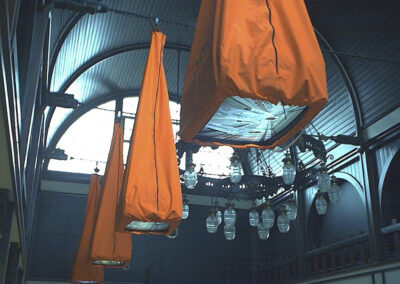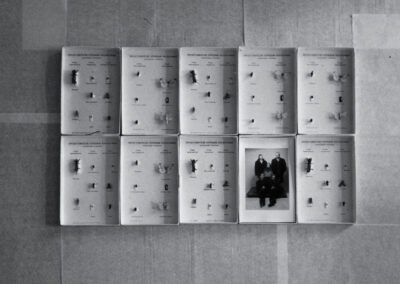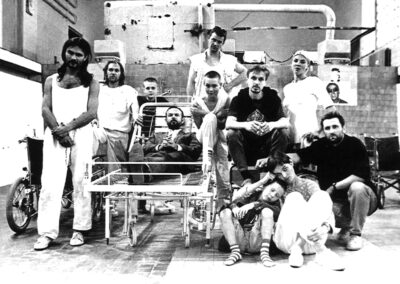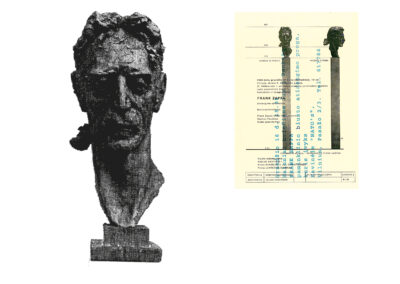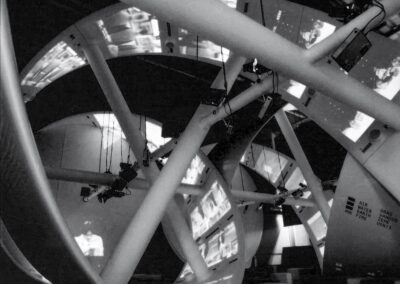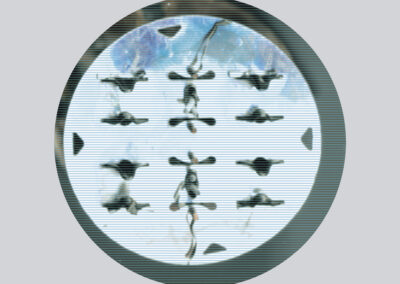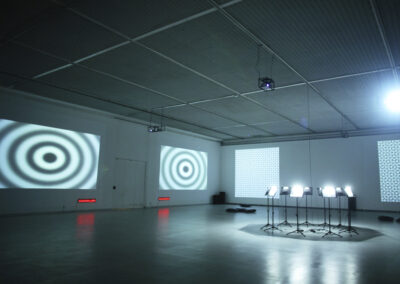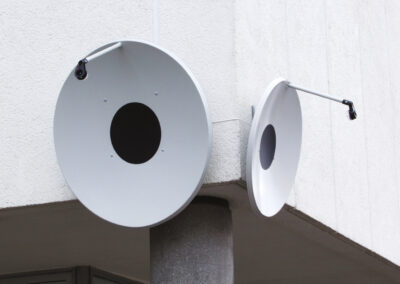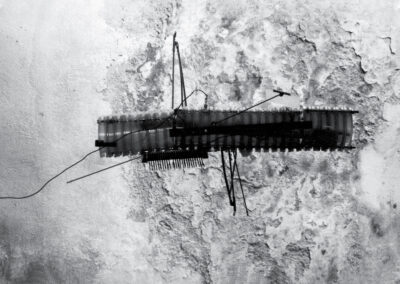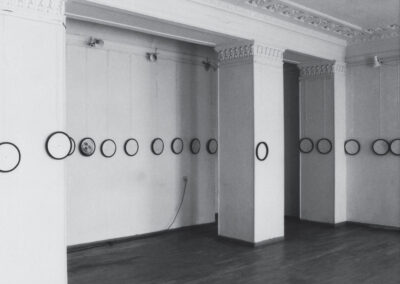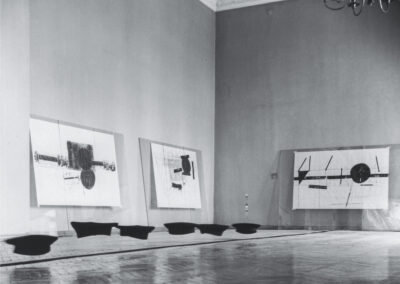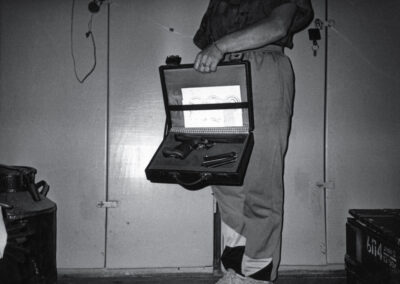
This cinematic play with multiple temporalities, along with the reversal of cause and effect within an otherwise logical sequence of actions, clearly reflects Ozarinskas’s fascination with experimental cinema – including the work of Jean-Luc Godard, David Lynch, and Jim Jarmusch. Shortly after this installation, Ozarinskas and Aida Čeponytė released their first video works as a duo, in which they pursued an even more consistent exploration of cinematic structures.
However, in a conversation with art critic Erika Grigoravičienė, Ozarinskas revealed another layer of meaning in this work: as in many of his other projects, the central – although implicit – theme remains architecture. ‘Sometimes life turns out in such a way that everything makes you feel sick,’ he remarked, referring to changes in the formal regulation of architectural practice at the time, which were particularly unfavourable to Ozarinskas and his like-minded colleagues due to ideological differences with decision-makers. ‘Bad emotions give rise to unaesthetic images,’[1] the artist added.
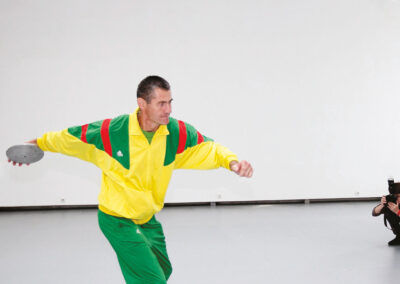
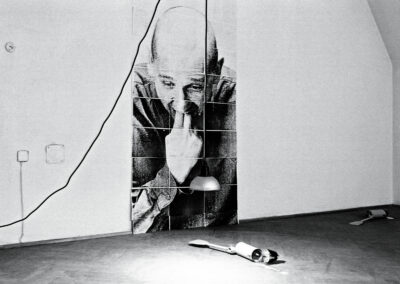
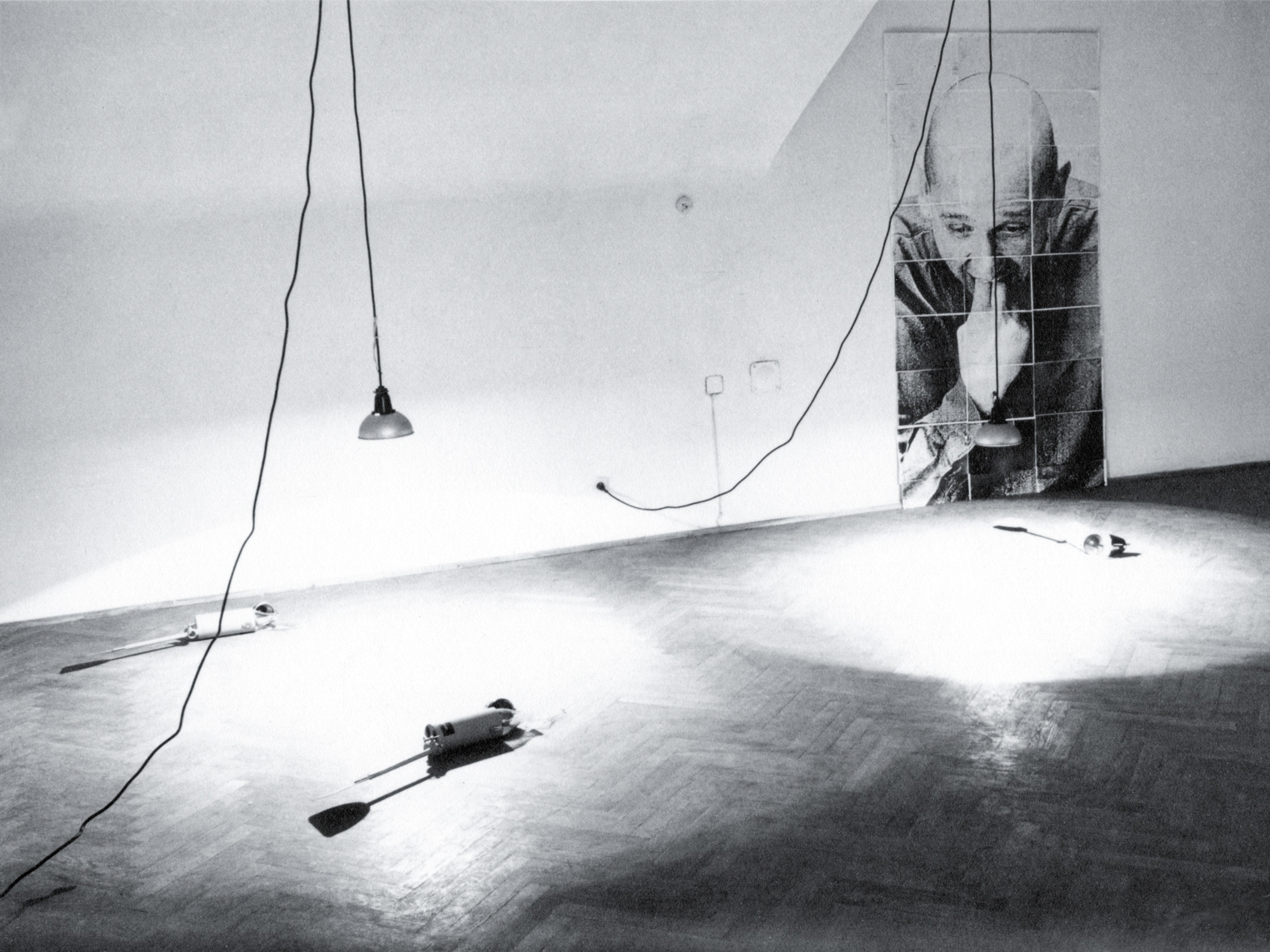
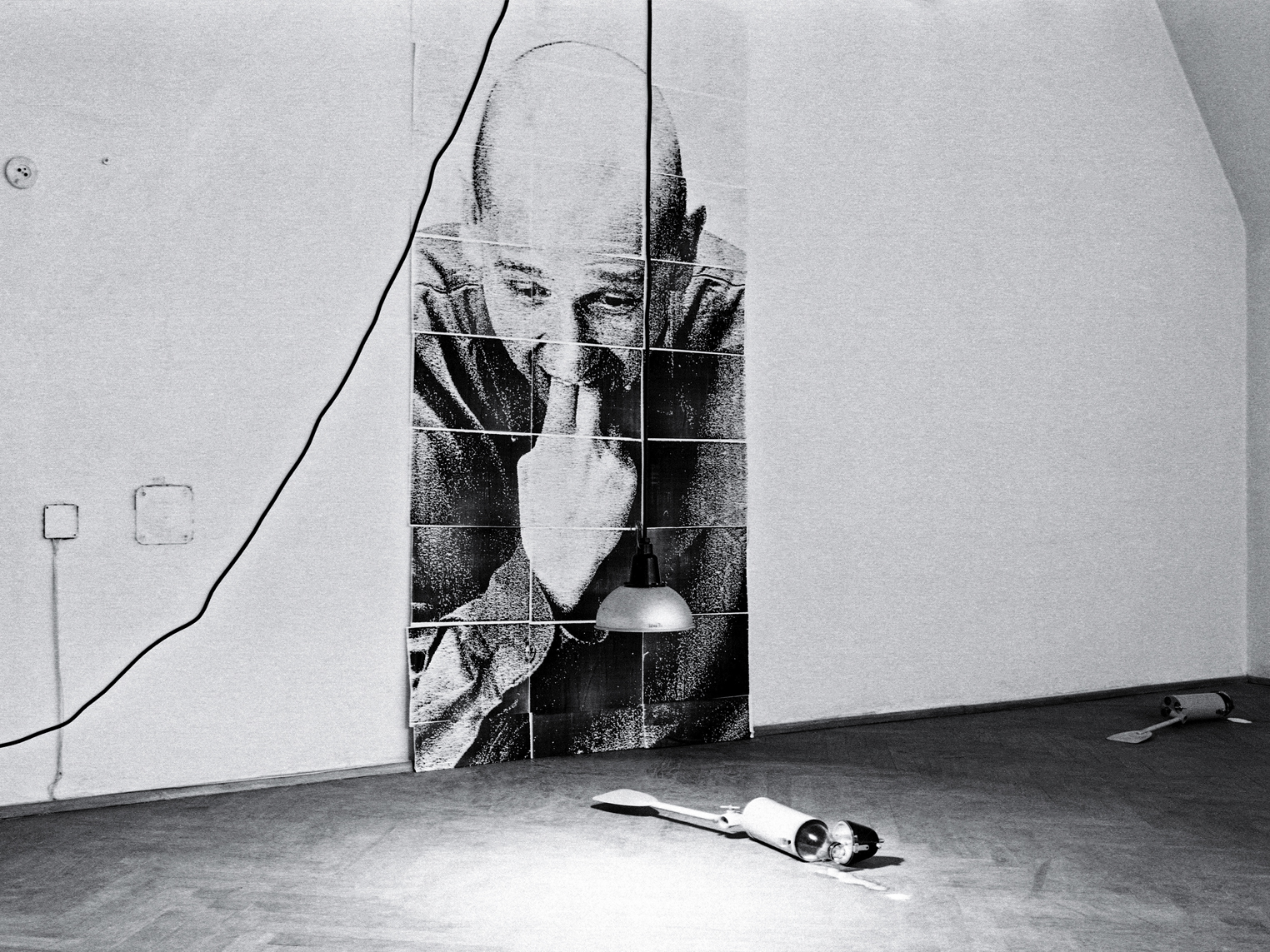
Paradoxically, by concealing the original impulse behind this work – as if hiding from the ‘authorities’ in his role as an architecture critic, or even protecting himself from them as an architect – Ozarinskas nevertheless reveals his own image in the installation in a vulnerable yet somewhat aggressive pose. The monumental scale of the portrait and the artist’s shaved head, which he himself compared to the fashion of ‘criminal elements’, created an unsettling sense of discomfort for the viewer.
‘Your installations, which are often the result of conceptual actions of varying duration, require some kind of verbal commentary. Unfortunately, the exhibitions contain no texts by the author,’ Grigoravičienė remarked during a conversation with Ozarinskas. ‘I tell a lot of people,’ the artist replied. At the time, within the still relatively small circle of interdisciplinary art enthusiasts, the complexities of architectural practice and Ozarinskas’s critical stance towards them were likely well known: the phenomena of Lithuanian architecture were perceived as an inevitable – indeed, in this case, a fourth – element of Ozarinskas’s work.
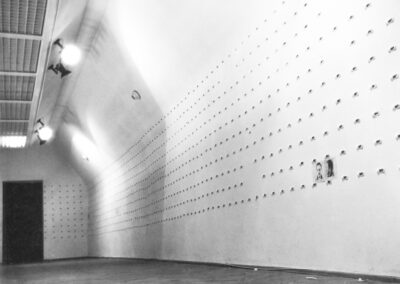
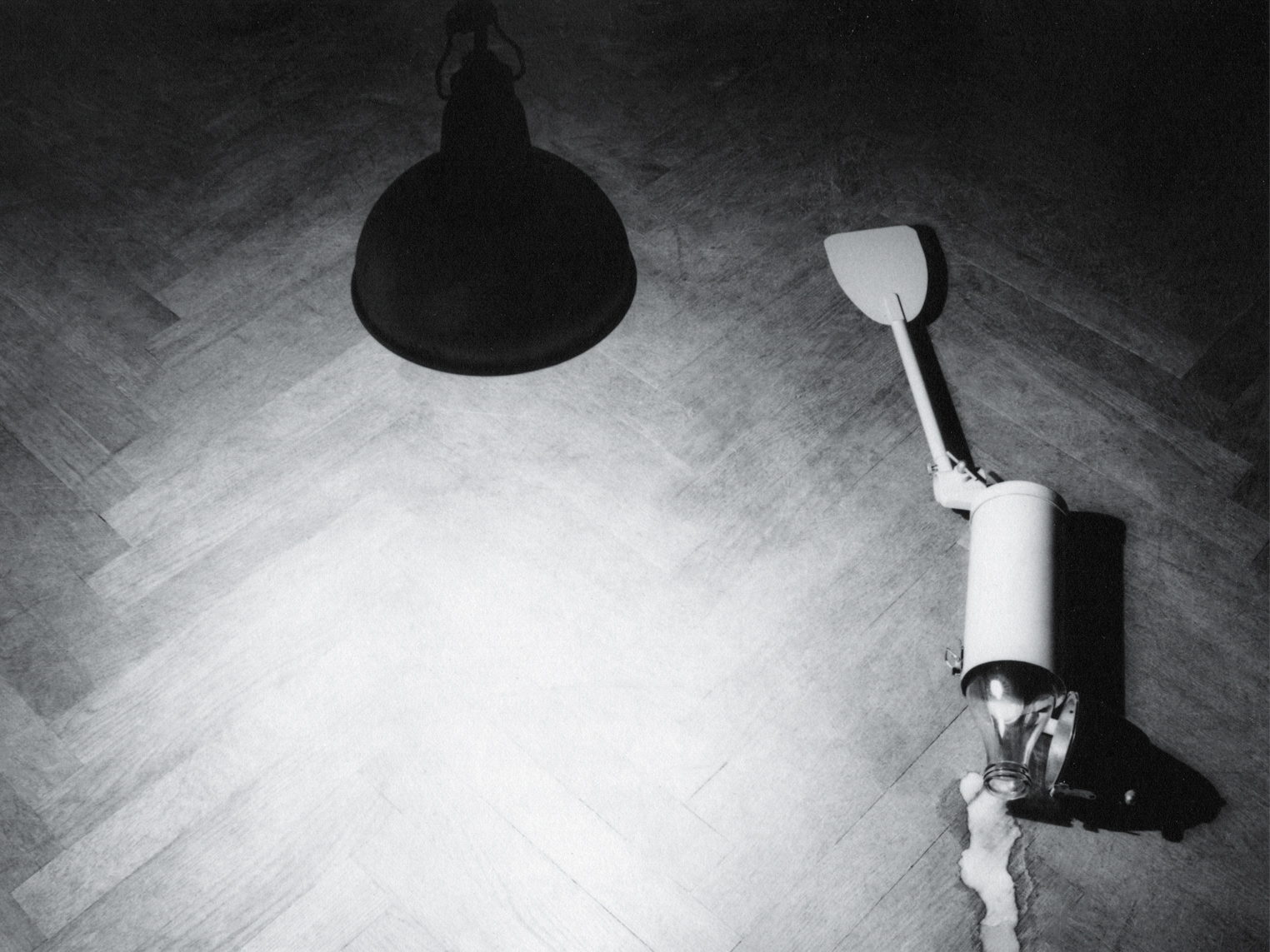
The title of the work, Diffusion, may be associated with the smell of sour milk, the despair that overwhelmed the artist, or the dominance of tastelessness and excessive bureaucratic demands in the architectural world – dominance he clearly recognised and which severely limited his professional opportunities. At the same time, it can also be understood as a deliberately anonymous creative format, chosen for its sound and openness to interpretation – much like the devices used in the installation to measure water samples.
[1] Erika Grigoravičienė, ‘Plieninis pabučiavimas’ (Steel Kiss), 7 meno dienos, April 14, 1995.
– Virginija Januškevičiūtė
Author: Valdas Ozarinskas
Photographer: Gintautas Trimakas
Exhibited at Arka Gallery, Vilnius
Art Projects