Elektrėnai Church, 1990
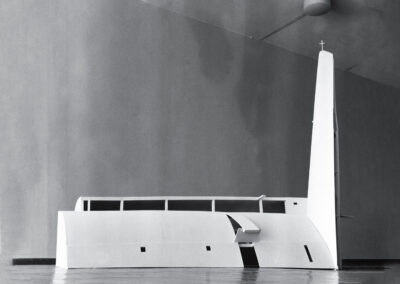
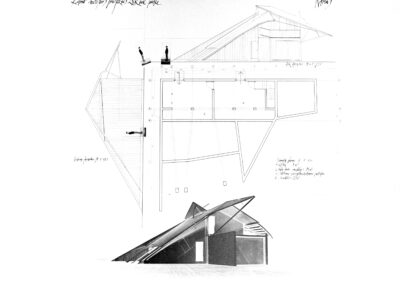
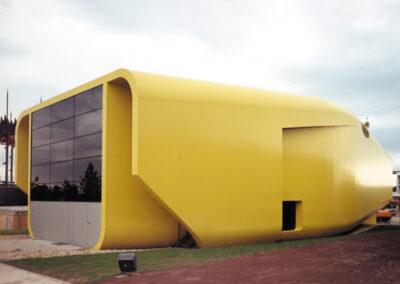
As a new industrial town, Elektrėnai long lacked a sacred centre. It was only in 1989 that the Parish of the Blessed Virgin Mary, Queen of Martyrs, was officially registered, followed shortly thereafter by the announcement of an architectural competition for a new church. The winning proposal was submitted by architect Henrikas Kęstutis Šilgalis, who offered a modern concept that did not stray far from tradition – a synthesis of new materials, visually expressive forms, and a clearly recognisable church silhouette.
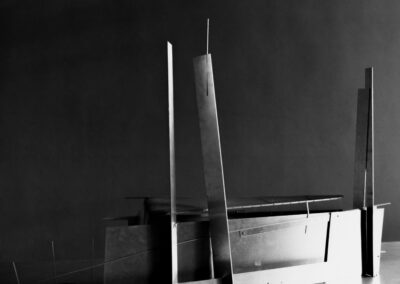
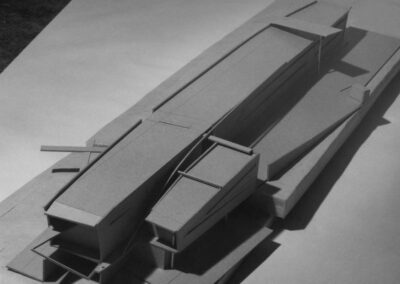
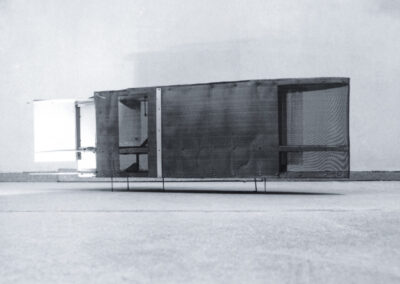
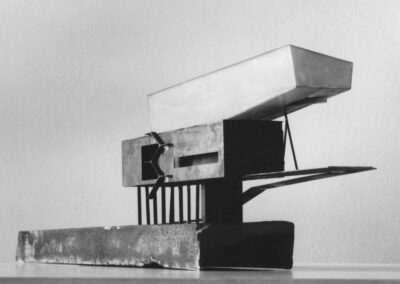
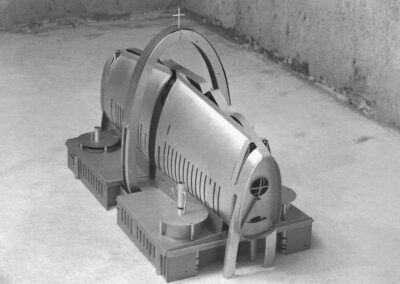
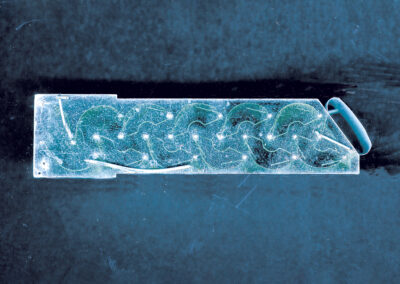
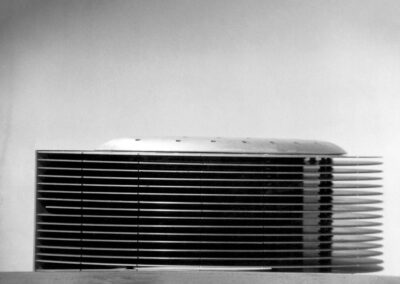
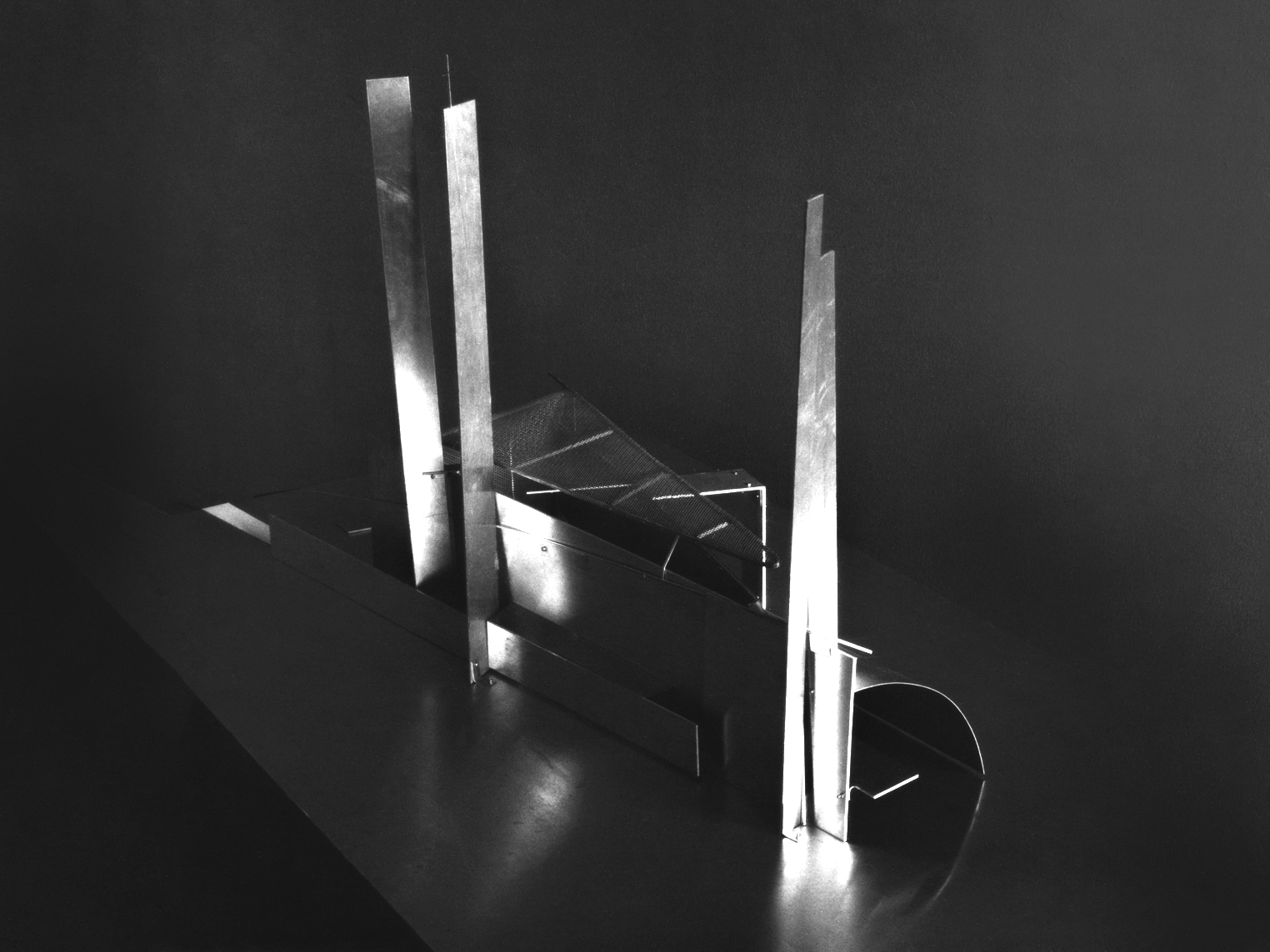
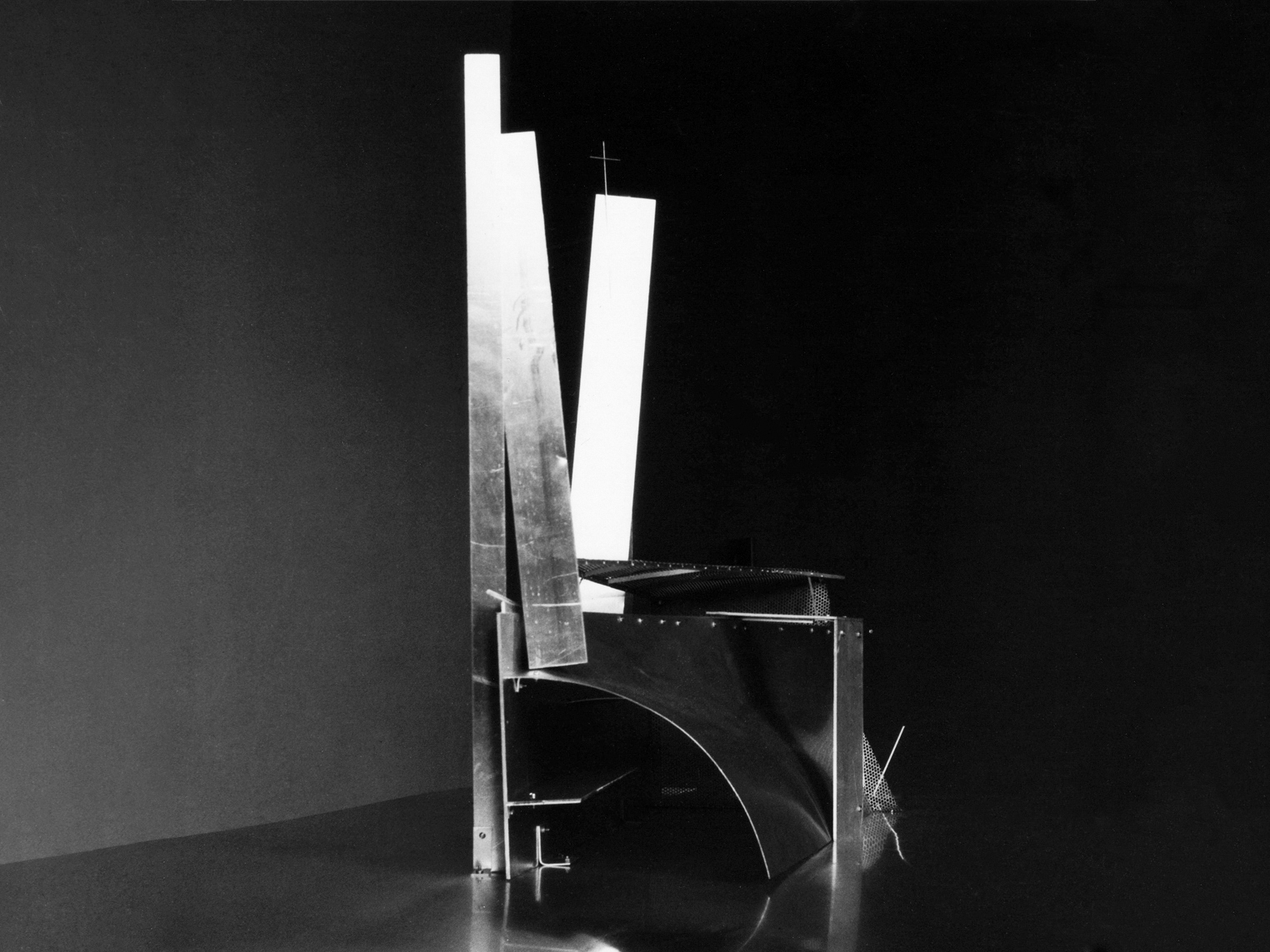
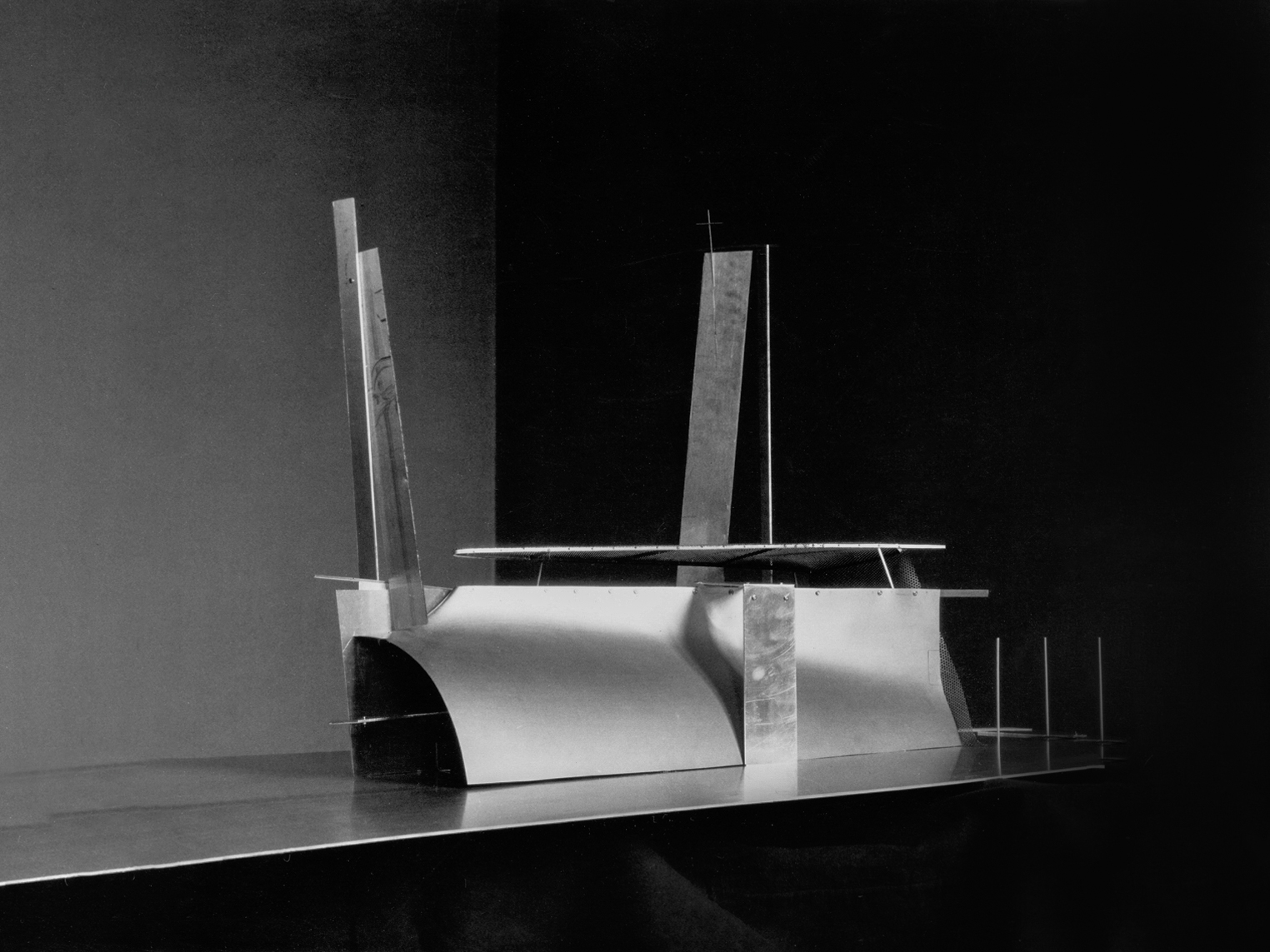
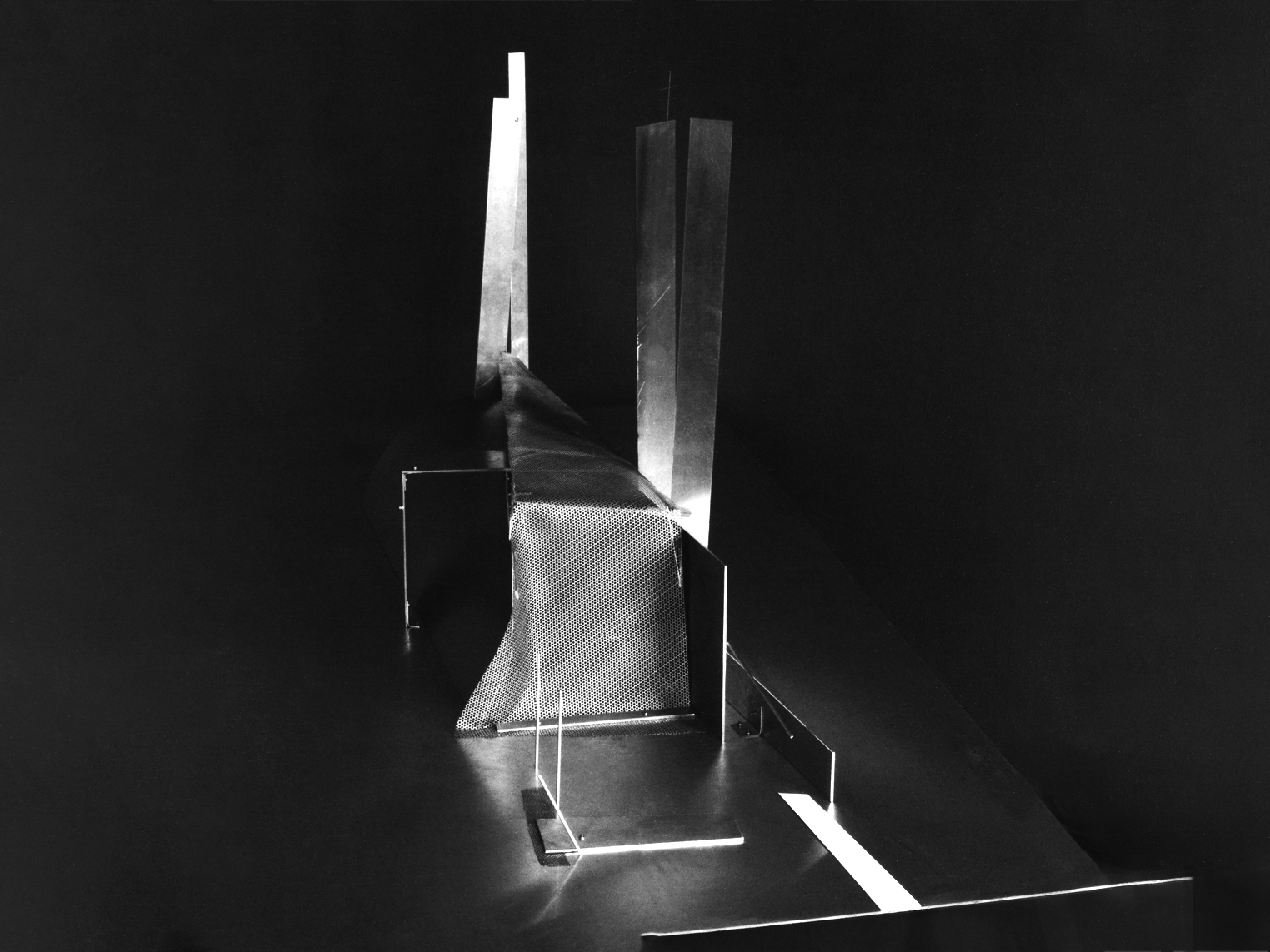
The architectural model submitted by Valdas Ozarinskas and Gintaras Blažiūnas rethought the codes of sacred architecture in a far more radical manner. Composed of metal sheets, wire, and perforated surfaces, the model resembled an architectural sculpture rather than a literal representation of a future church. Light, reflections, and materiality generated an almost kinetic impression, calling into question established practices of Lithuanian sacred architecture. Here, sacredness was sought not through traditional tectonics or iconography, but through a meditation on the ephemerality of surfaces and the abstraction of line and space.
The graceful verticals, imbued with the poetics of the machine age, were likely inspired by Ivan Leonidov’s 1927 proposal for the Lenin Institute in Moscow, while also resonating ideologically with experiments in deconstructivist architecture. Although the forms in Ozarinskas and Blažiūnas’s project are more laconic, the dynamic asymmetry of the planes invites comparison with Coop Himmelb(l)au’s 1985 proposal for Hamburg, commonly known as the Hamburg Skyline.
– Vaidas Petrulis
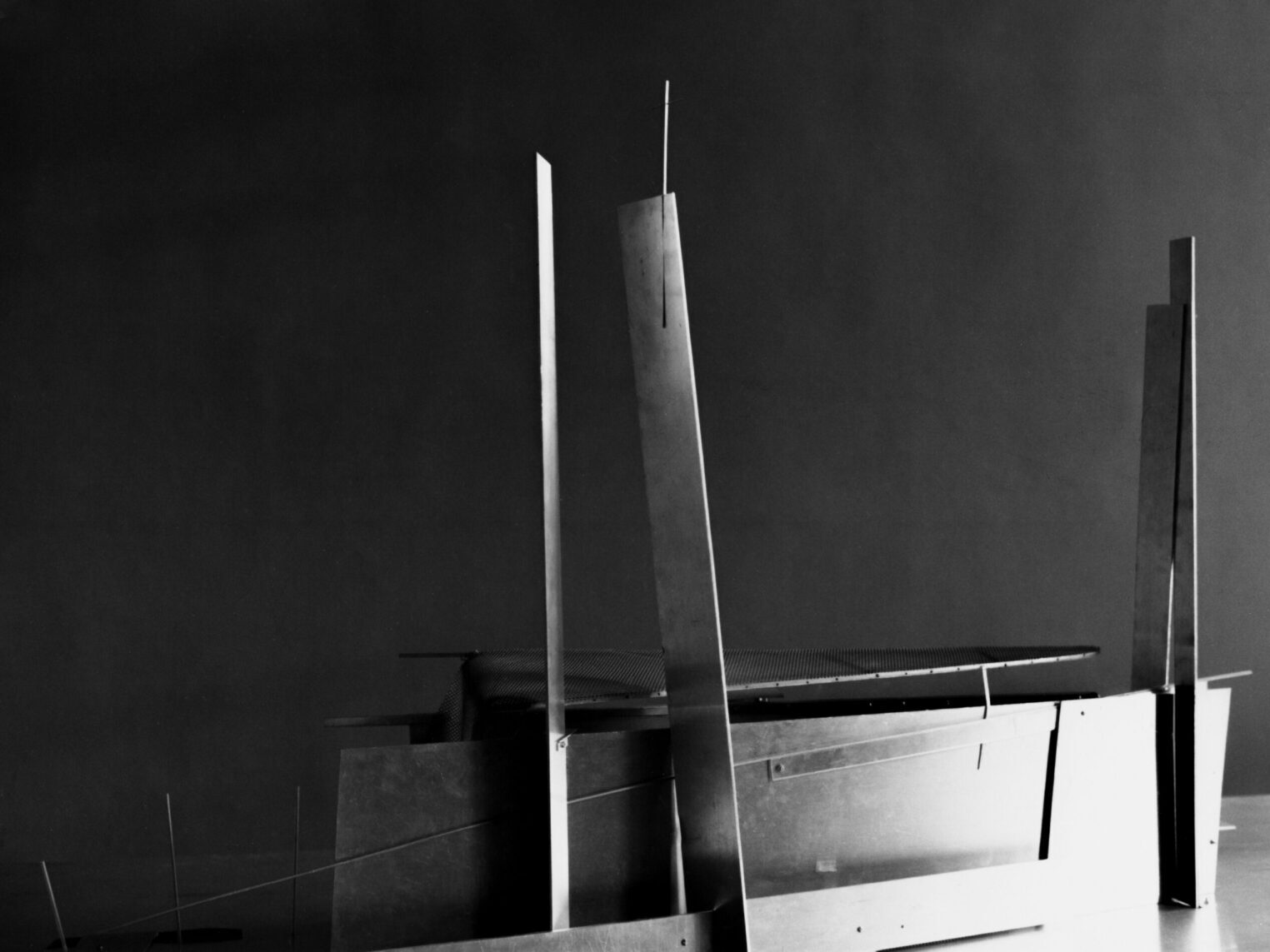
Authors: Gintautas Blažiūnas, Valdas Ozarinskas
Photographer: Remigijus Pačėsa
Source:
Paulius Kulikauskas, ‘Akis su Dievu’, Krantai, No. 18, 1990.
Architecture