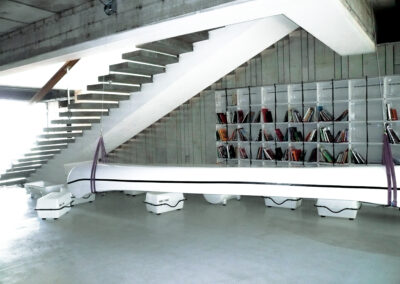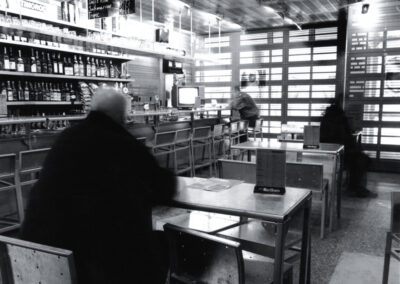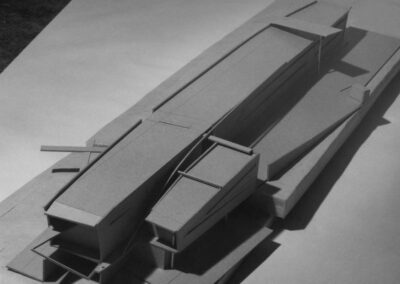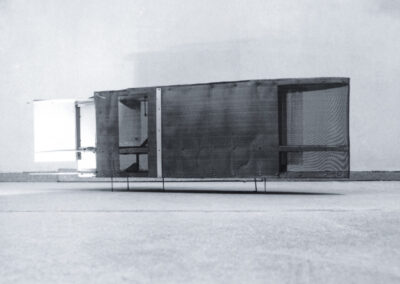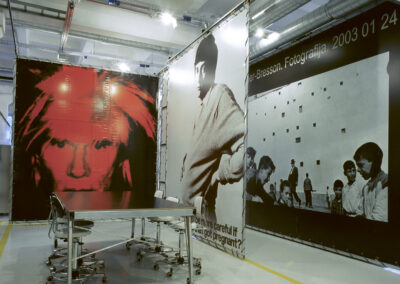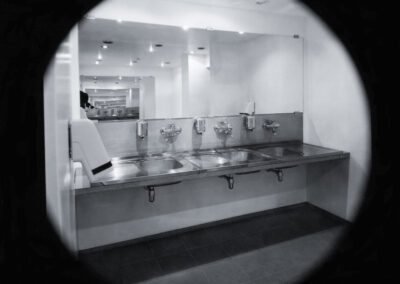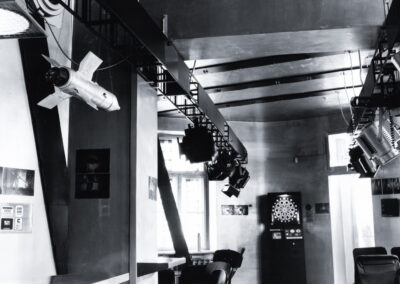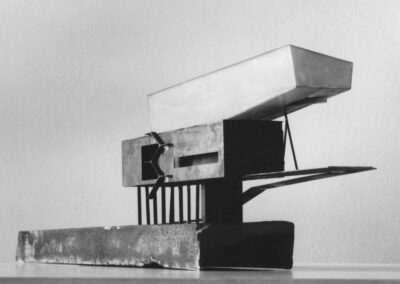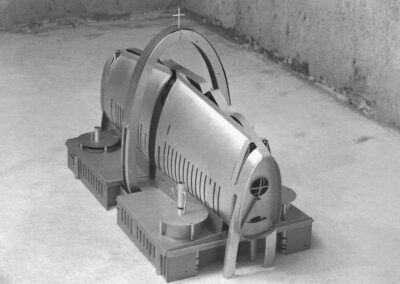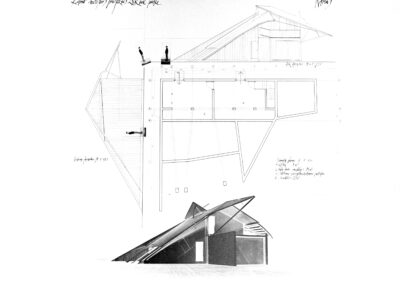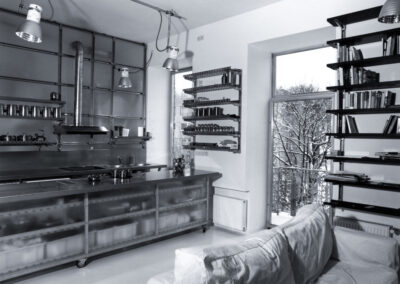
Apartment Interior, 1999
Le Corbusier’s famous statement, ‘a house is a machine for living in’, is perhaps most clearly articulated in interior spaces, where architecture becomes everyday, familiar, and physically tangible – more so than at the scale of the city. At the beginning of the twentieth century, as modernist ideas reshaped social life, interiors became a kind of litmus test, reflecting shifts in society’s architectural mentality. The introduction of light and fresh air into domestic space, together with calculations of spatial efficiency based on the dogma of “form follows function,” found expression in iconic examples such as the Frankfurt Kitchen.
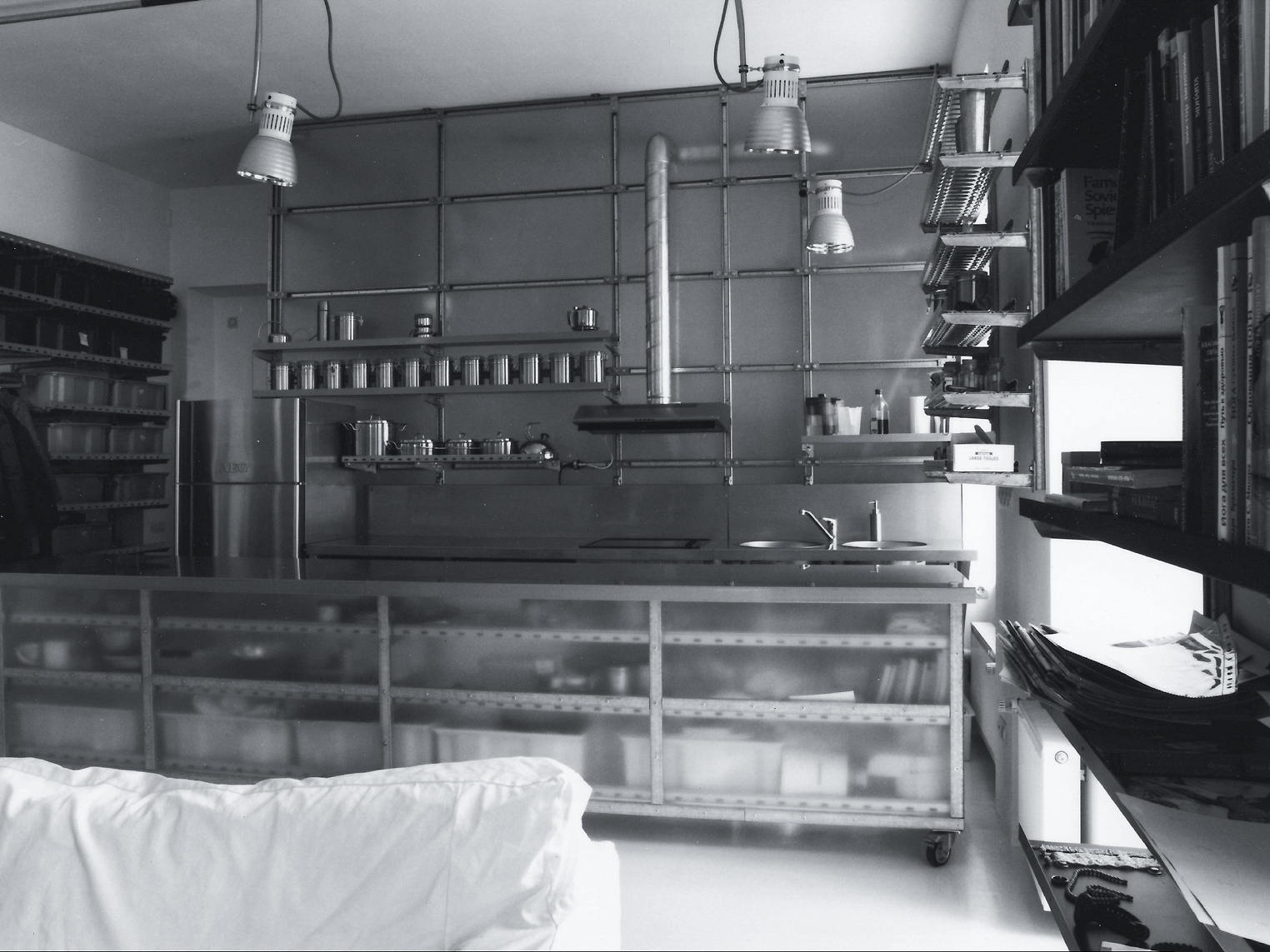
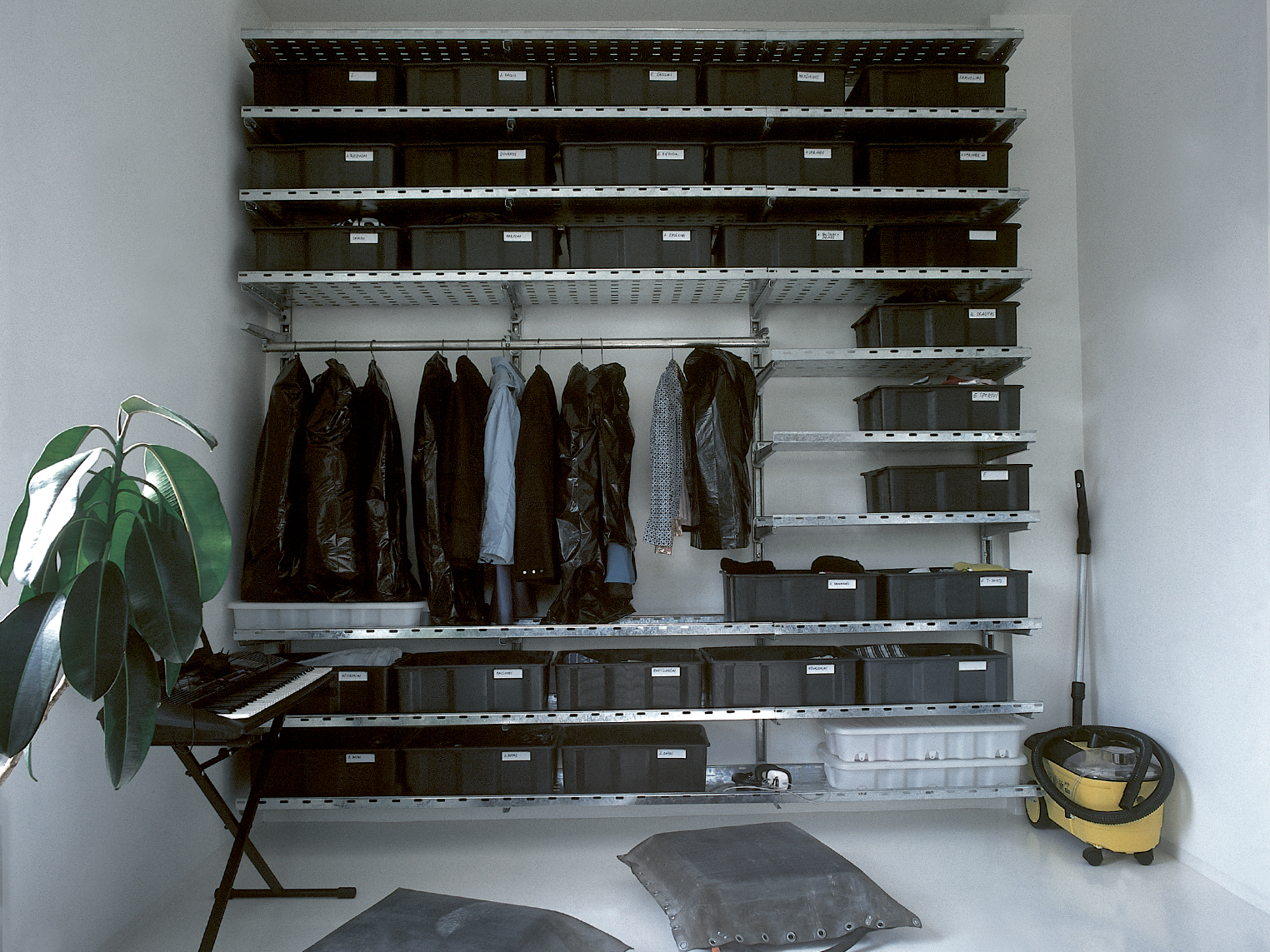
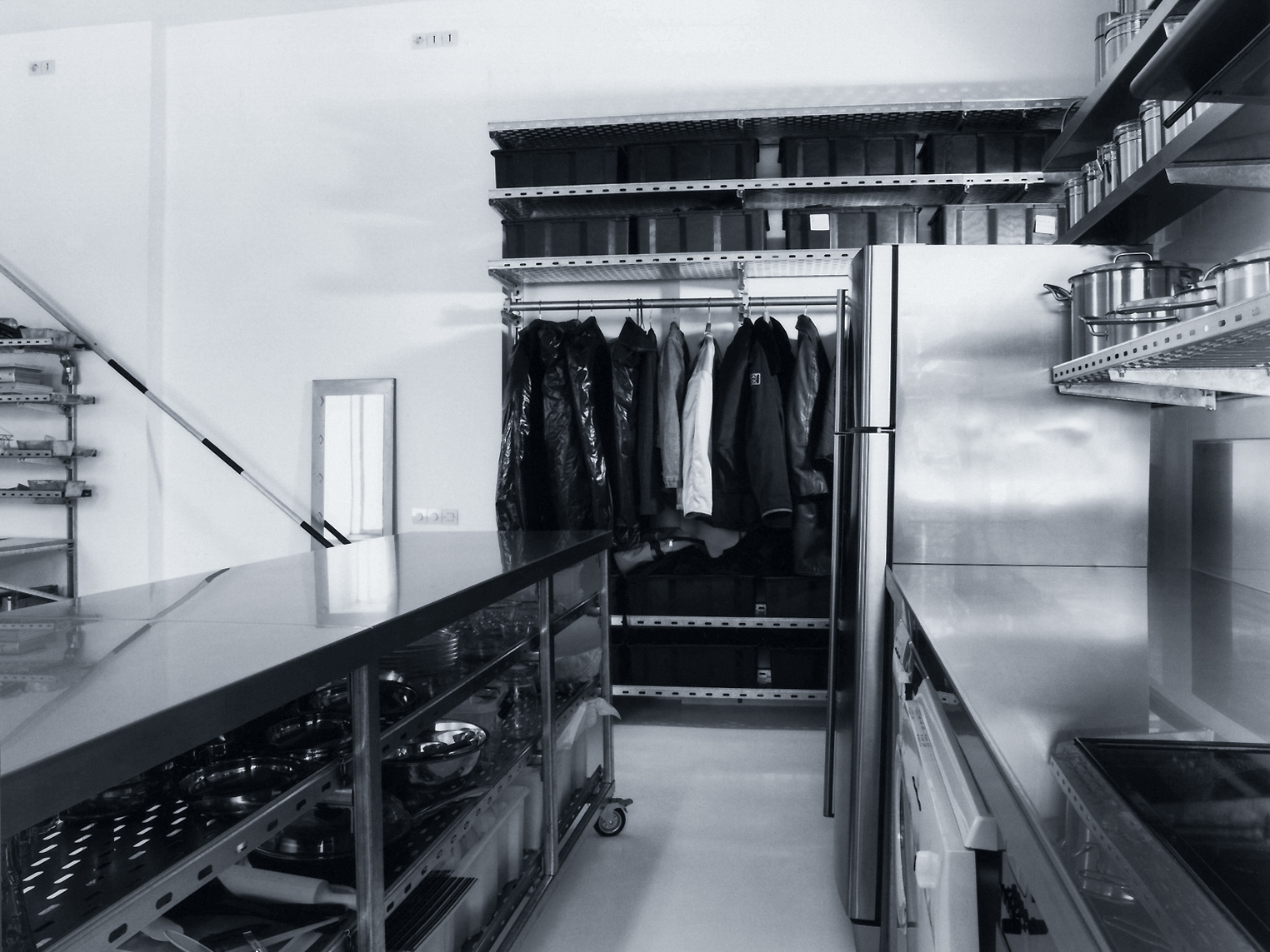
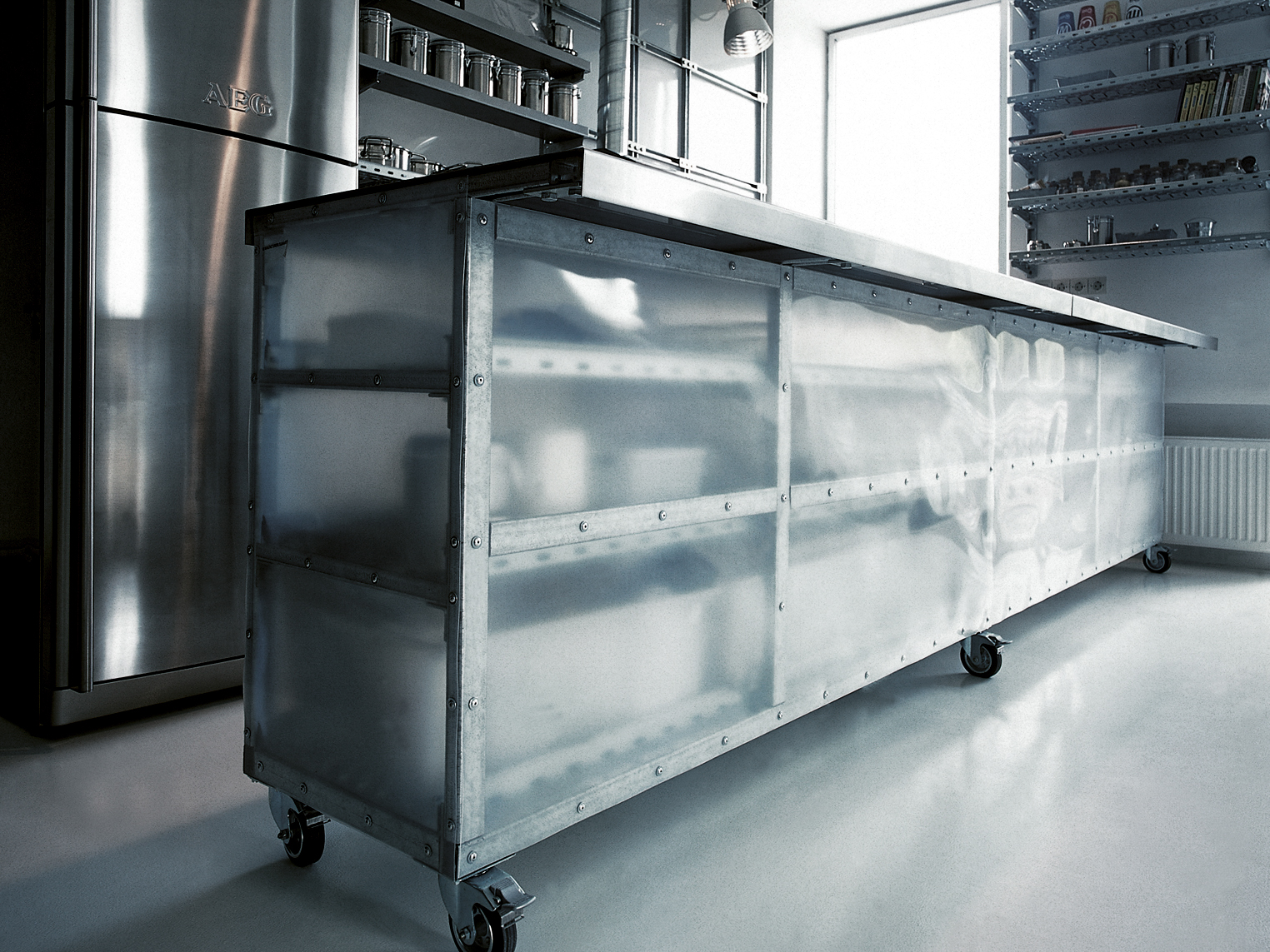
Viewed through this historical lens, the high-tech aesthetic of the apartment interior designed by Valdas Ozarinskas and Aida Čeponytė at Krivių gatvė. 50 in Vilnius suggests a late-twentieth-century return of the modernist idea of the ‘machine for living in’. The project once again calls into question prevailing social attitudes towards the aesthetics of domestic space. Not only are technical metal surfaces and openly exposed structures employed, but the very concept of dwelling is grounded in the principle of continuous transformation, typical of production environments: most of the furniture is mounted on wheels. The project was presented in 1999 at the group exhibition Butas’99, curated by Algis Lankelis.
– Vaidas Petrulis
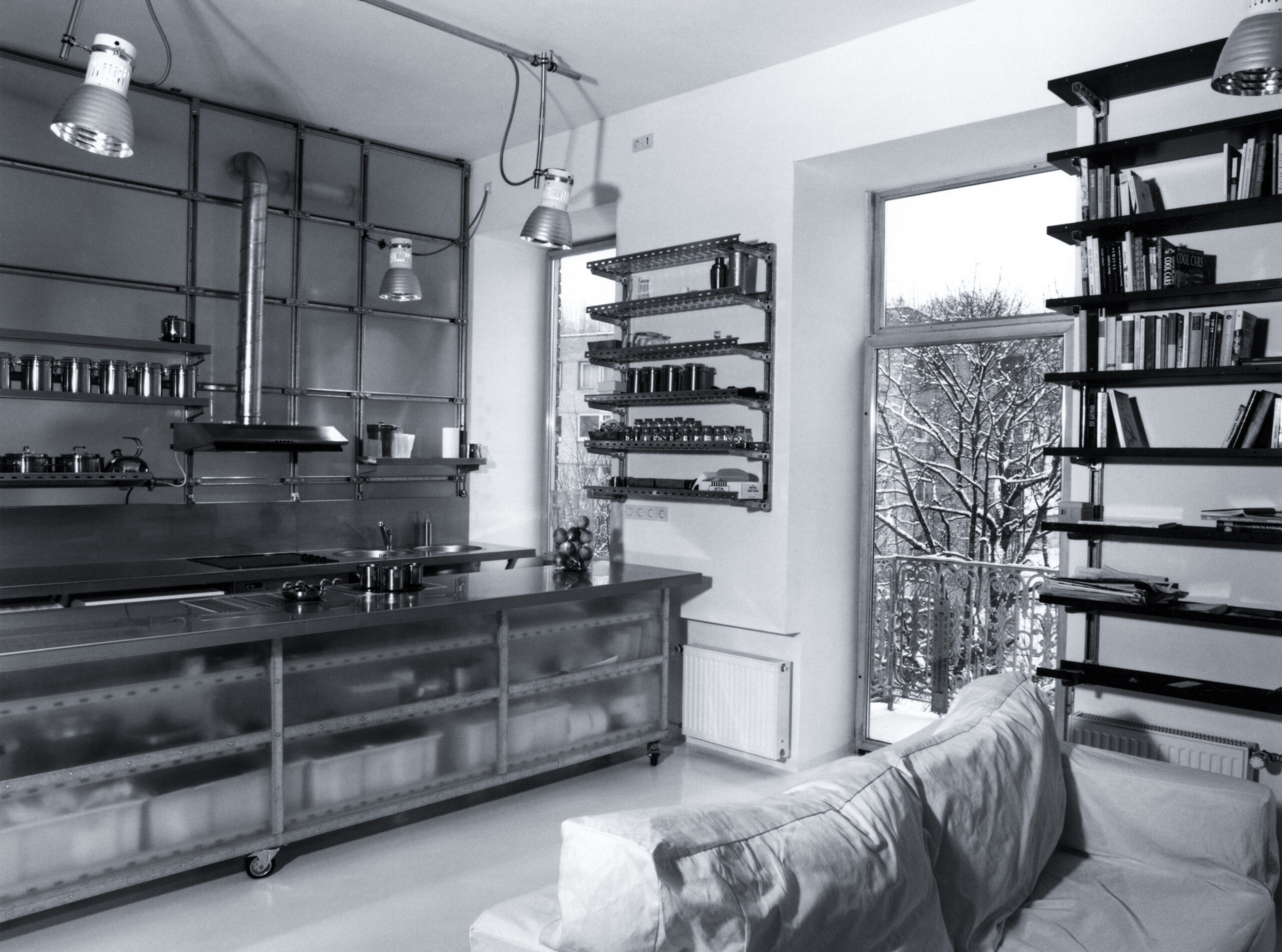
Authors: Aida Čeponytė, Valdas Ozarinskas
Photographer: Arūnas Baltėnas
Sources: Eglė Jaškūnienė, ‘Juodai baltas butas: įvaizdis ar realybė’, Namas ir aš, 2002, no. 3, pp. 4–9.
Architecture