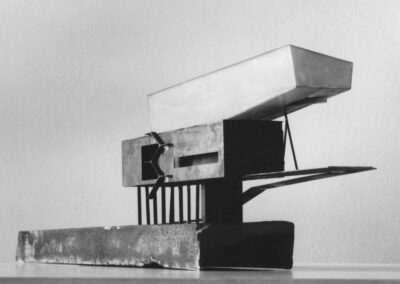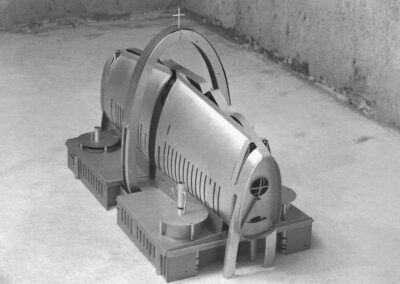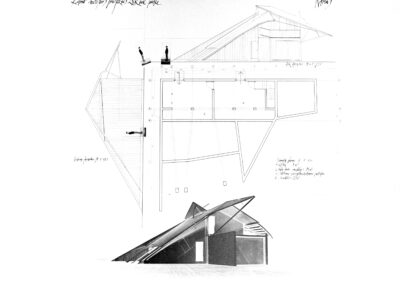
Café NATO’s, 1995
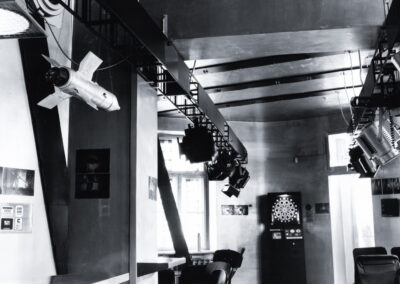
Billy Wilder’s film Some Like It Hot (1959) opens with a now-classic scene in which gangsters conceal their weapons in musical instrument cases. This detail can be read metaphorically: a case intended for music becomes a cover for violence – notes replaced by bullets, melodies by bursts of automatic gunfire. In 1995, this cultural reference crossed geographical and social boundaries and resurfaced in the capital of a small Eastern European country newly awakened to the capitalist world – the interior of the café NATO’s[1], designed by architect Valdas Ozarinskas and designer Aida Čeponytė. Here, the art of war and the art of music found an architectural echo.
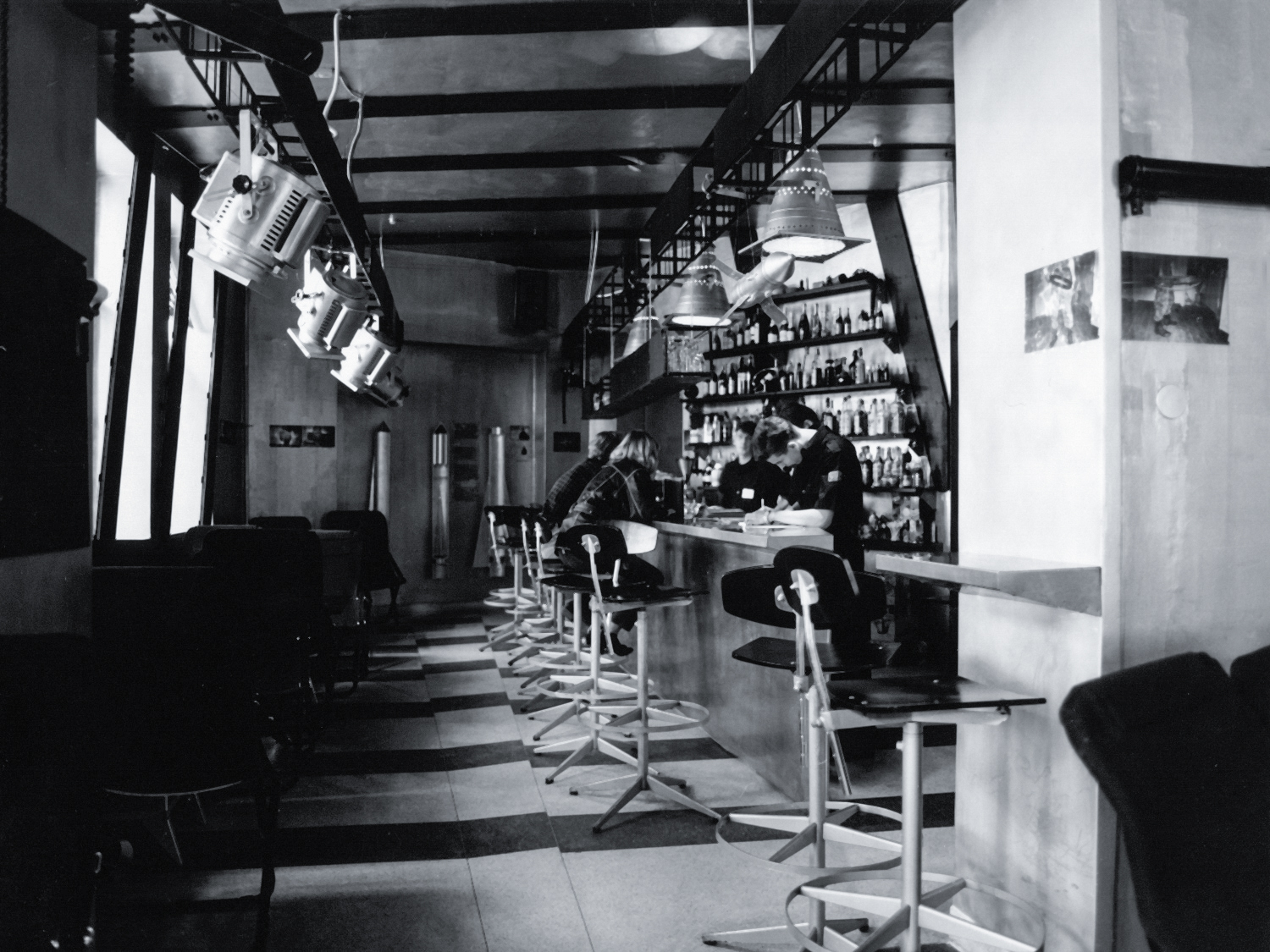
NATO’s interior is postmodernly layered, as if its authors feared a space without symbolic charge. Even the name – suggested by essayist and art critic Ernestas Parulskis[2] – brings together seemingly incompatible realms: music[3] and the NATO military alliance. Within the interior, this synthesis unfolds through material choices and spatial installations. One of the most insightful reflections on the café’s design comes from art historian Elona Lubytė, who observed:
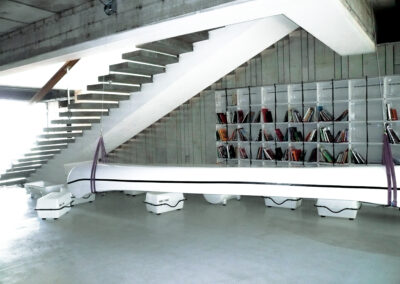
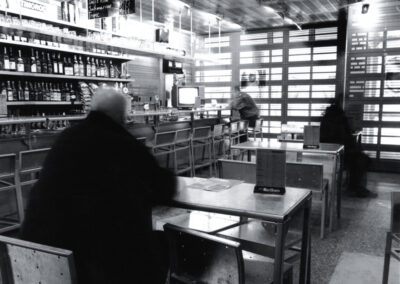
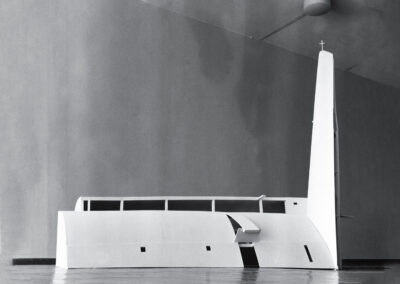
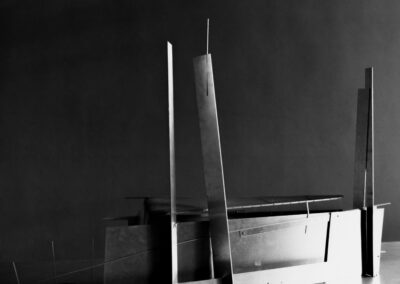
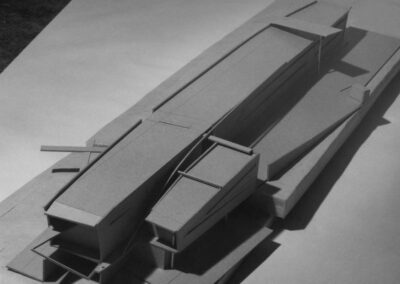
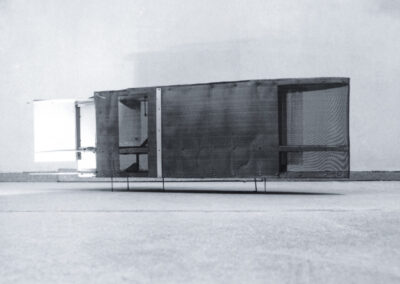
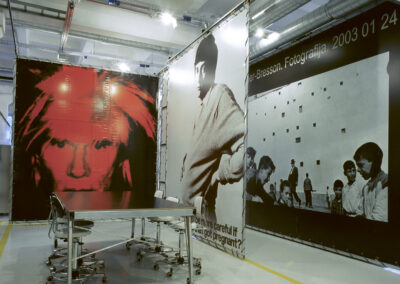
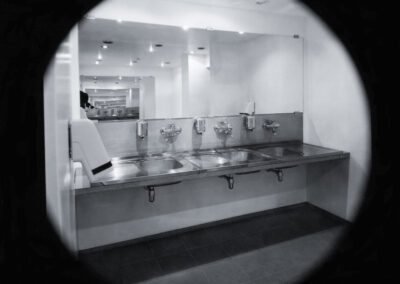
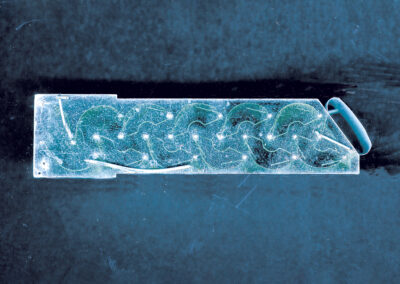
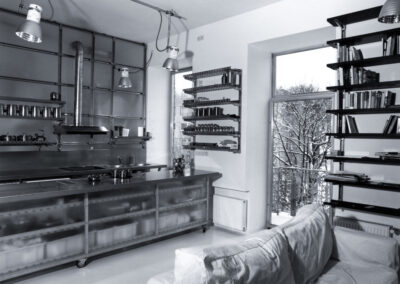
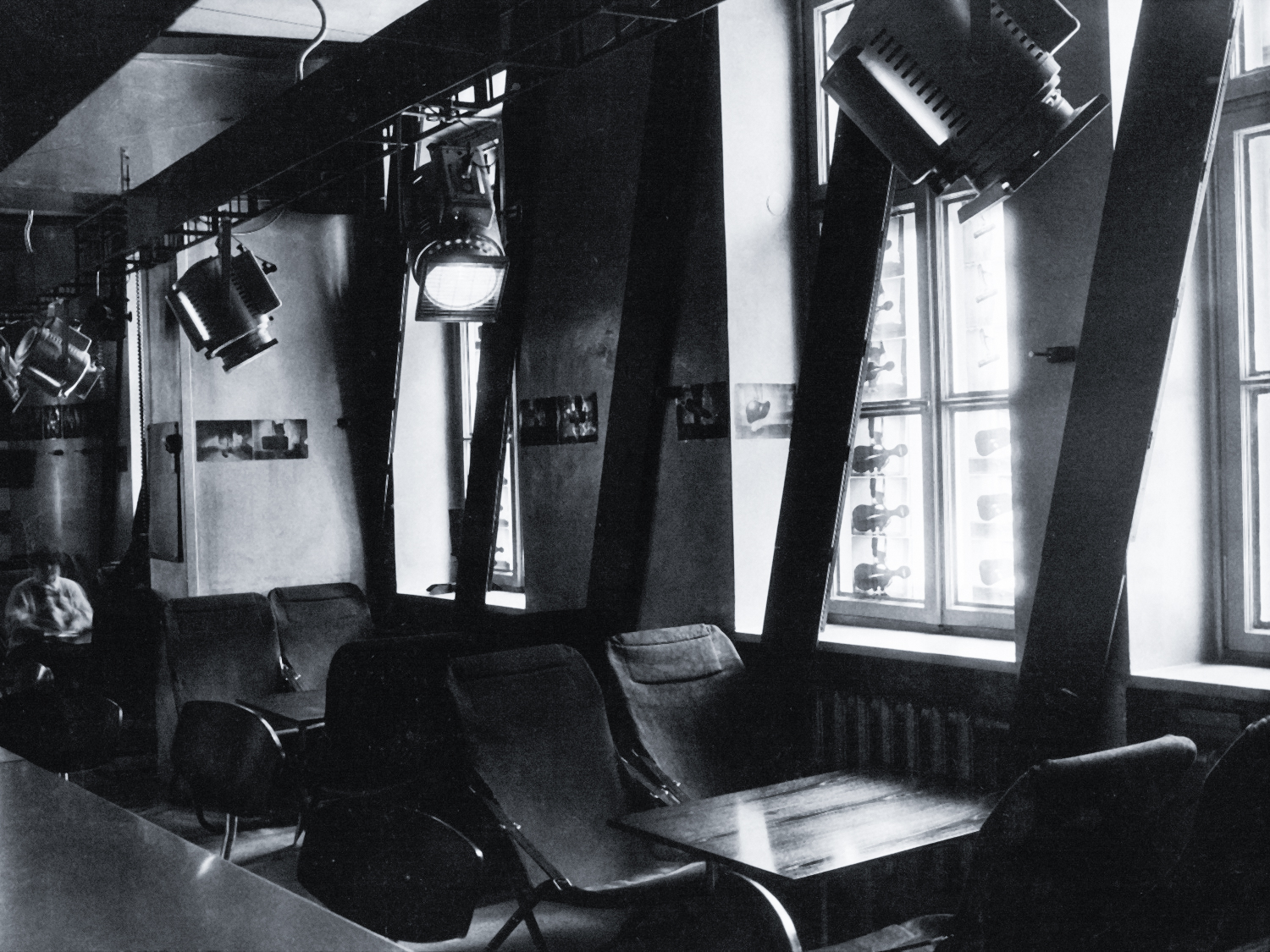
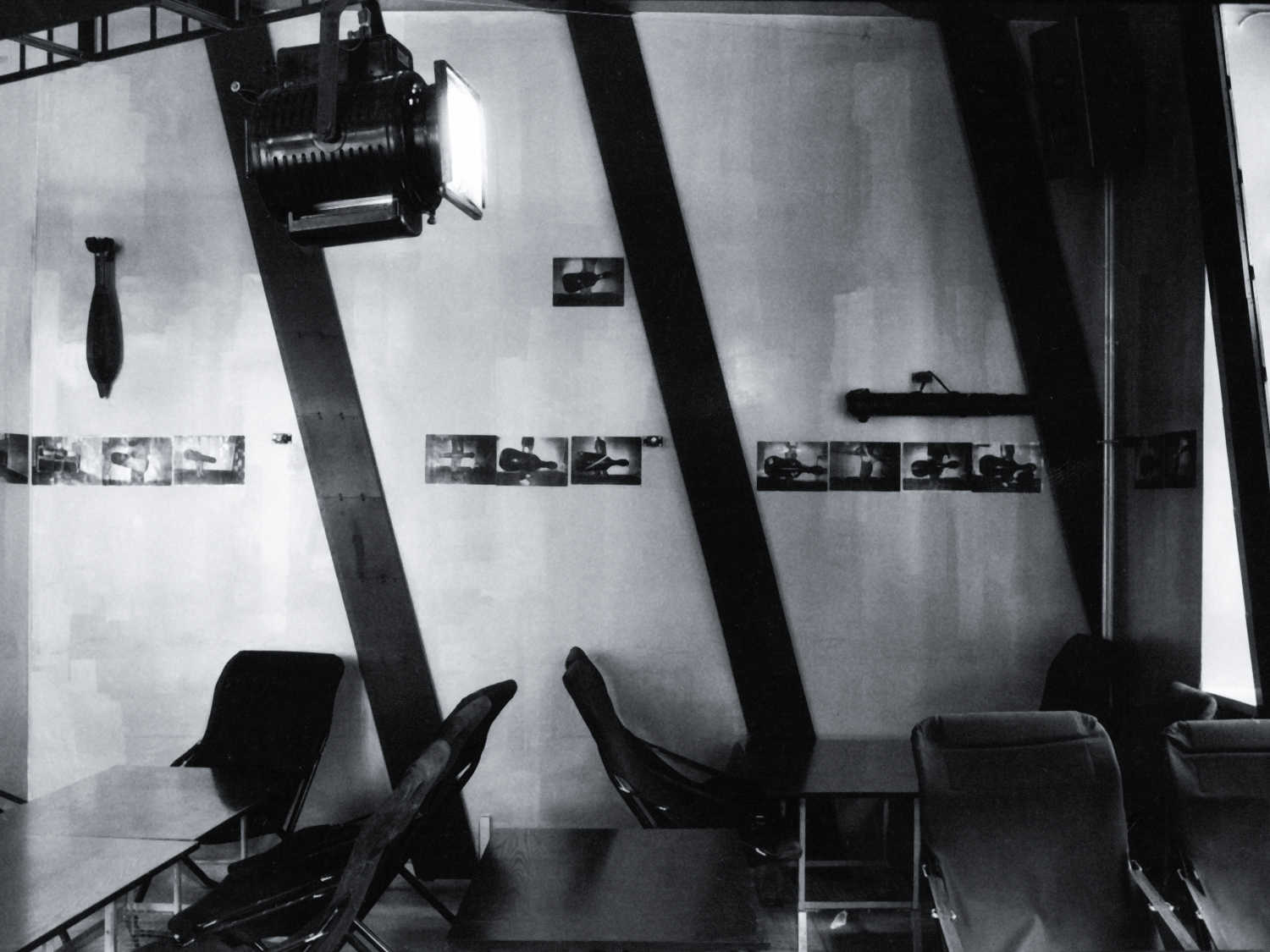
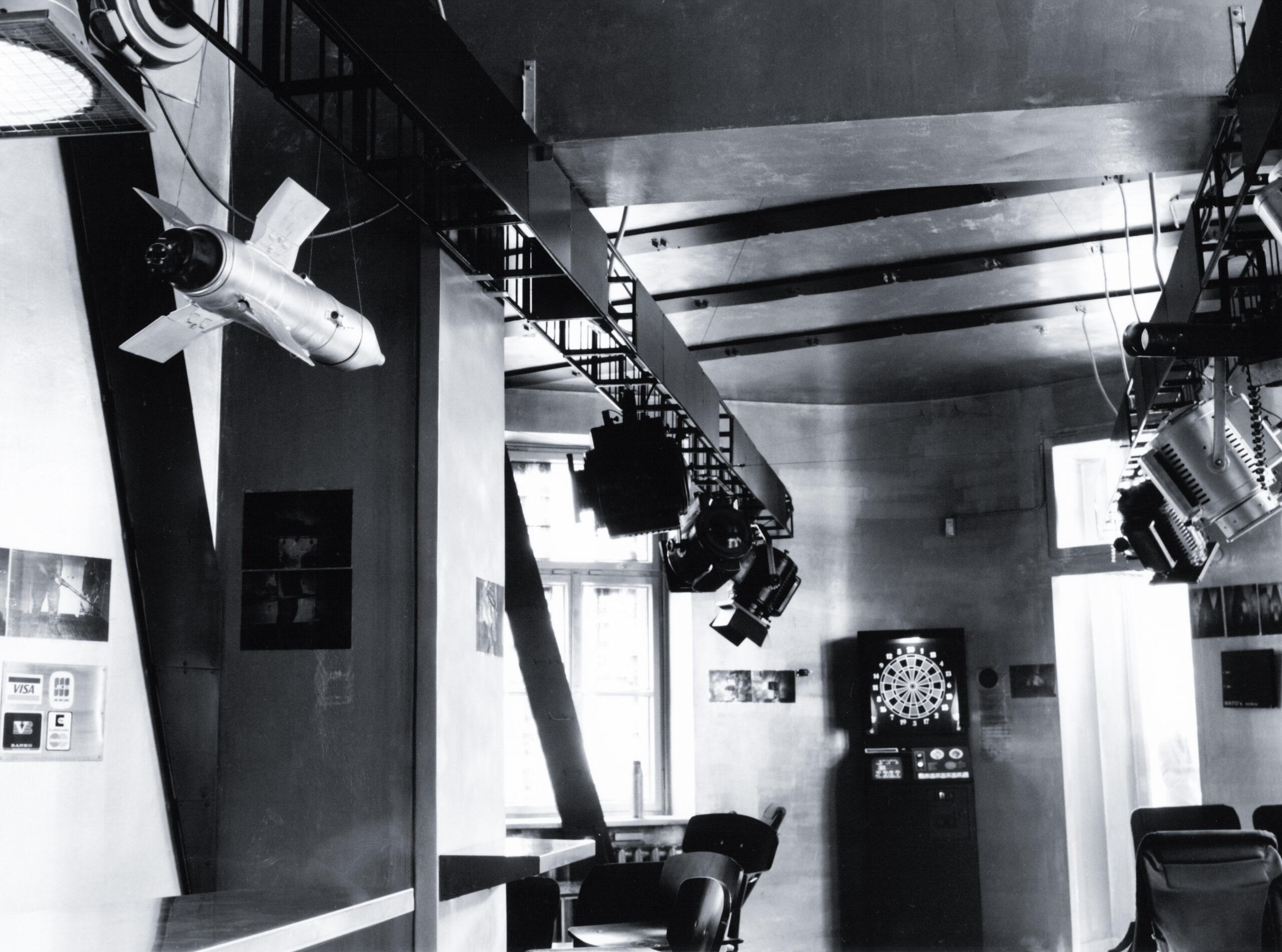
An associative, enclosed bunker-like space is created through the deliberate imitation of solid metal cladding: heavy doors, a bar covered with steel plates. The rhythmic contrast of the black steel environment, which gives the space a theatrical quality, is reinforced by diagonal (wrapping) black stripes applied to the walls at modular intervals. This rhythm is echoed in the floor pattern, the matching black furniture, the ‘uniforms’ of the service staff, and the didactic antique font of the alcohol-consumption rules displayed opposite the bar, producing a positive two-tone effect. Transposed into an intimate interior, the pavilion chandeliers[4] resemble theatrical props. <…> Military attributes are integrated into the space: training weapons, their cases, and an installation dedicated to Kazimieras Simonavičius’ rocket.[5] The window panes are obscured by separate wall sections covered with a positive ‘running newsreel’ – ‘portraits’ of anonymous (pre-war) militarists: sturdy men and graceful women standing with cases for military weapons and musical instruments.[6]
The artistic ambition to step beyond the exhibition hall resonated with one of the owners’ desire to find a “counterbalance to the white plastic prop-like interiors.”[7] The resulting bold, minimalist black-steel bar interior became the enfant terrible of an environment charged with social and political tension – provocative and unsettling, opening up new possibilities for artistic expression while simultaneously operating within the laws of wild capitalism. The café was also visited by NATO officers; LRT archives, for example, preserve a 1996 interview with the then NATO Secretary General Javier Solana, recorded inside the café.[8] After attracting significant public attention and costing 120,000 litas – a considerable sum at the time – the interior was “uninstalled” just a year later, as if it were a temporary gallery exhibition. This physical ephemerality may be read as yet another metaphor, perhaps unconsciously encoded but still unsettling today: the masculine essence of NATO, saturated with symbolism, iron, attributes, and assertions of power, can, unfortunately, prove highly fragile.
[1] In Lithuanian, the word ‘natos’ means ‘notes’, making the name of the café based on a wordplay – translator’s note.
[2] Lazdanienė, J. ‘Susipažinkite – Valdas Ozarinskas. „Užsakovų jau seniai nebeauklėju’, Laisvalaikis, 7 May, 1998, p. 5.
[3] The emergence of the musical leitmotif was likely also influenced by the fact that the café premises were rented from the Philharmonic Society.
[4] Dating from 1961, Russian theatre chandeliers – produced after American designs and restored by interior designer Ozarinskas – remain from the former Pasažas tavern.
[5] Simonavičius K. 1650, Artis magnae artilleriae.
[6] Lubytė, E., NATO’S – militarizmo metaforos interjere: a manuscript. From the archive of the Valdas Ozarinskas Foundation.
[7] Šimkus, V. ‘Smuklė iš plieno’, Verslo žinios, 3 August, 1995, p. 4.
[8] Januškevičiūtė, V., ‘Interiors’, An Architect without Architecture? Valdas Ozarinskas Retrospective: Exhibition Guide, Vilnius: Contemporary Art Centre, 2018, 17.
– Vaidas Petrulis
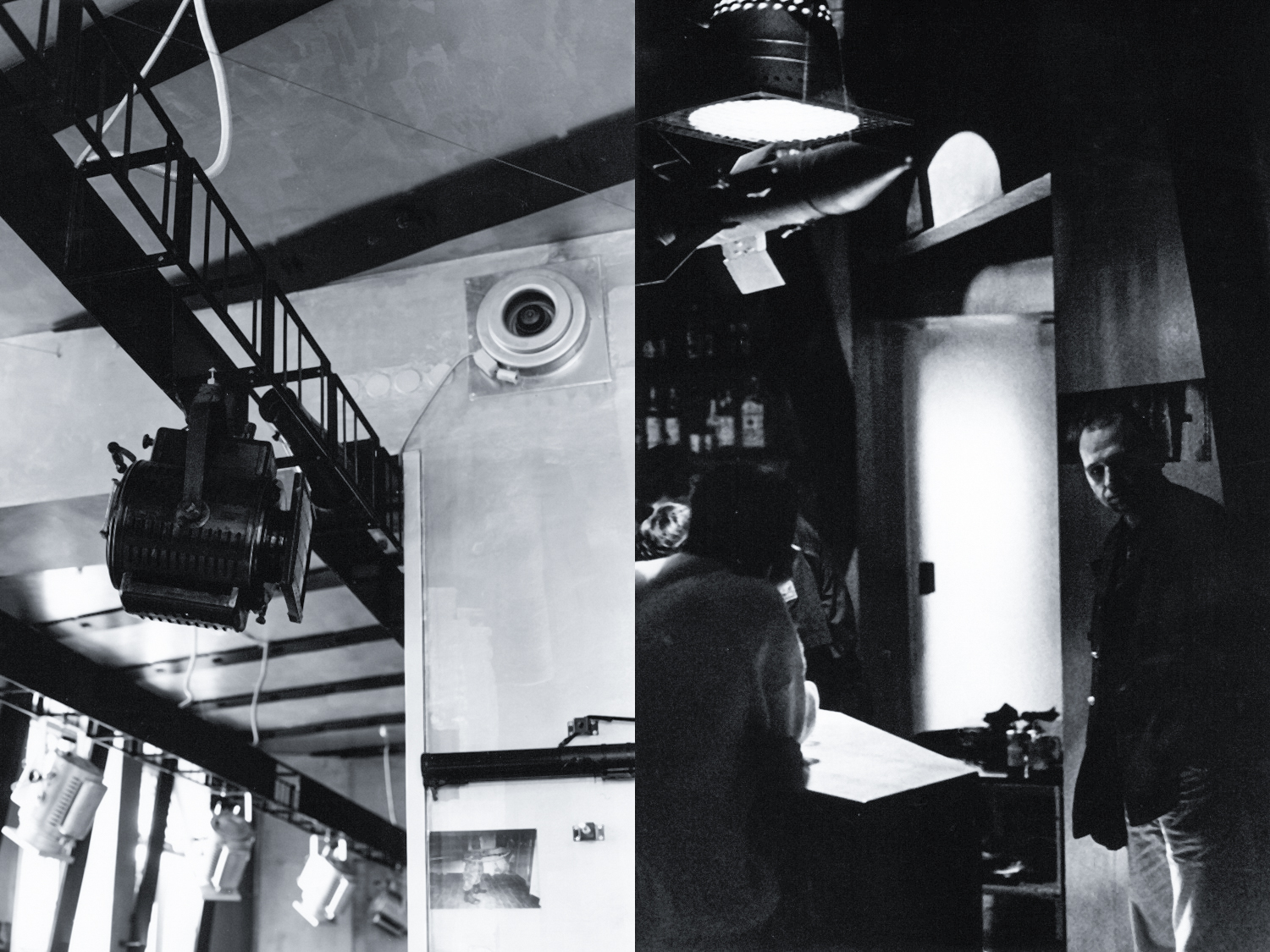
Authors: Valdas Ozarinskas, Aida Čeponytė
Photographers: Arūnas Baltėnas, Gintautas Trimakas
Realised on Pasažo gatvė, Vilnius. The interior has not survived.
Architecture