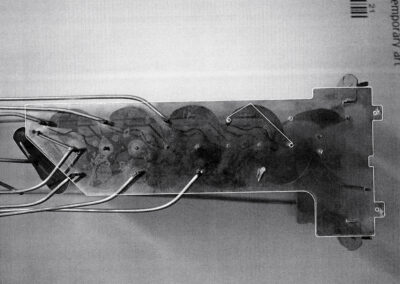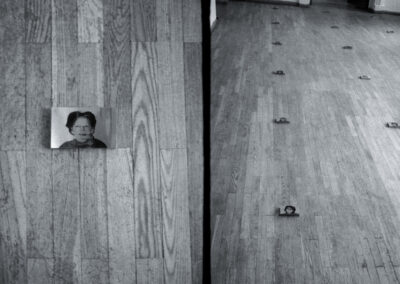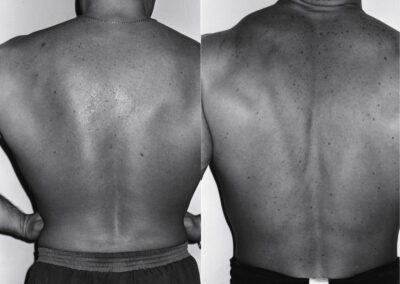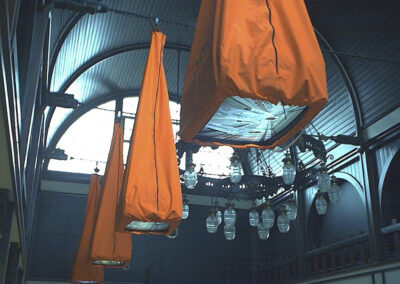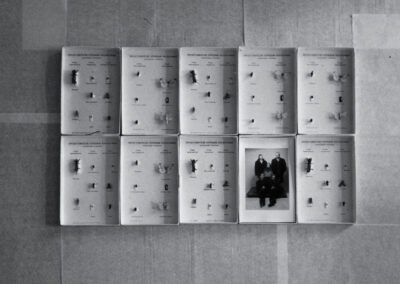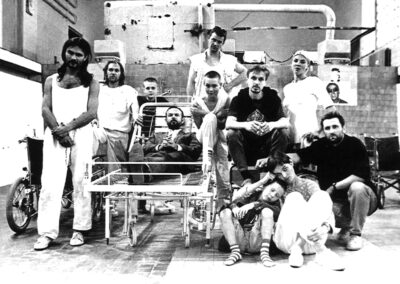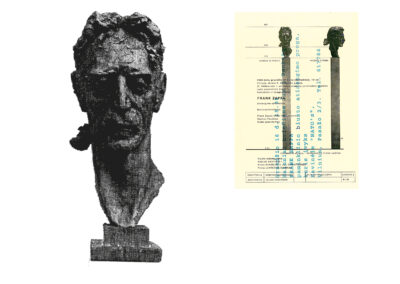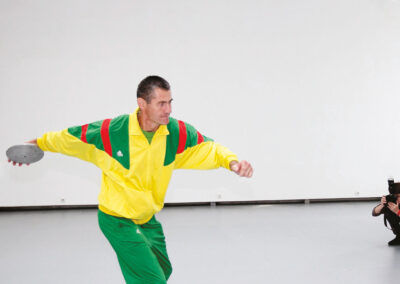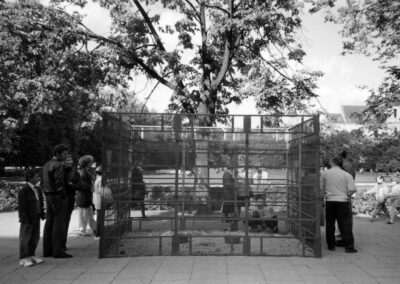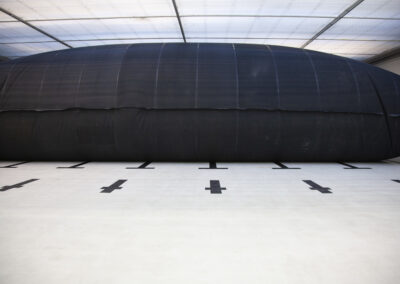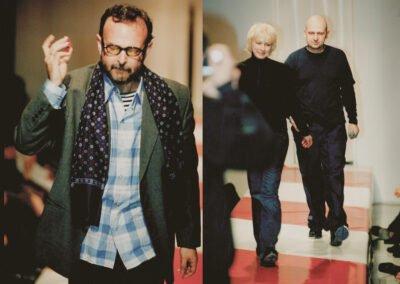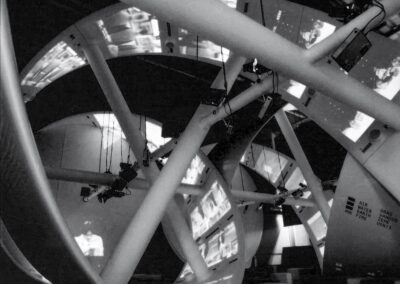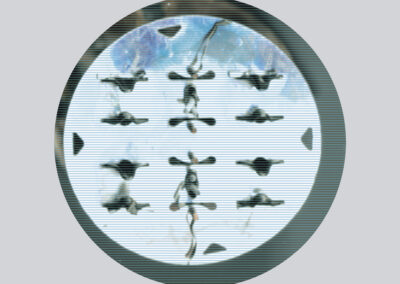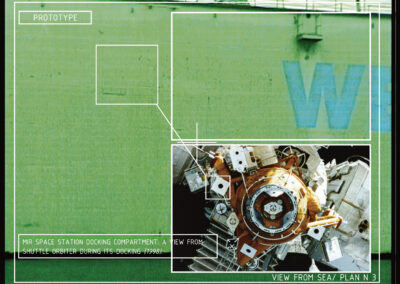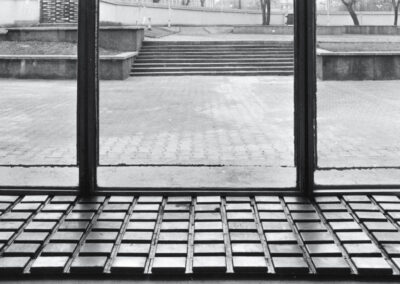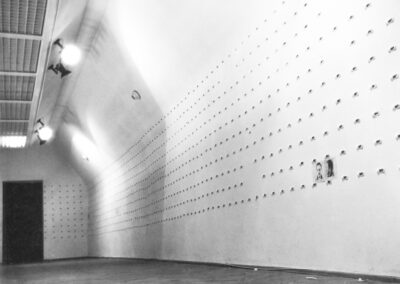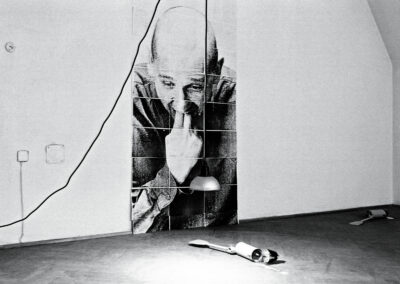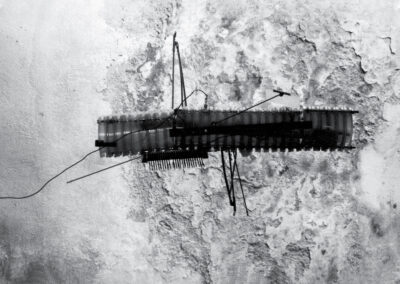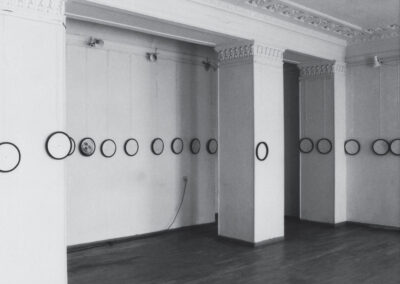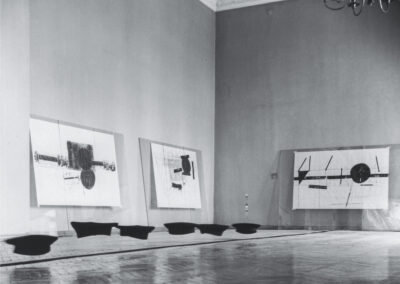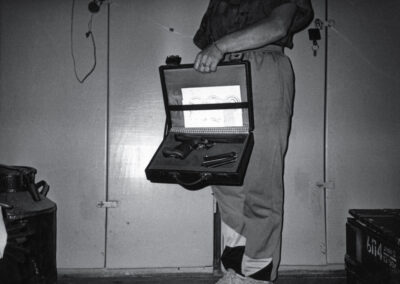
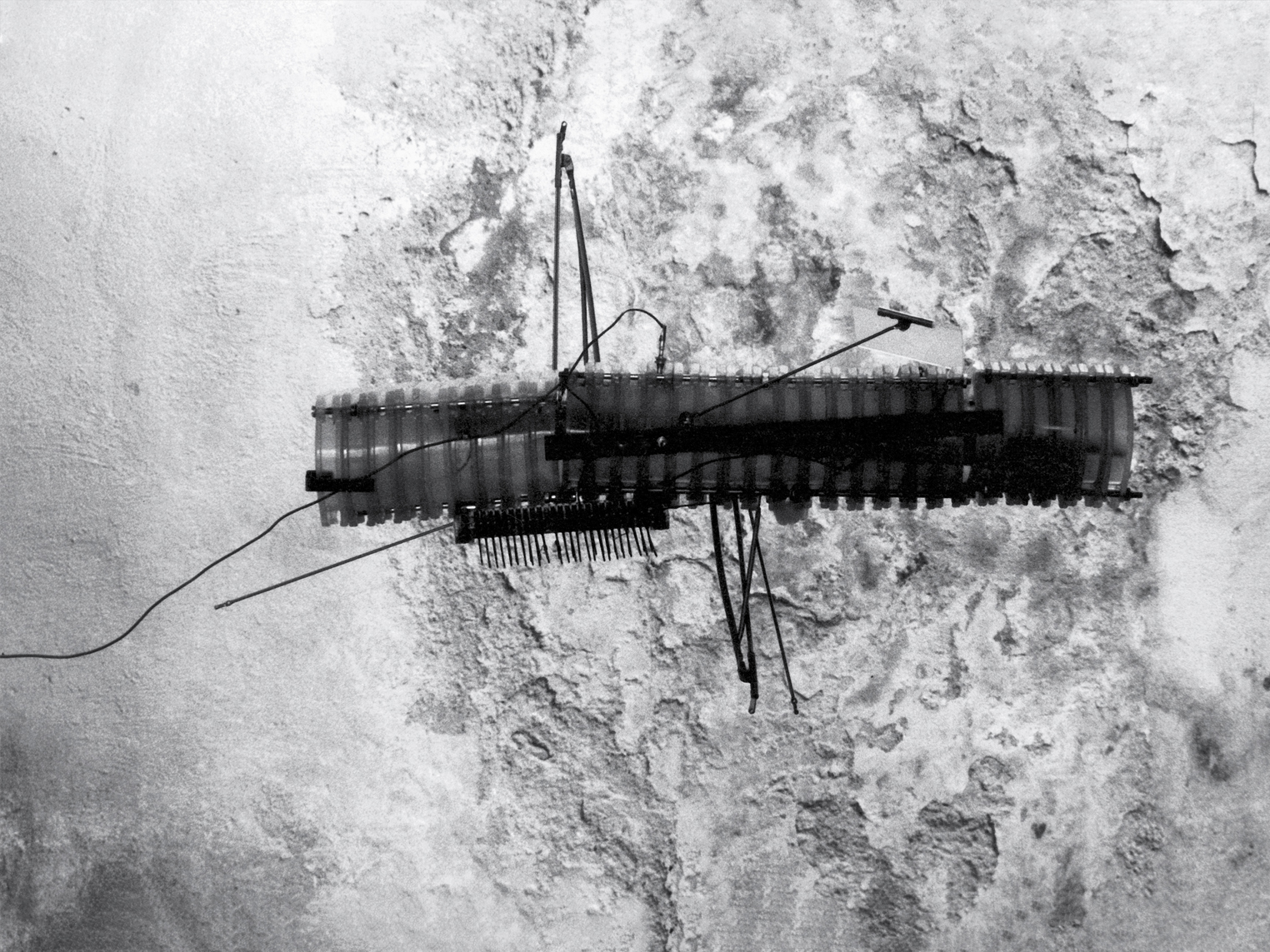
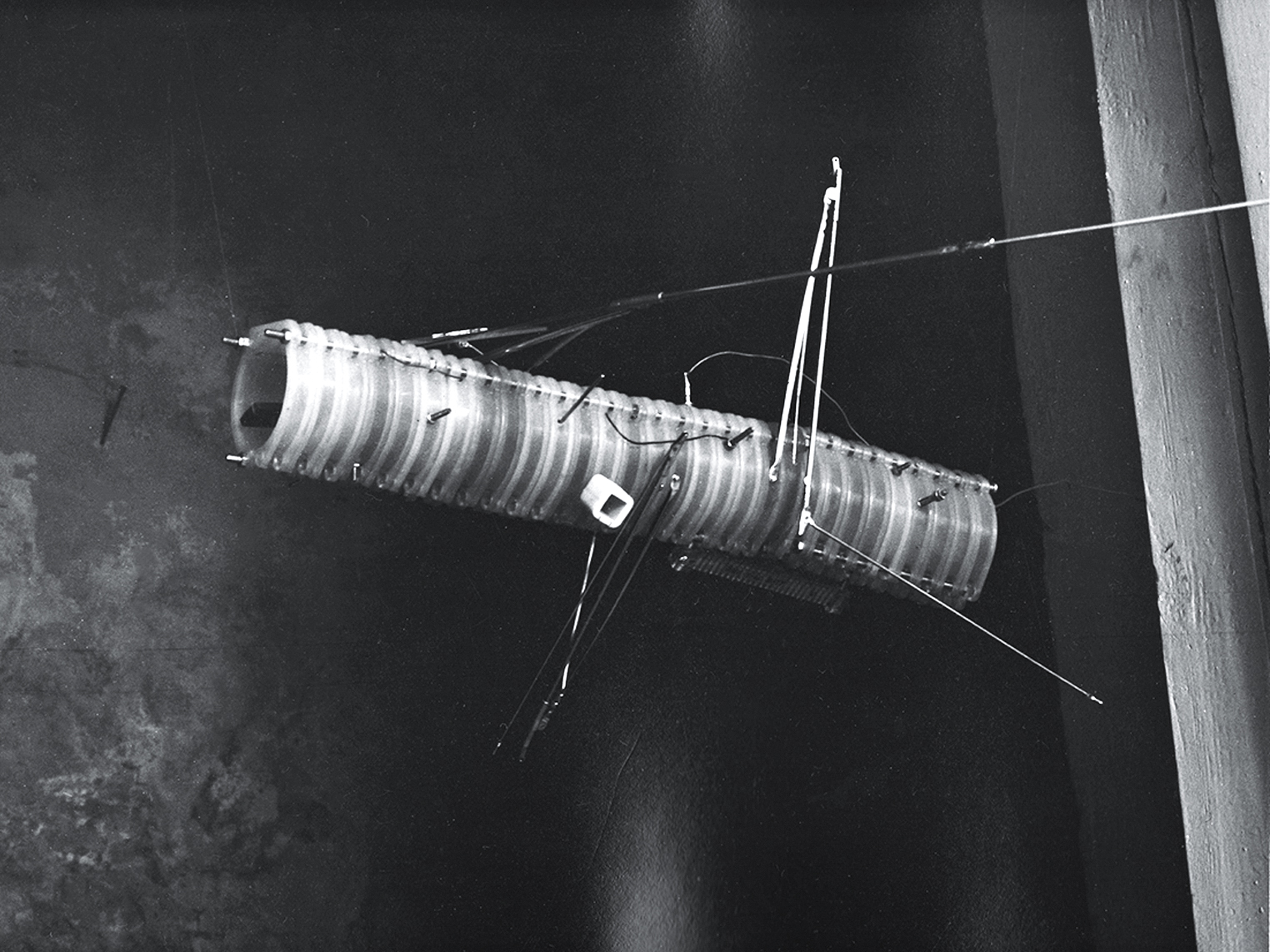
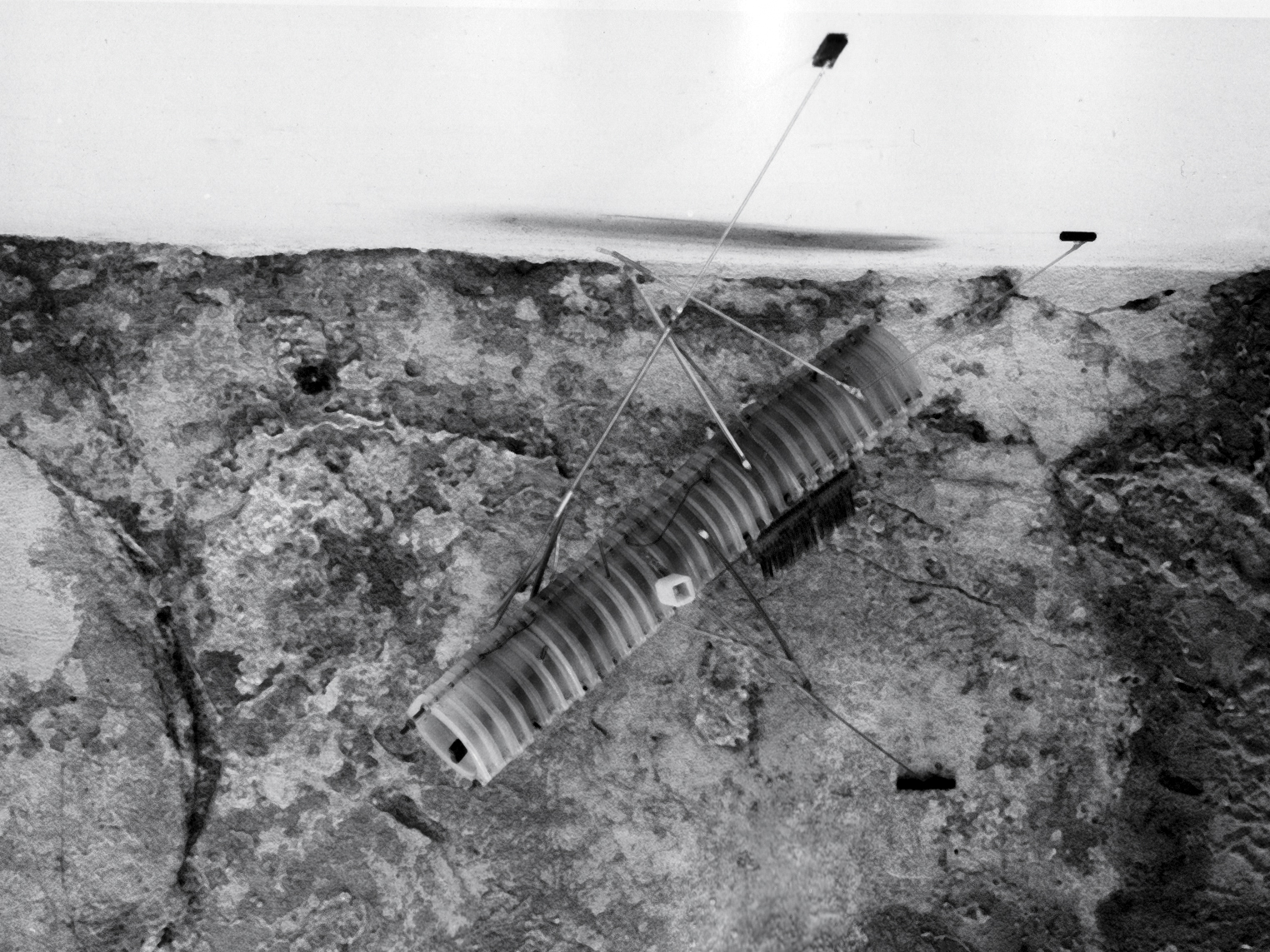
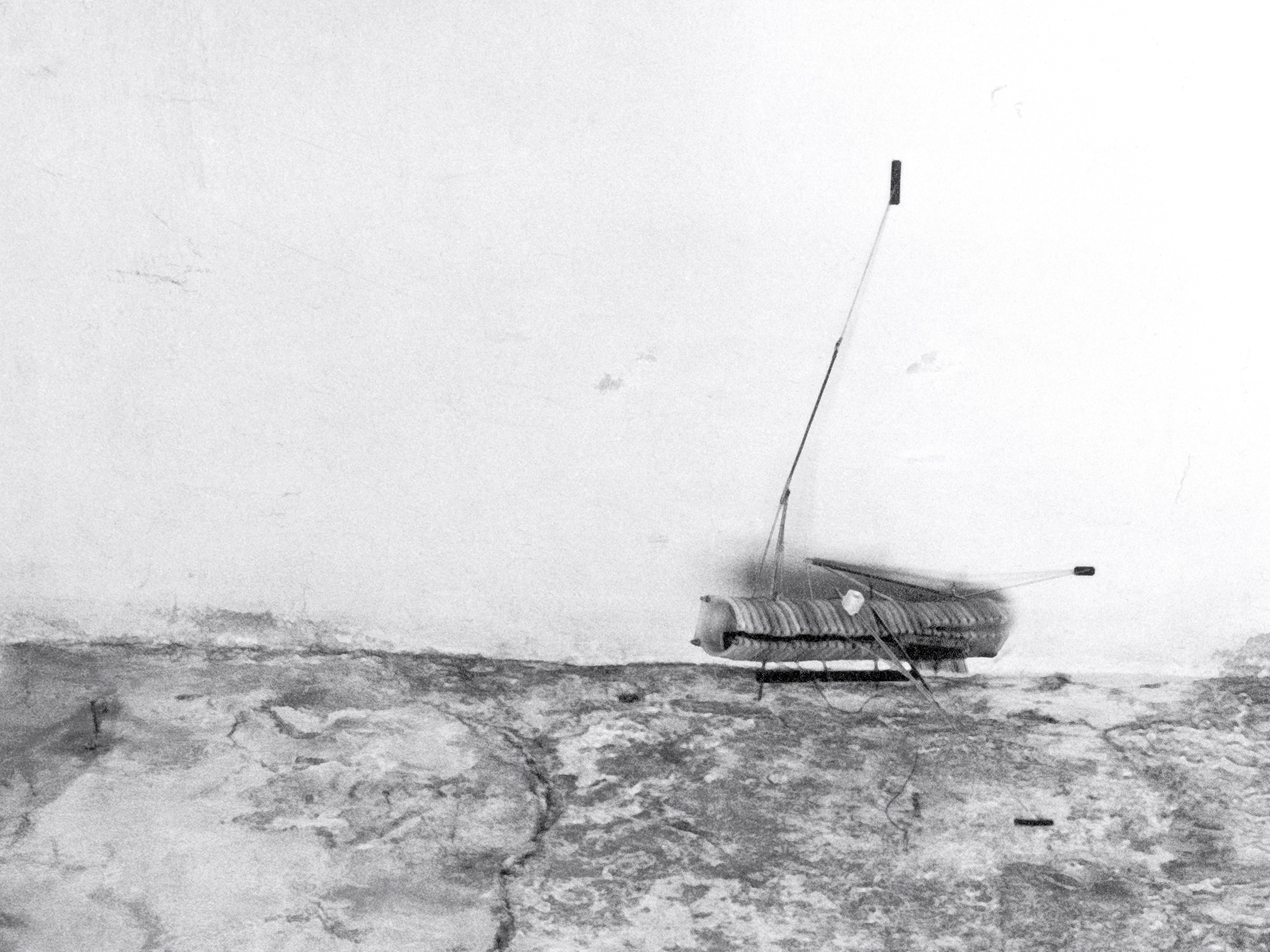
At the request of Audrius Bučas and Valdas Ozarinskas, Remigijus Pačėsa photographed an object co-created by the two architects. Assembled from various industrial remnants – offcuts, tools, and other scraps – it can be seen as a peculiar document of the decay of Soviet industry. Over time, the object has acquired several names, most commonly Vabalas (Beetle), Tarakonas (Cockroach), or Architektonas (Architecton). The latter name refers to an early twentieth-century tradition associated with Constructivism, later taken up by the Bauhaus, of creating sculptural objects based on architectonic forms intended to articulate creative ideas.
– Virginija Januškevičiūtė
Design and architecture researcher and curator Anna Kats points to a formal connection between Ozarinskas’s work and later Western deconstructivist architecture. One of the most striking features linking deconstructivism, in its broadest sense, with Ozarinskas’s creative approach is the ambition to produce objects that are inexhaustible in meaning – objects that generate new meanings and interpretations.
At that time the architects and the photographer had studios or also lived in the premises of the Architects’ Union, and it was there that the earliest exhibitions (art installations) by Ozarinskas, each seen by just a handful of people, were held. In these photographs, the decaying walls of the building perform yet another important role – their mouldy and disintegrating surfaces have become cosmic nebulae and galaxies in the nocturnal sky of the Universe, a background for an architekton which has suddenly turned here into a space station floating in open space.
Is this irony, a declaration of the shortcomings and faults of one of the most important architectural organisations in the country? Probably. Yet the photographs also speak of the boundless ambition and poor economic circumstances of that time.
– Virginija Januškevičiūtė, ‘OZE PAX’, in Architect without Architecture? A Retrospective of Valdas Ozarinskas: exhibition guide, ed.: Virginija Januškevičiūtė, Vilnius: Contemporary Art Centre, 2018, p. 12–13.
Valdas Ozarinskas became a dissident architect somewhat by accident – as much for his character and ideas as for the circumstances of his career. Ozarinskas entered architecture at a moment of political instability, in the late 1980s as the Soviet Union collapsed. The Baltic states enthusiastically sought independence from the Russian-led yoke – the early 1990s brought an optimism for the future of an independent Lithuania much as they witnessed the collapse of the only state system Ozarinskas had theretofore known. Some of the sense of rupture pervasive in this transitional period would remain in Ozarinskas’s work for the duration of his career.
In 1988, Ozarinskas submits a degree project to graduate from the Lithuanian Academy of Art that encapsulates something of the ethos of uncertainty: a house assembled of fragmented, disjointed planes so jagged that the depicted building cannot be inhabited. Buckling planes and warped shapes intentionally violate a quaint, traditional notion of home. Ozarinskas’s design betrays what Philip Johnson described as the ‘pleasures of unease’ in press quotes for the Deconstructivist Architecture exhibition, which he co-organised at the Museum of Modern Art, New York that same year.
And indeed, Ozarinskas’ work shares some of the affinity for early-Soviet Constructivism, the viciously rough dismantling of architectural orthodoxy, and the skewed geometries of that exhibition’s protagonists, among them early Frank Gehry and Zaha Hadid. Like the Deconstructivists, Ozarinskas understood irregular geometry as a structural condition, not just a dynamic formal aesthetic, and proposed in turn an architecture of disruption and dislocation. Yet unlike his more famous fellow travellers, Ozarinskas never developed a portfolio of built work, never calcified into a signature style, and never traded a sense of unease for a sense of self-satisfaction borne of the scale and sheer spectacle of their work. The more the Deconstructivists committed to architecture, the more the instability of their early work was undermined. Ozarinskas never realised a full-scale, permanent building – though he certainly longed to – and his enduring position as an outsider of sorts to the architectural profession facilitated instead a polymath practice that critically, if affectionately, examined both the changing Lithuanian context and the architecture it generated.
– Anna Kats, ‘Valdas Ozarinskas: Architecture by Other Means’, in Architect without Architecture? A Retrospective of Valdas Ozarinskas: exhibition guide, ed.: Virginija Januškevičiūtė, Vilnius: Contemporary Art Centre, 2018, p. 6–8.
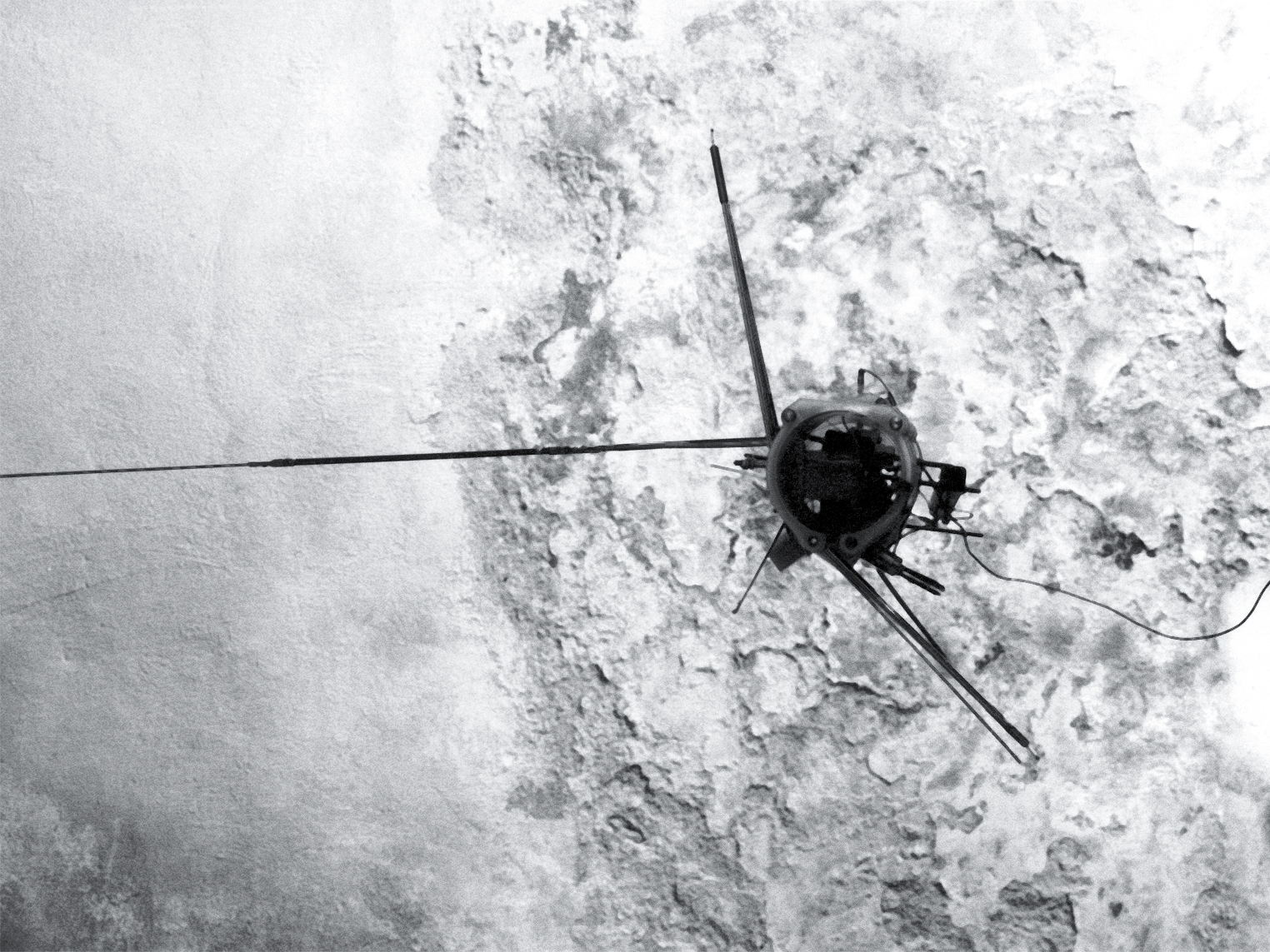
Authors: Audrius Bučas, Valdas Ozarinskas
Photographer: Remigijus Pačėsa
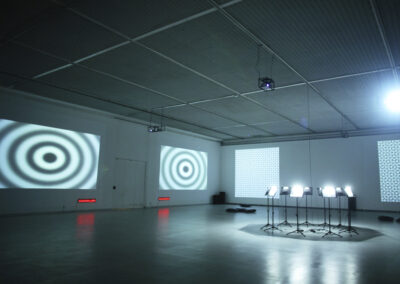
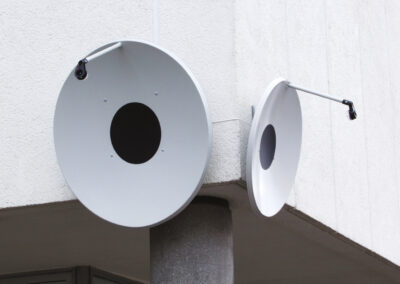
The photographs were exhibited in An Architect without Architecture? Valdas Ozarinskas Retrospective, Contemporary Art Centre, Vilnius, 2018
Art Projects