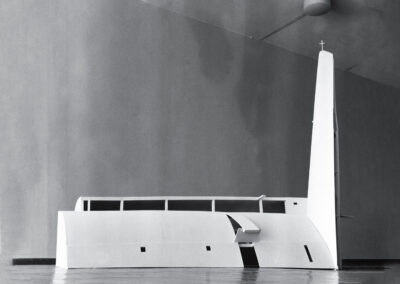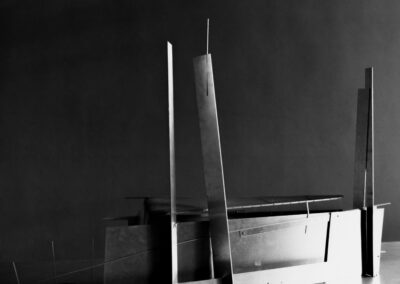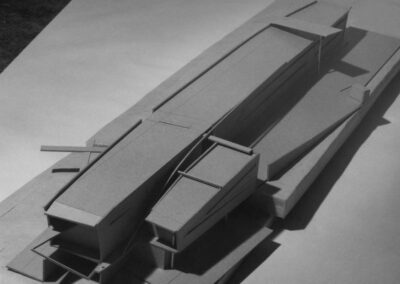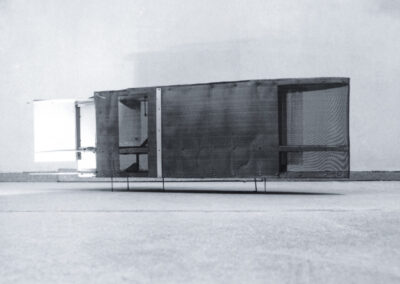
Competition for the Church in Ignalina, 1988
The early architectural works of Valdas Ozarinskas were, surprisingly quickly, overlaid with historical layers. To reconstruct their original image accurately, an ‘archaeological excavation’ of archival materials and the memories of friends and colleagues remains to be done.
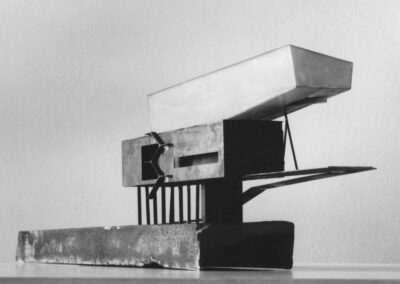
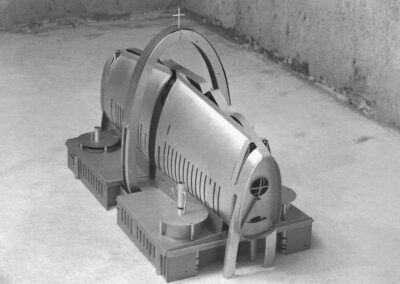
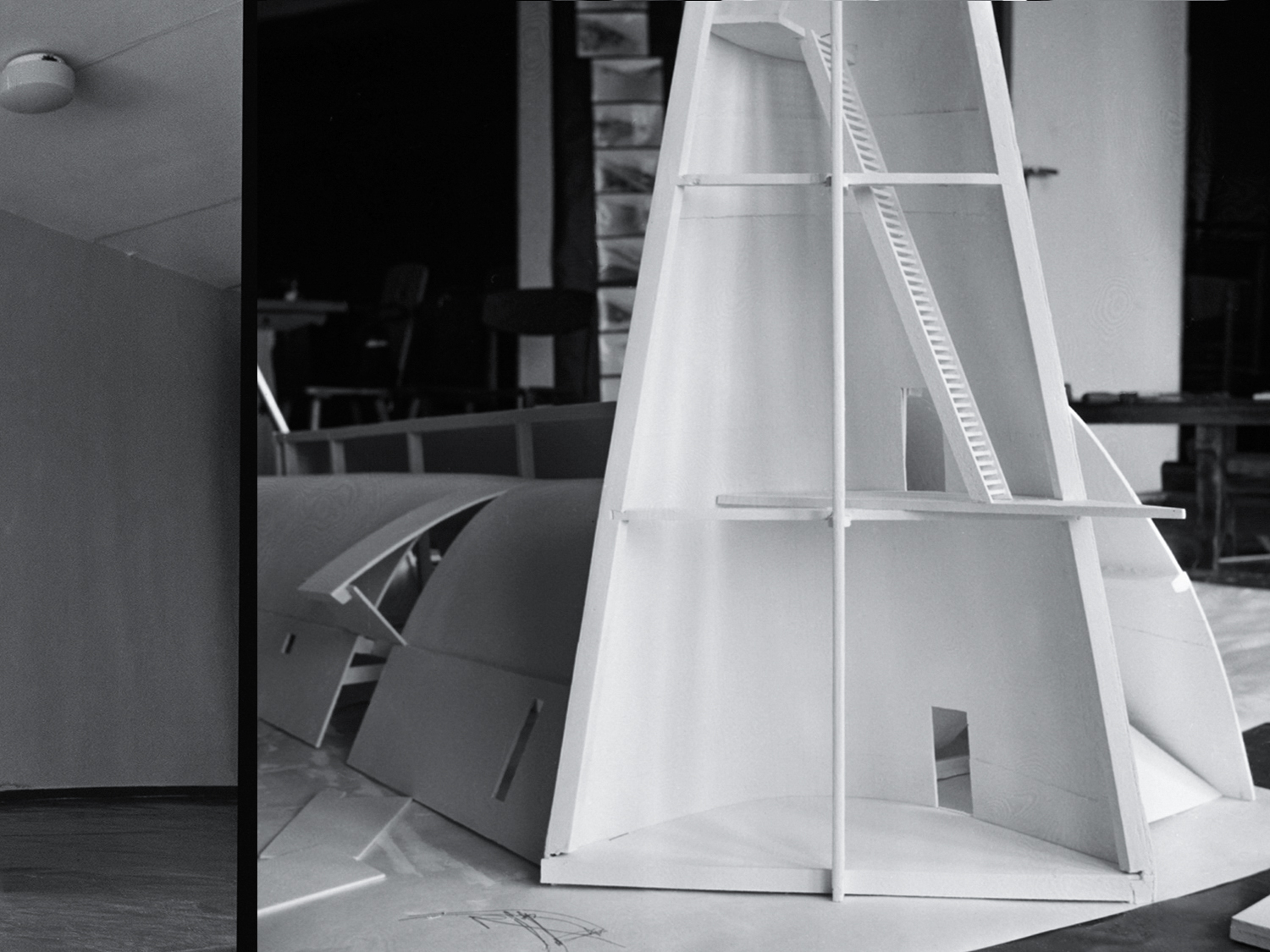
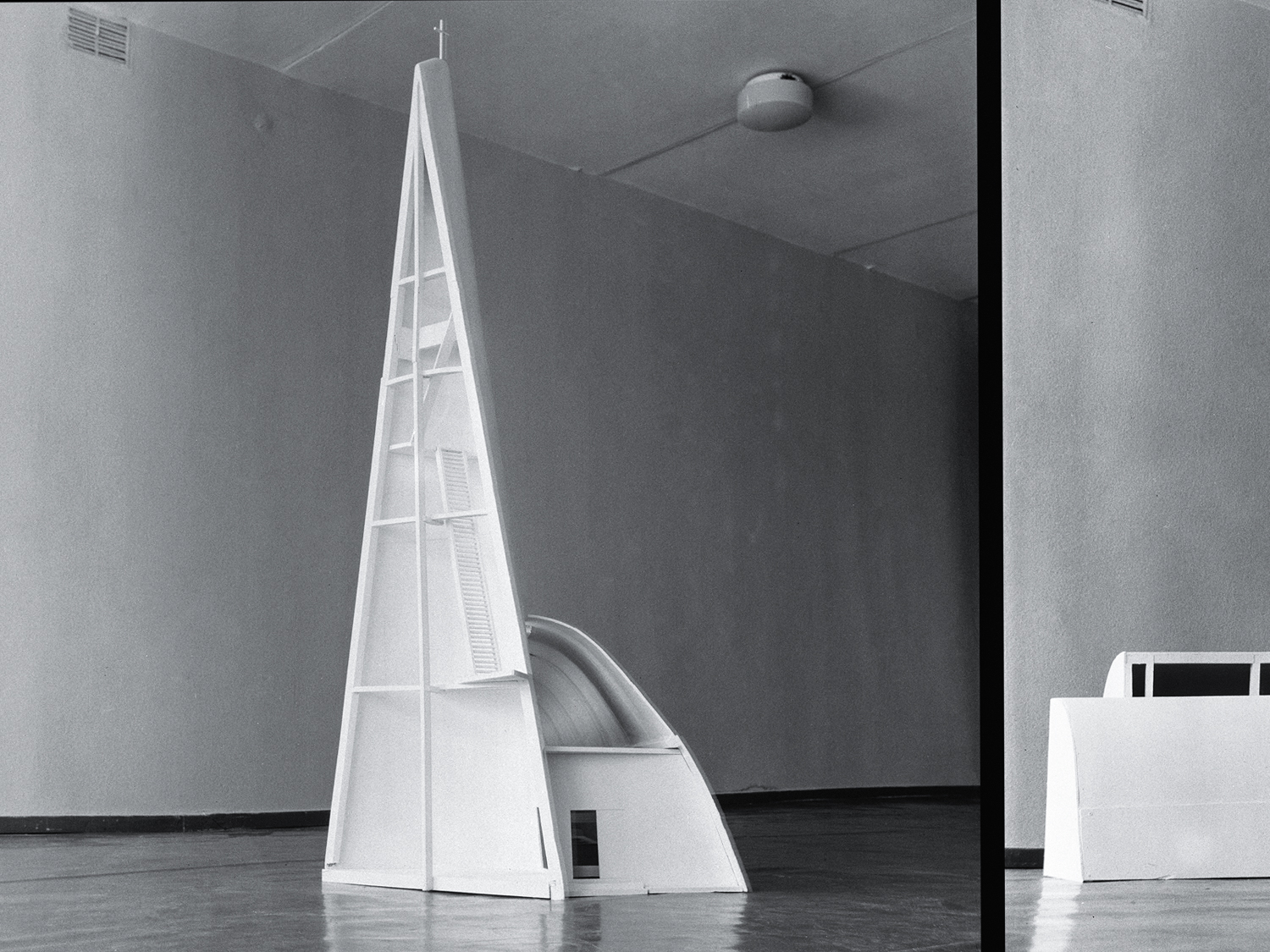
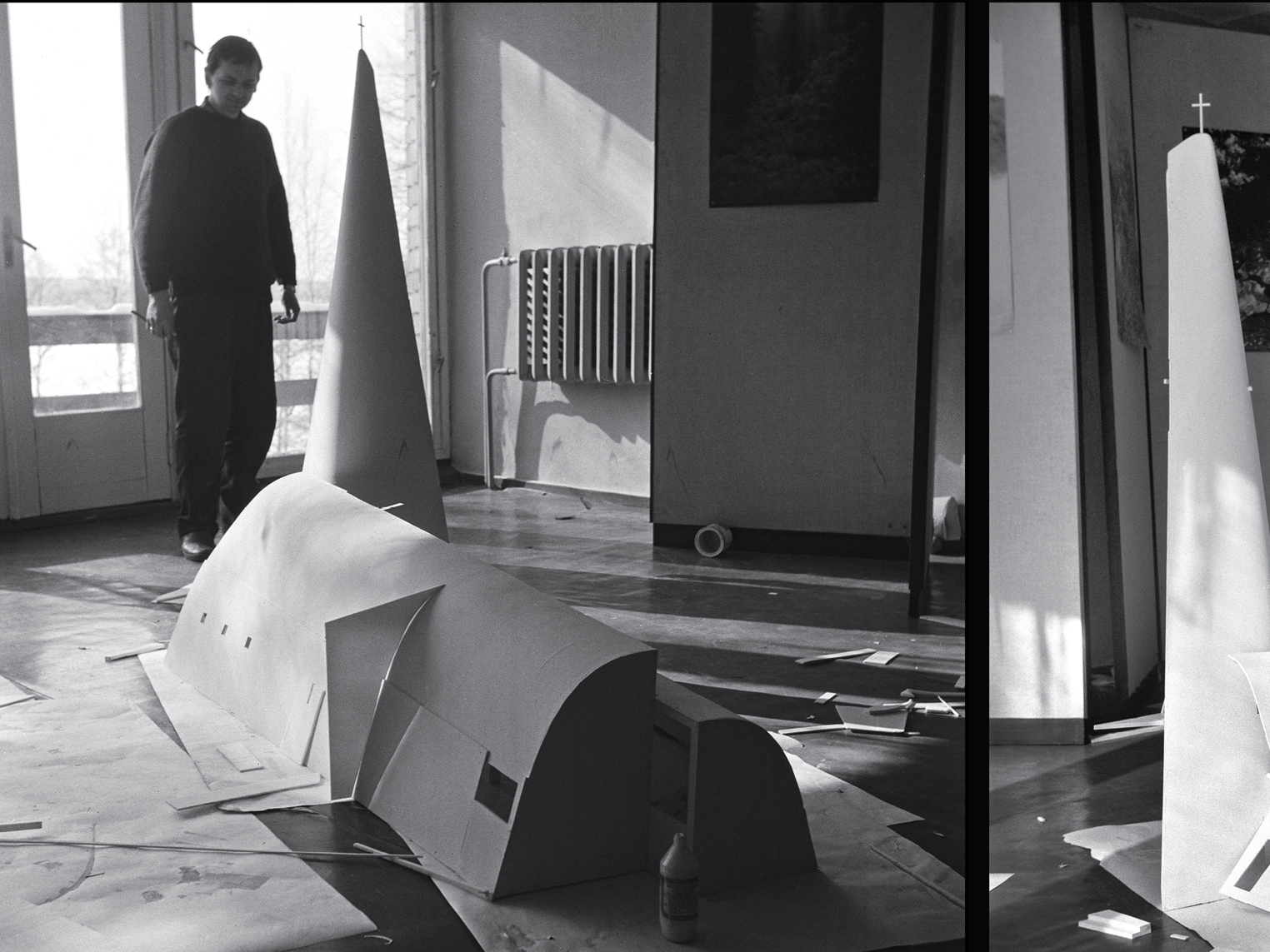
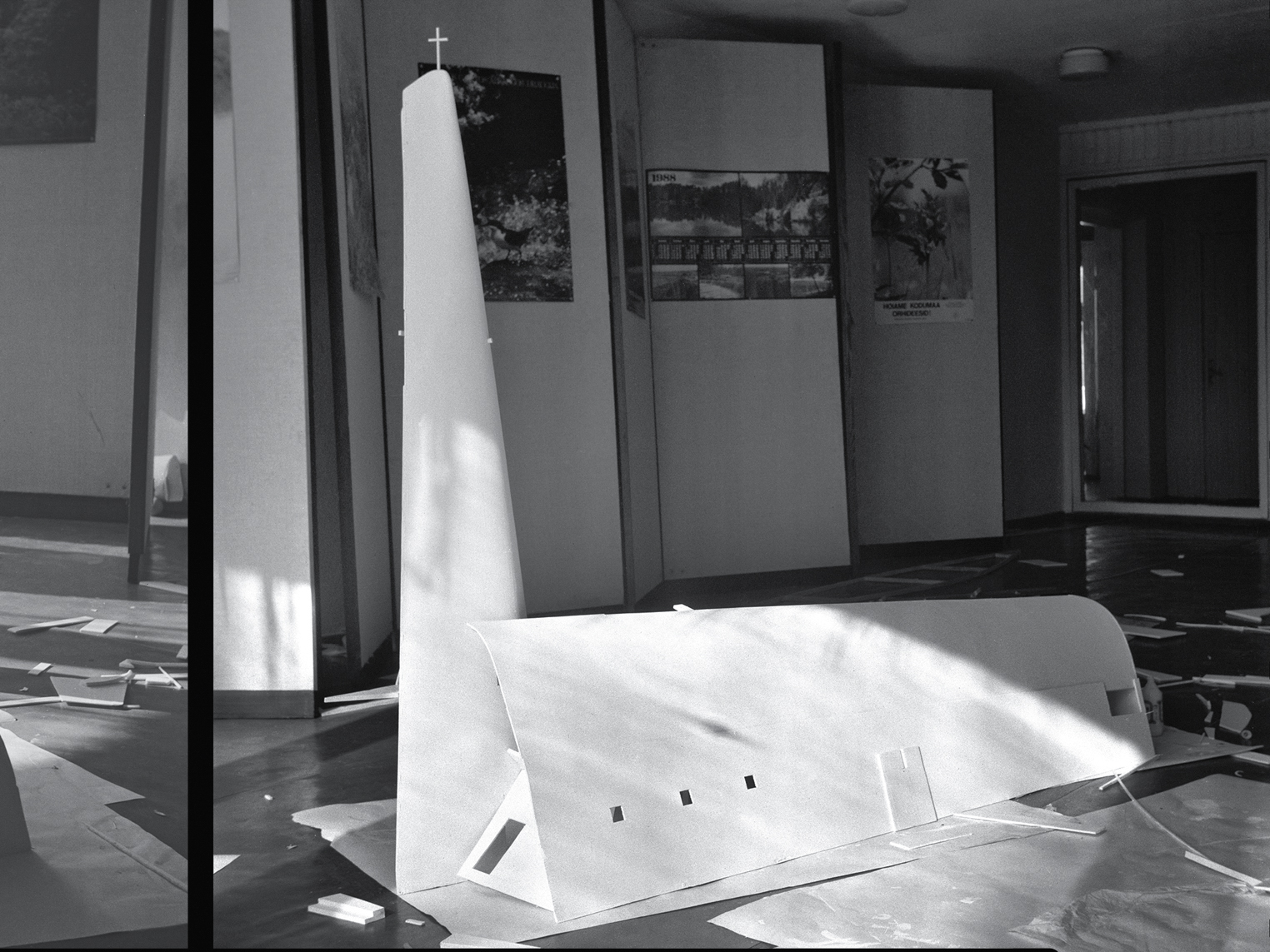
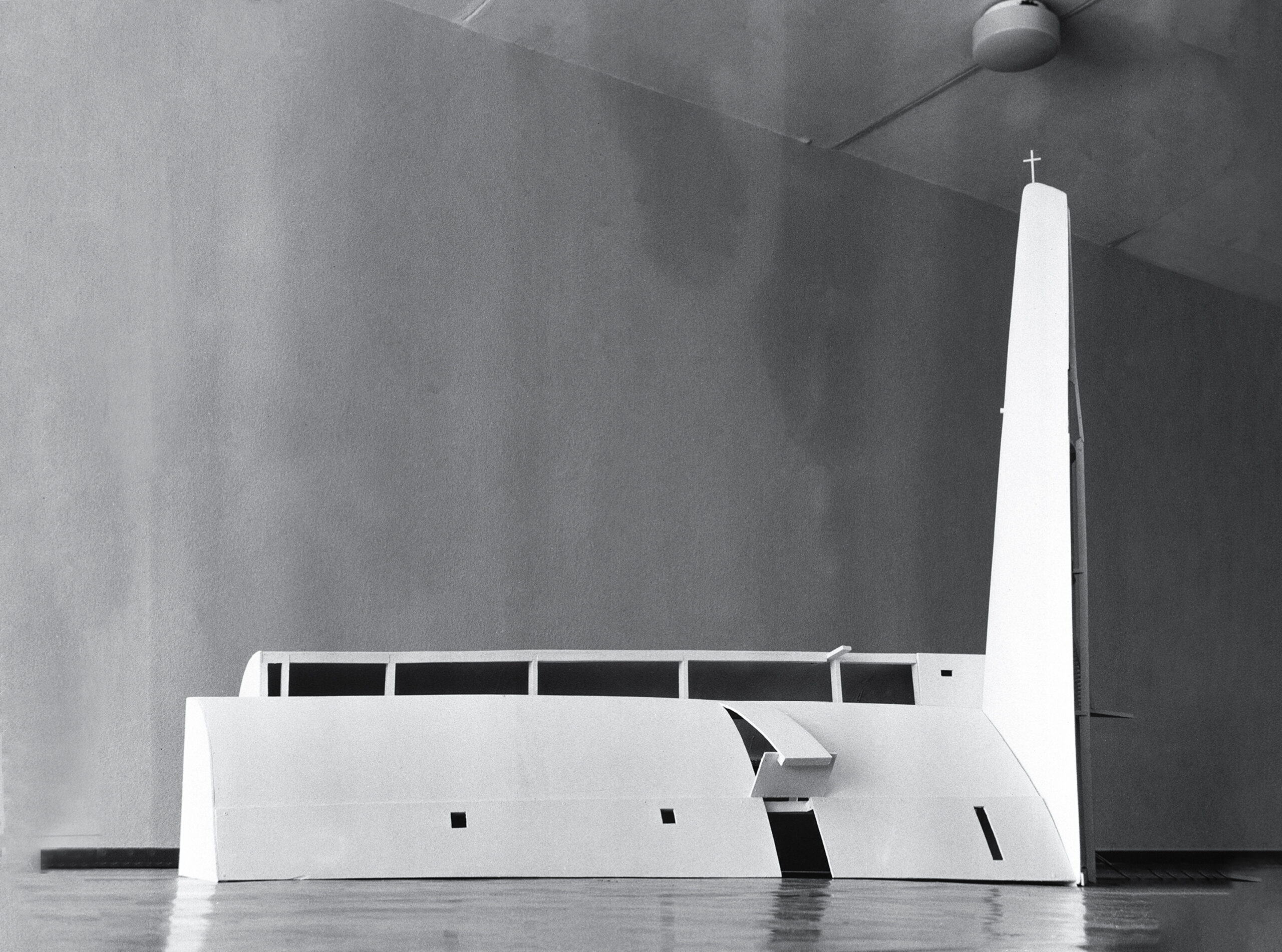
Nevertheless, the model itself is highly eloquent. The Ignalina church project – Ozarinskas’s first work of this scale after completing his architectural studies in 1986 – already clearly reveals the fundamental principles of his architectural thinking. Foremost among these is his uncompromising rejection of provincialism. In Ozarinskas’s understanding, architecture follows a universal logic of development, to which he responds openly and without compromise – even while recognising that the Lithuanian context of the time was not yet mature enough, intellectually, technologically, or financially, to fully accommodate such ideas.
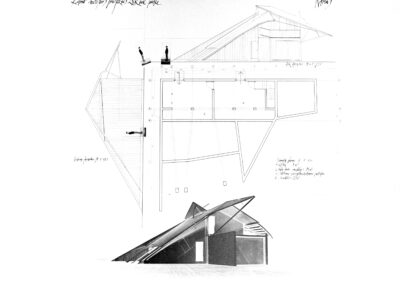
The Ignalina church project appears to attempt, in a single leap, to overcome the rupture left by the Soviet era – a period during which sacred architecture had effectively disappeared from the Lithuanian architectural landscape. In his competition proposal, Ozarinskas establishes a clearly articulated dialogue between a vertical plane – the symbolic axis mundi, structurally expressed as a triangle – and the nave, which can be read as a metaphor for Noah’s Ark gathering the community of believers. This interaction does not radically depart from the canon of the Roman Catholic Church.
The monumental form, free from functional or decorative excess, and the gentle sculptural quality of clearly recognisable geometric figures – the triangle and the parabola – speak a language that became universal in twentieth-century architecture. This lineagee can be traced from Dominikus Böhm’s St. Engelbert Church in Cologne (1932), through Oscar Niemeyer’s Church of St. Francis of Assisi in Belo Horizonte (1943), and Le Corbusier’s Chapel of Notre Dame du Haut in Ronchamp (1955), to contemporary interpretations such as the church tower in Bleibach, Germany, where an abstract, brutalist, material-emphasising dominant element conveys a powerful sense of sacredness.
Through truly bold structural solutions, Ozarinskas’s work complements the universal language of sacred brutalism with a distinct elegance – an elegance often absent from earlier attempts at brutalist monumentality in religious architecture. In the competition organised by the Lithuanian Union of Architects in 1988, Ozarinskas’s proposal was awarded fourth place.
– Vaidas Petrulis
Author: Valdas Ozarinskas
Photographer: Gintautas Trimakas
Architecture