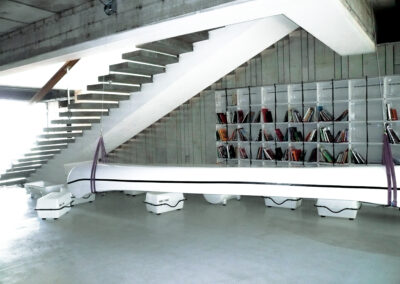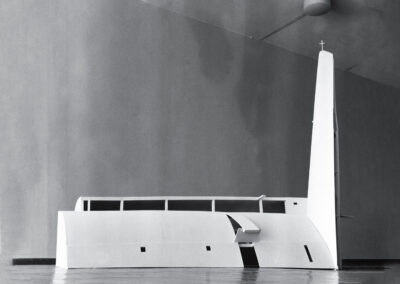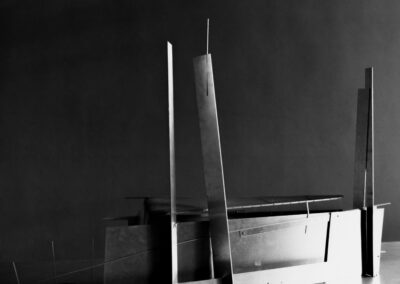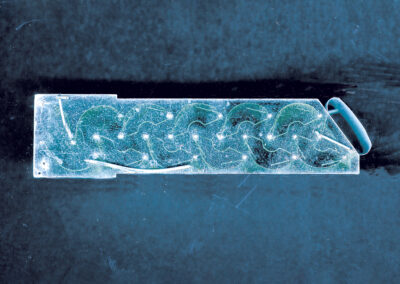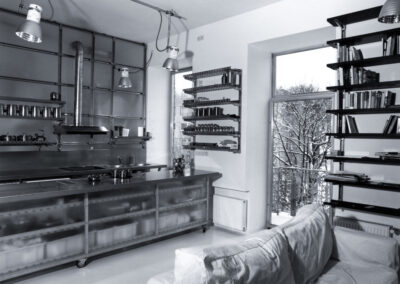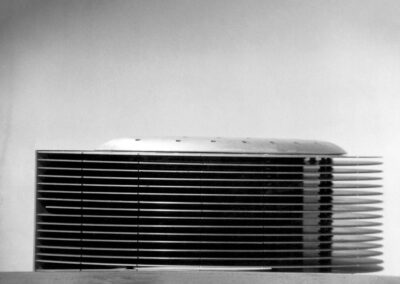
Competition for the Church of Blessed Jurgis Matulaitis, 1989
In 2002, artist and curator Raimundas Malašauskas described Valdas Ozarinskas’s creative fate as follows:
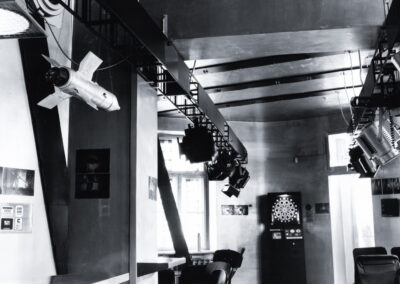
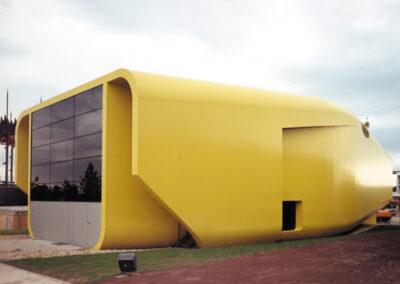
Being part of the first wave of conceptual architecture in Lithuania (Bucas, Cukermanas, Kuginys) of the early 90s, after the USSR collapsed, Ozarinskas has remained probably the most model-imprisoned architect in Lithuania ever since. Only two of his numerous projects have found their way to the construction site: the EXPO 2000 pavilion and Villa Jogaila.[1]
This observation accurately captures the paradoxical position of Ozarinskas – an architect more prolific in ideas and concepts than in realised buildings, yet one who profoundly influenced Lithuanian architectural development. In 1989, when he submitted the competition design for the Church of Jurgis Matulaitis together with Aida Čeponytė, Ozarinskas was only at the beginning of his professional career. He entered it with ambition: convinced of the artistic mission of architecture in shaping a new Lithuania, and eager to contribute actively.
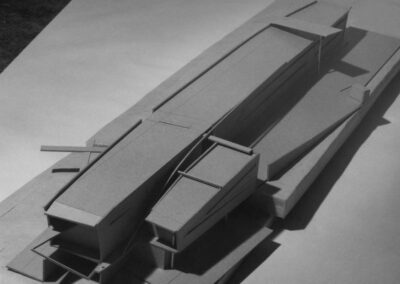
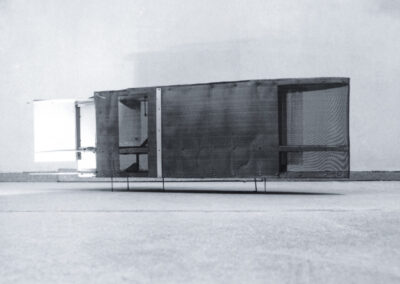
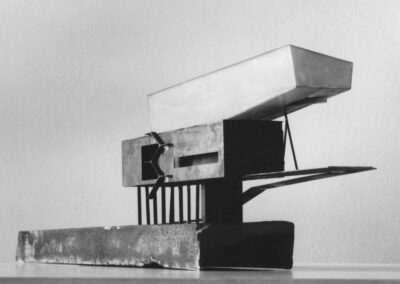
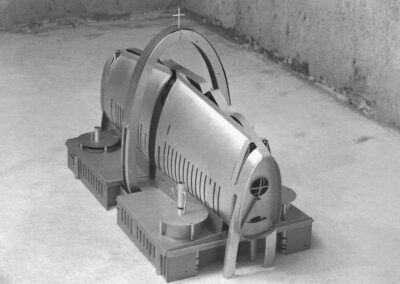
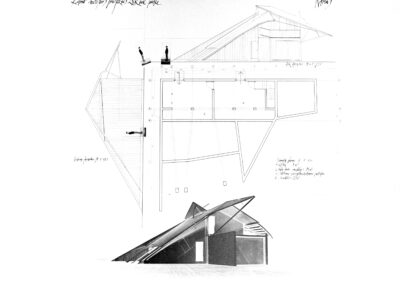
The competition, organised in 1989 by the Vilnius Archdiocese Curia and the Lithuanian Union of Architects, was one of the first architectural signals of the Revival era. Fifteen projects by fifty architects were submitted. Ozarinskas’s design stood out for its conceptual boldness. Steeped in the spirit of technical utopia, it drew on a wide spectrum of global architectural references: Constructivism, streamline design, echoes of Archigram, the “detachment” of the object from the ground – as if it were a giant household tool ready to move – and the raw materiality of Brutalism.
The split volume of the building also carried symbolic meaning connected to the identity of Vilnius:
Vilnius is divided into two parts – the old town and the new town. The old town carries a sacred aura, shaped by churches that reflect the style of each era. Together, these churches create a shared symbol of divinity – the city radiates from within. The new town (the Soviet-era districts) is a part of the city cut off from traditions and sacred places, isolated from culture and religion. It is a city left without spaces that attract divinity. The new town has no aura. <…> A clean volume cut in half becomes a symbol of the old and new town. A fragment of the old town appears within the new, doubling itself and marking it. The intersection of these two volumes is surrounded by an aura that symbolically represents the old town’s aura. It becomes the link between two intersecting volumes – old town and new, divinity and atheism, traditional architecture and constructivist architecture. The volumes converge into a sign visible from both the old and new towns (the height of the volume is 33 m, the central nave is 30 m, and the height of the aura is 50 m).[2]
The model created with Čeponytė – as typical of their partnership – emphasised the industrial spirit of the project, constructed from parts of a Blanik glider wing, aluminium, and silver-painted cardboard. This bold project demonstrated an effort to interpret religious architecture in relation to tradition while also responding to high-tech and even postmodernist trends. For Ozarinskas, the church offered exceptional potential for artistic expression – more than just a liturgical commission.
[1] Malašauskas, R. 2002, ‘A Waiter of the Restaurant at Vilnius Train Station Made the Most Colourful Statement at EXPO 2000’, NU: The Nordic Art Review. https://sunvysne.tumblr.com/post/105686207740/valdas-died
[2] Aiškinamasis raštas [Explanatory note], 1994. From the archive of the Valdas Ozarinskas Foundation
– Vaidas Petrulis
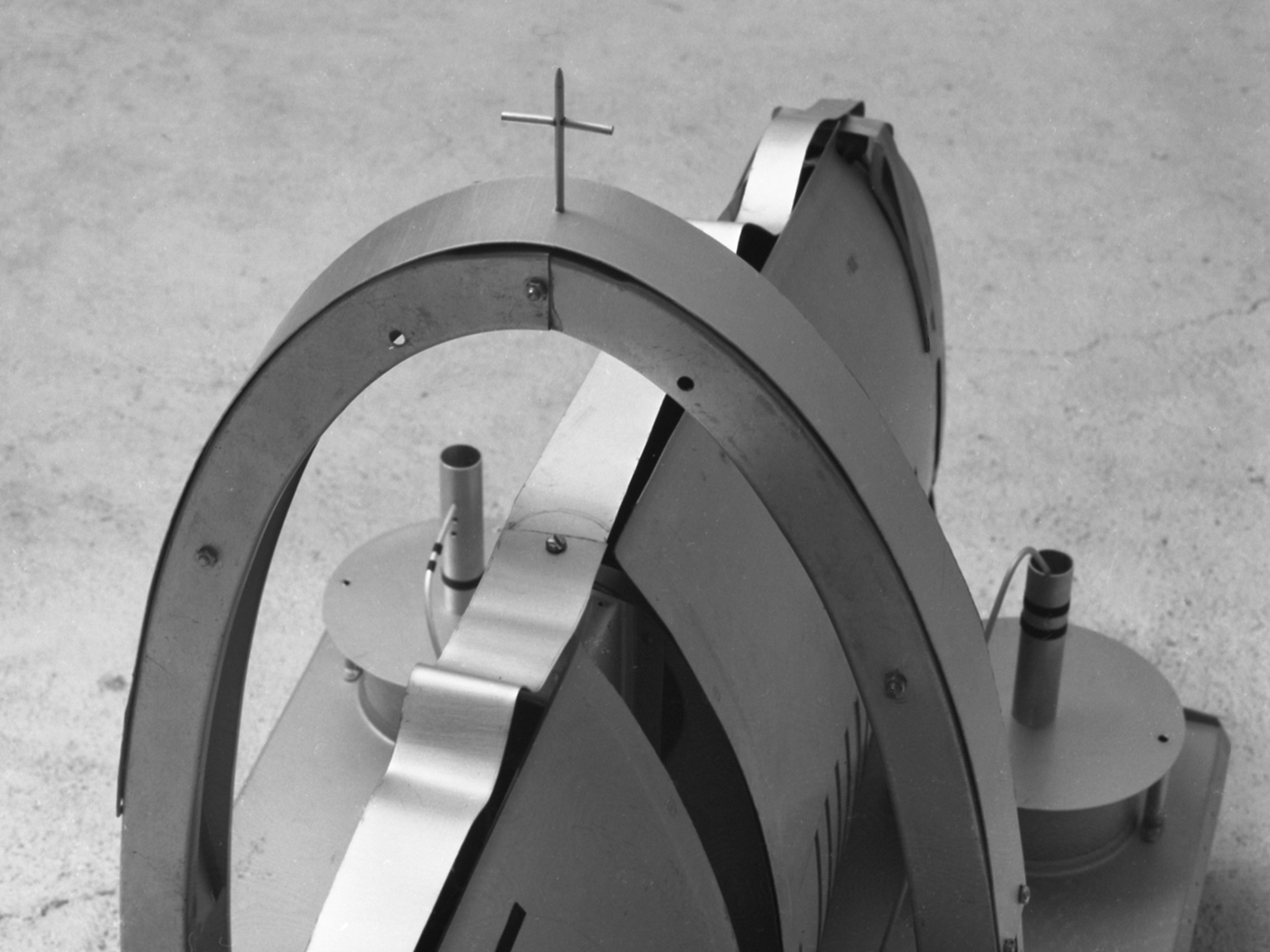
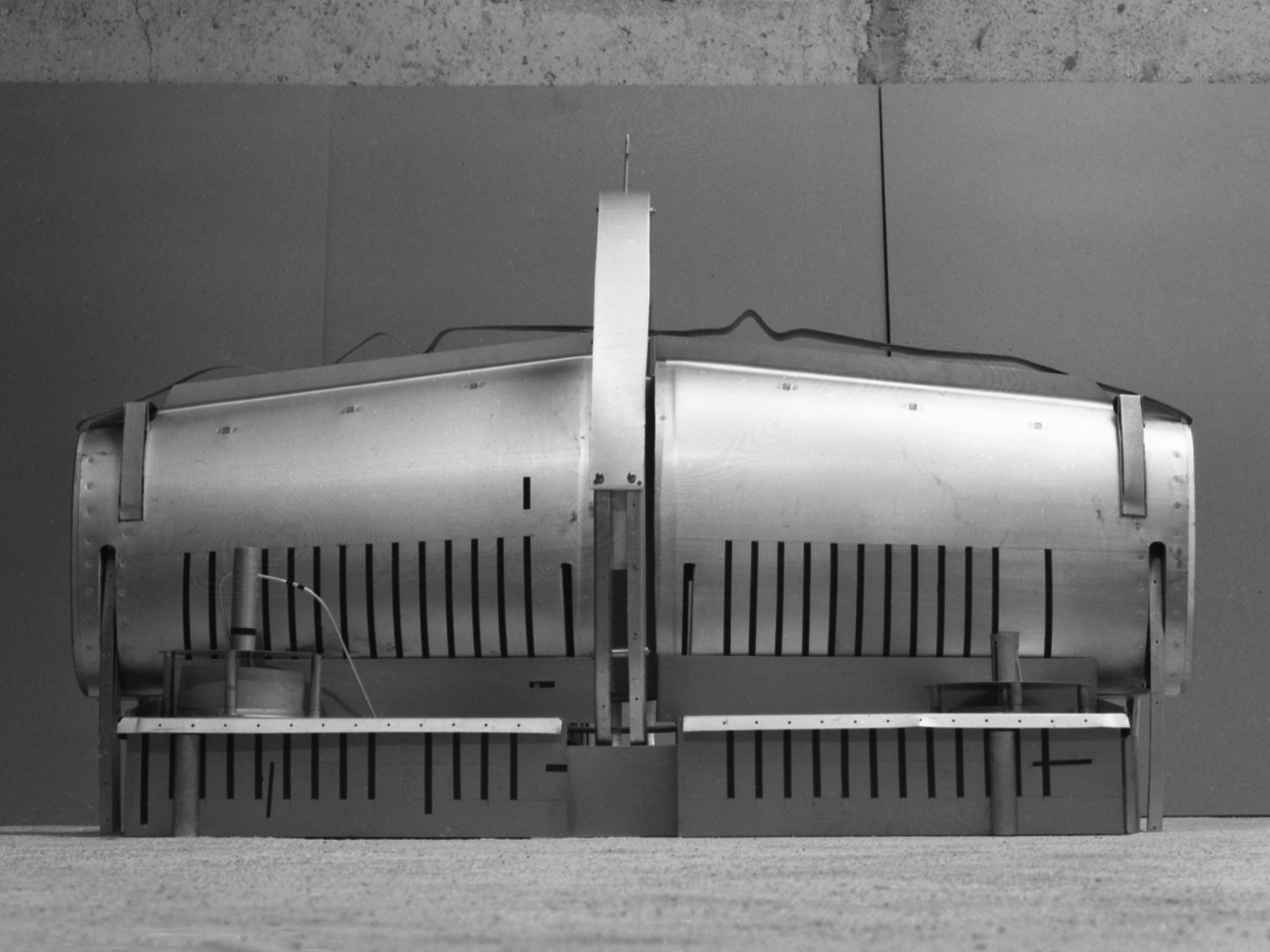
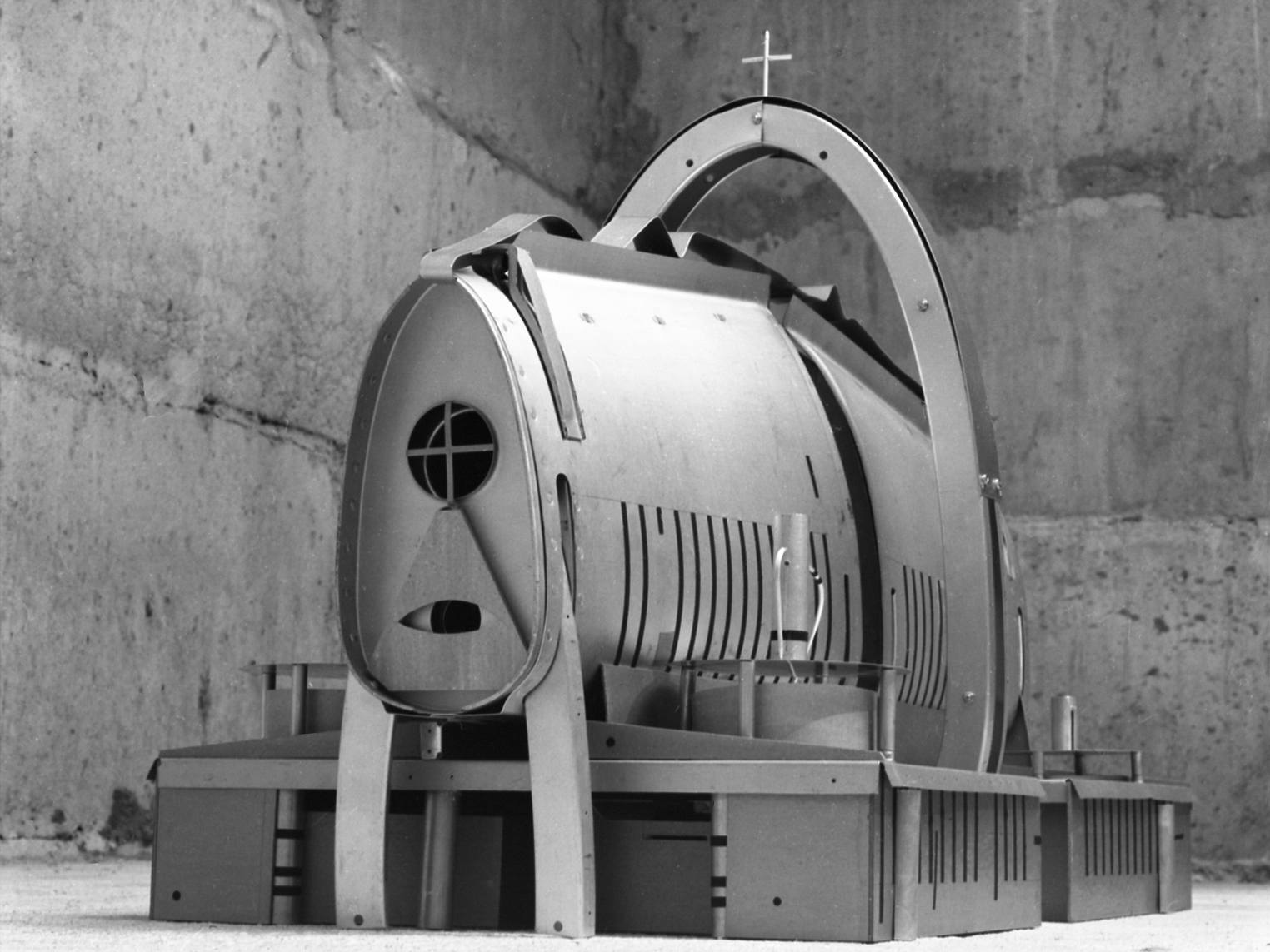
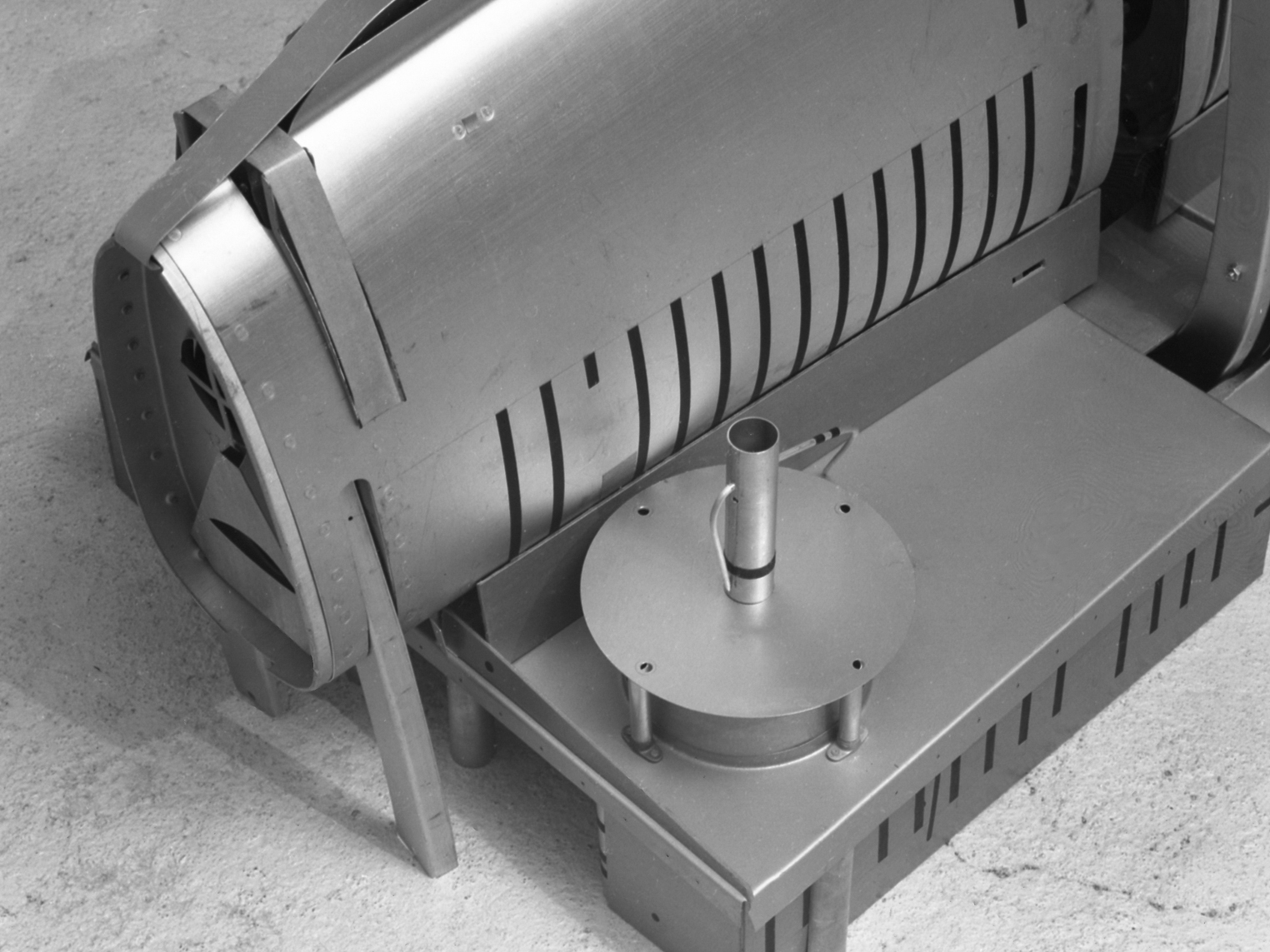
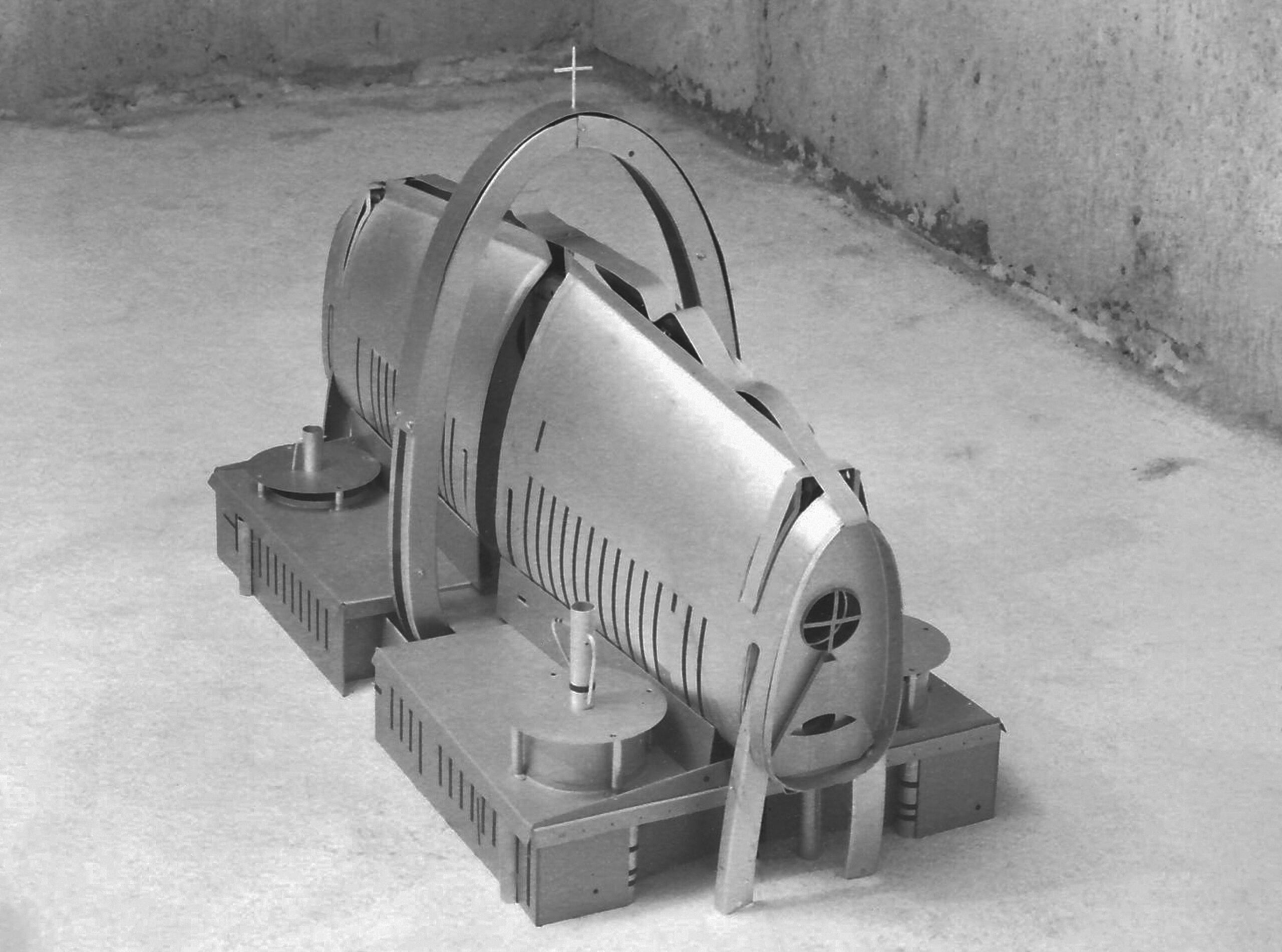
Author: Valdas Ozarinskas
Photographer: Gintautas Trimakas
Exhibited:
1989 Exhibited in the competition exhibition, LAS, Vilnius
2018 – The photographs were exhibited in An Architect without Architecture? Valdas Ozarinskas Retrospective, Contemporary Art Centre, Vilnius
Sources: Neįgyvendintas Vilnius, Lapas Publishing House, 2021 (Marija Drėmaitė, Rasa Antanavičiūtė), pp. 215–217.
Architecture