Geology Laboratory, 1990
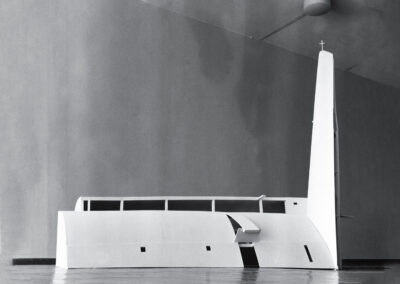
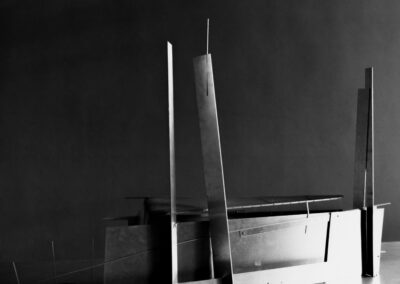
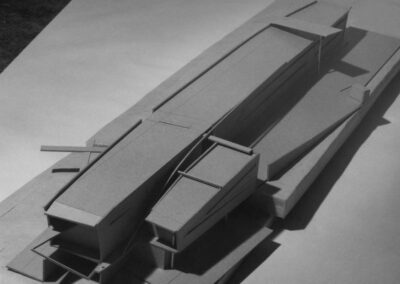
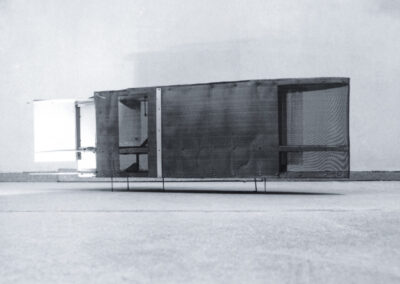
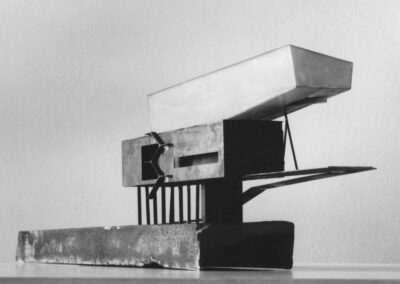
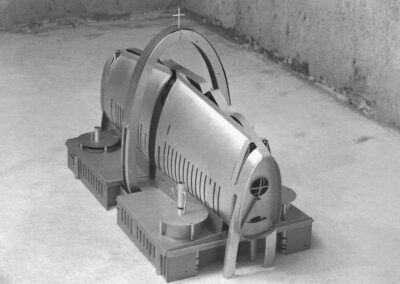
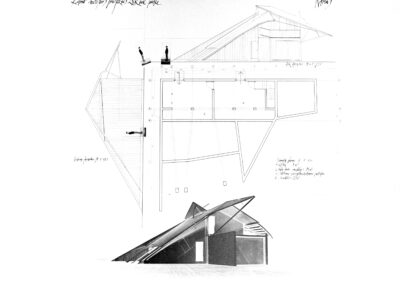
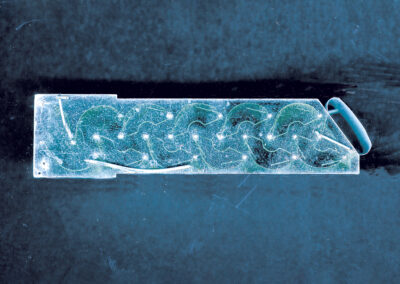
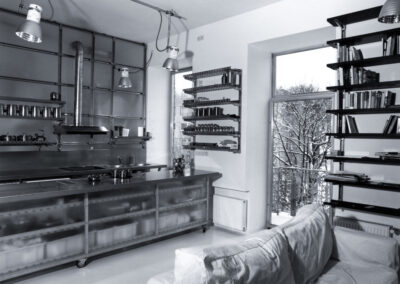
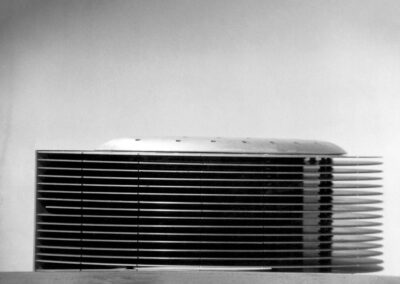
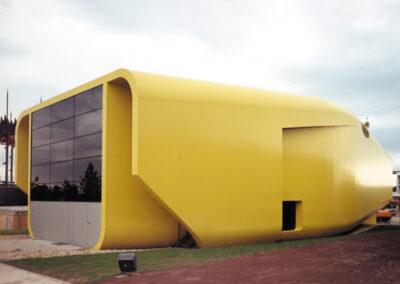
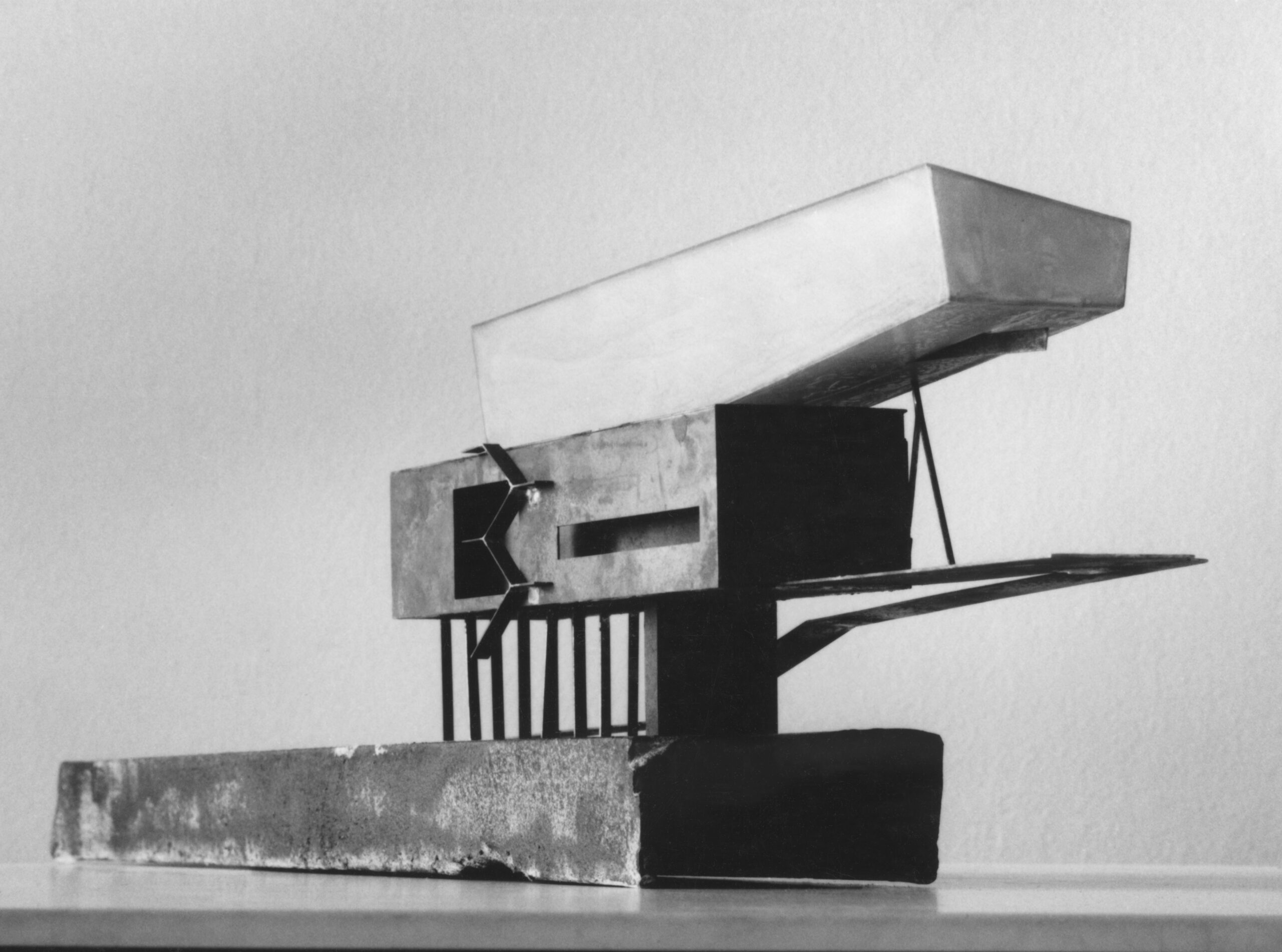
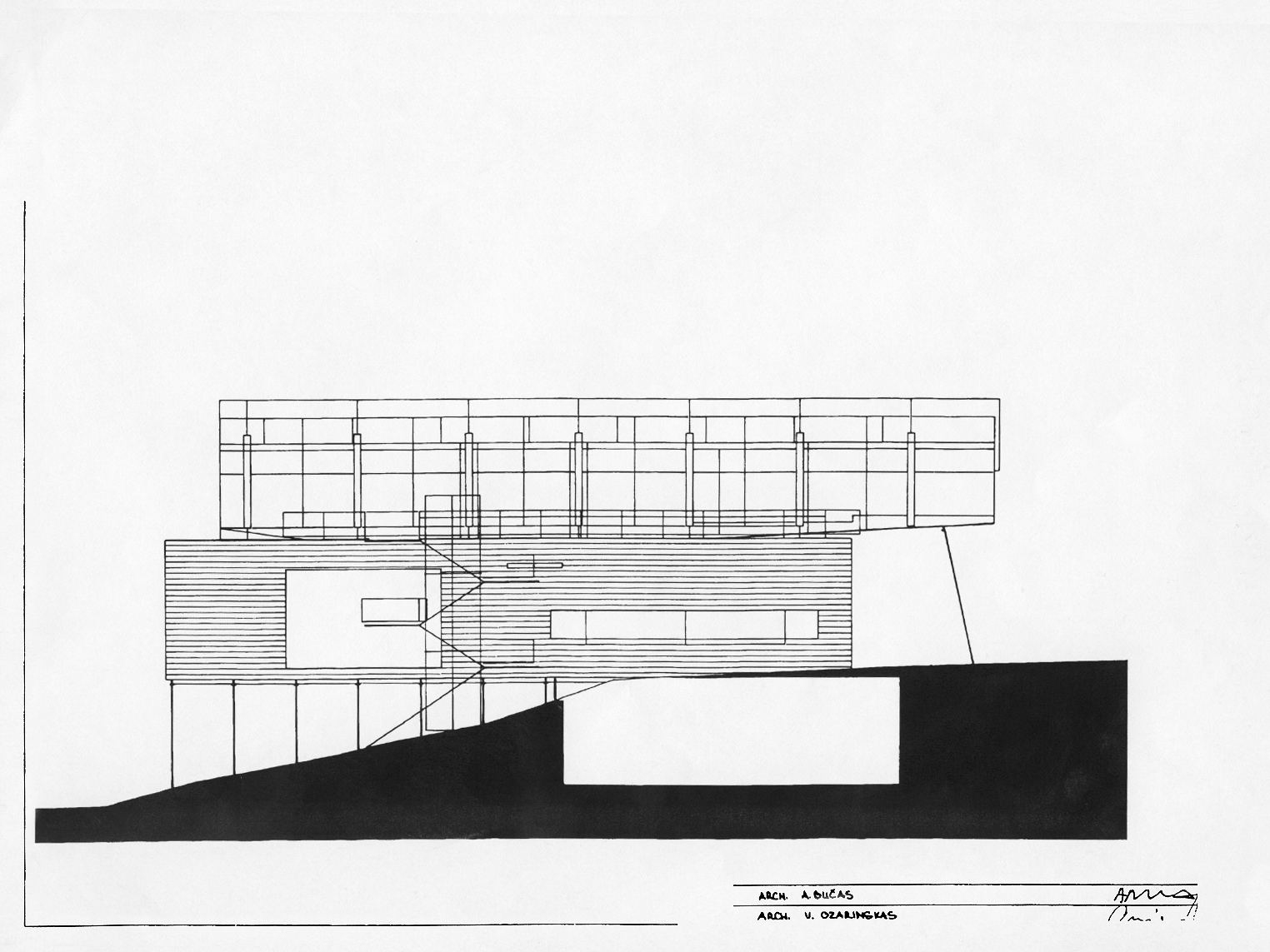
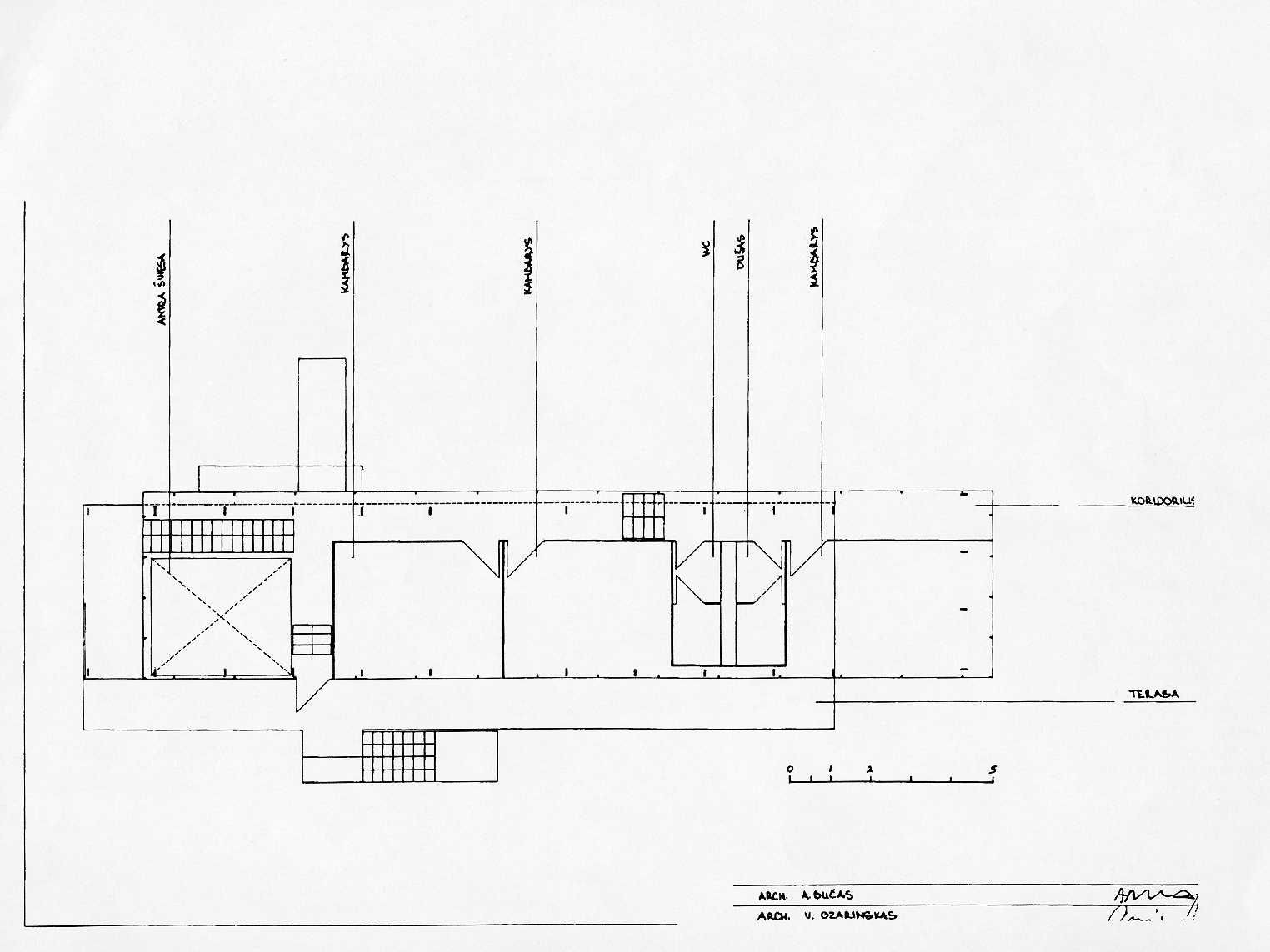
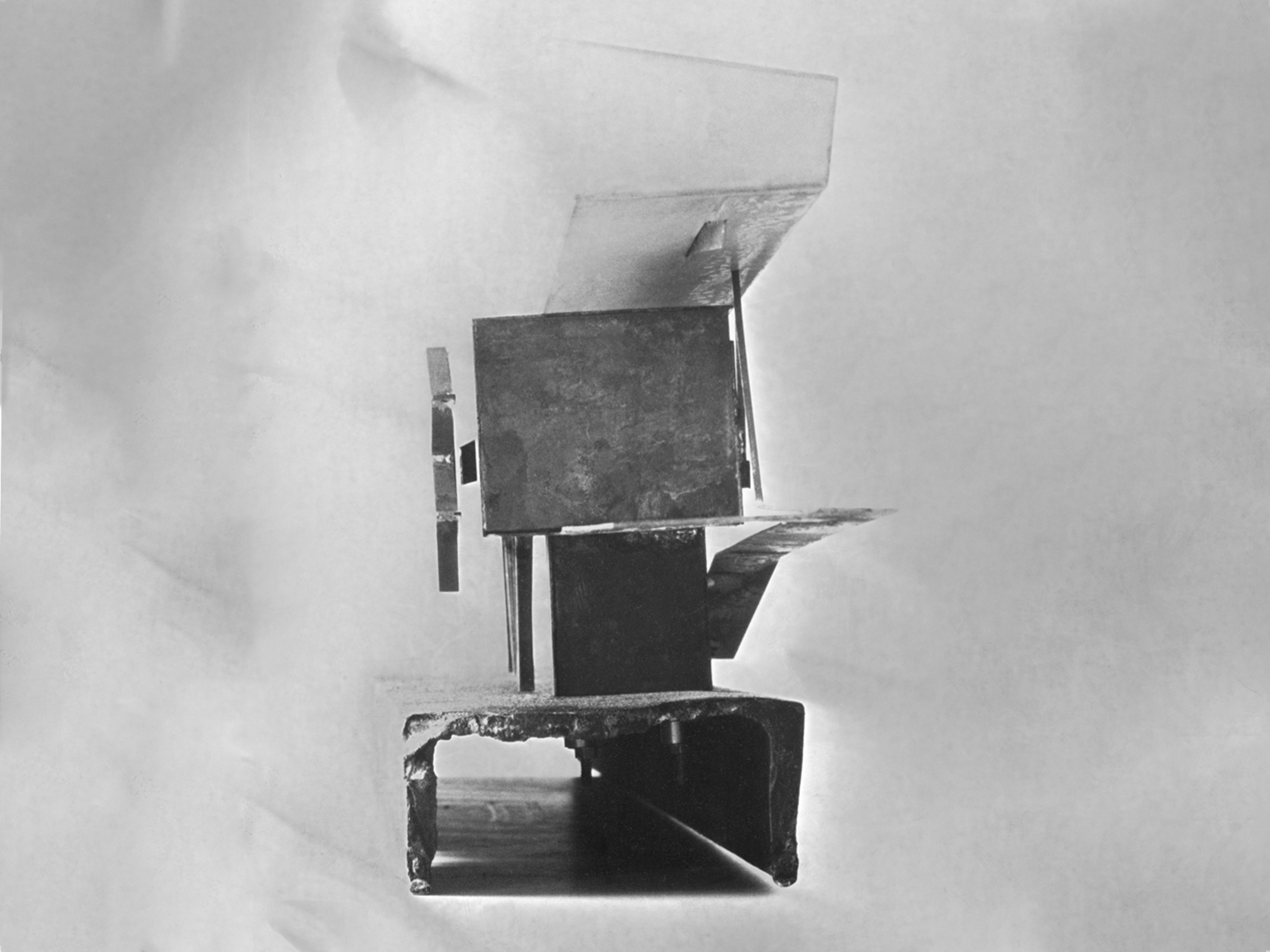
In 1990, Valdas Ozarinskas and Audrius Bučas designed a geology laboratory near Lake Ungurys in the Trakai District. As is characteristic of Ozarinskas’s work, the project was radically atypical. Massive volumes – seemingly derived from industrial production processes – were assembled into a dynamic composition that appeared to defy gravity and had no clear analogues in the contemporary architectural context. The project balances between engineering construction and metaphorical expression, resembling a conceptual sketch materialised as a model rather than a building that appears realistically realisable. In this way, Ozarinskas and Bučas pursued their shared position that architecture is, above all, a field of ideas and aesthetics, and only secondarily a practical activity constrained by economic, engineering, or social limitations.
The austere atmosphere of a decaying Soviet industrial landscape, combined with the influence of Constructivist masters (the upper part of the volume inevitably evokes associations with the Rusakov Workers’ Club in Moscow, designed by Konstantin Melnikov), allows the project to be read as an expression of Eastern European experience. At the same time, the laboratory model can be interpreted more poetically – as a work of art reflecting broader visions of the second half of the twentieth century. In this reading, the work of Ozarinskas and Bučas aligns with the thinking of figures such as Lebbeus Woods. The laboratory, much like Woods’s Solohouse (1988–1989), becomes a reflection of the spirit of an unsettled era. Both works balance controlled structure with dynamic forces that express the unpredictability of change, as well as the aesthetic weight of rough materiality with the fragility of ideas.
– Vaidas Petrulis
Authors: Audrius Bučas, Valdas Ozarinskas
Photographer: Remigijus Pačėsa
Architecture