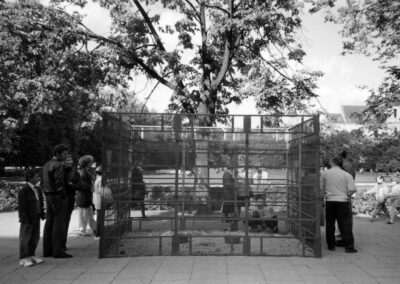
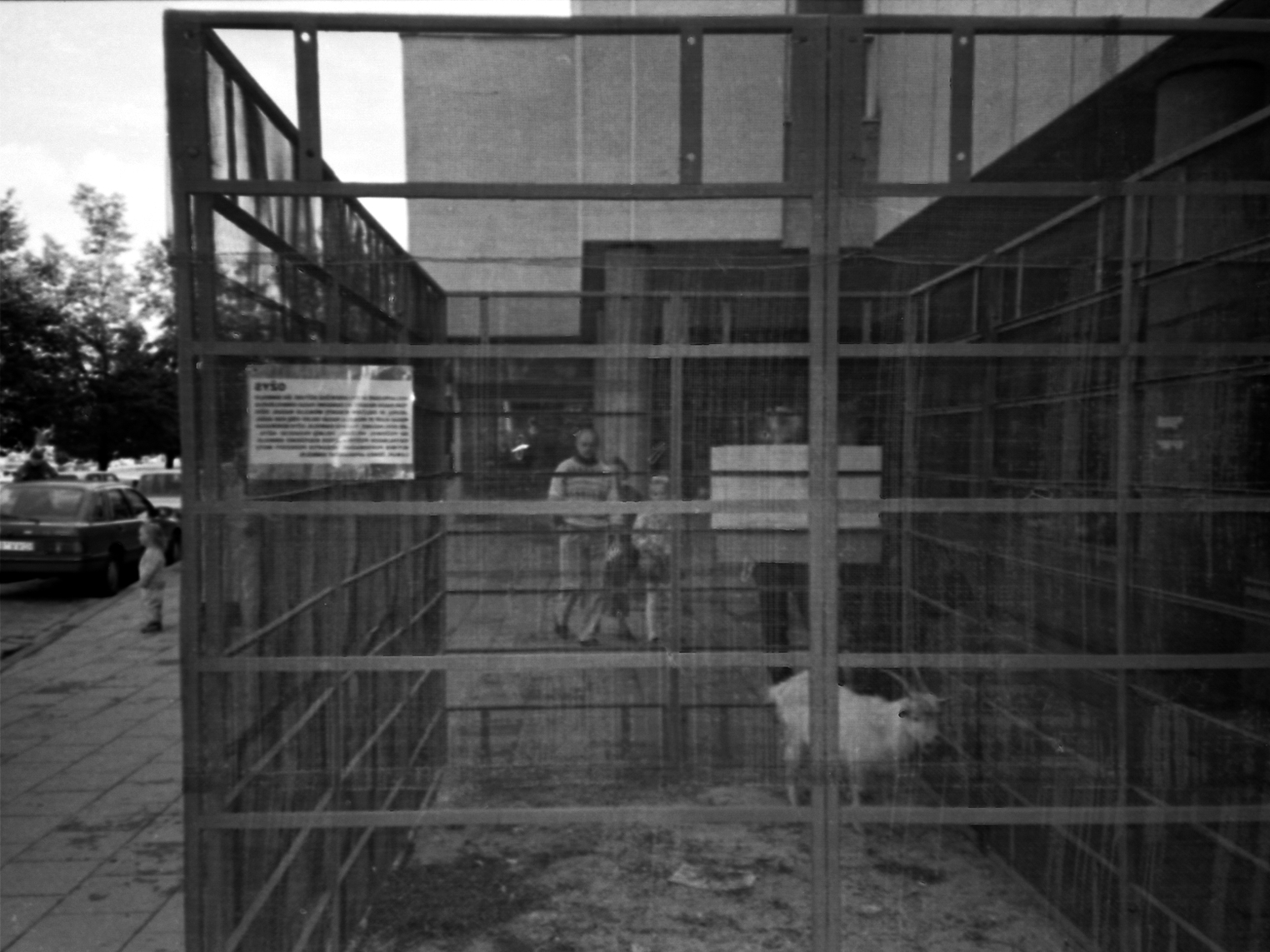
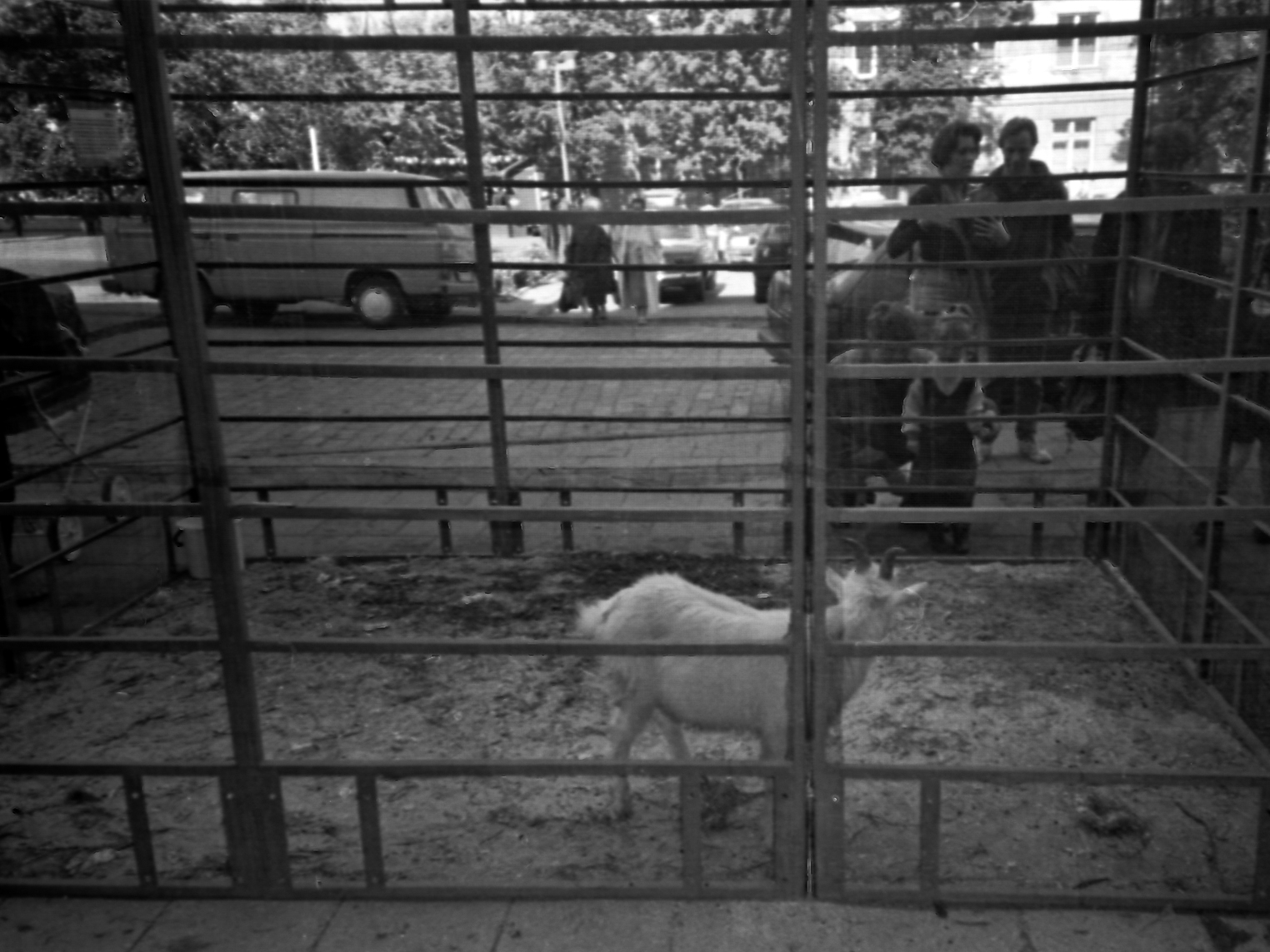
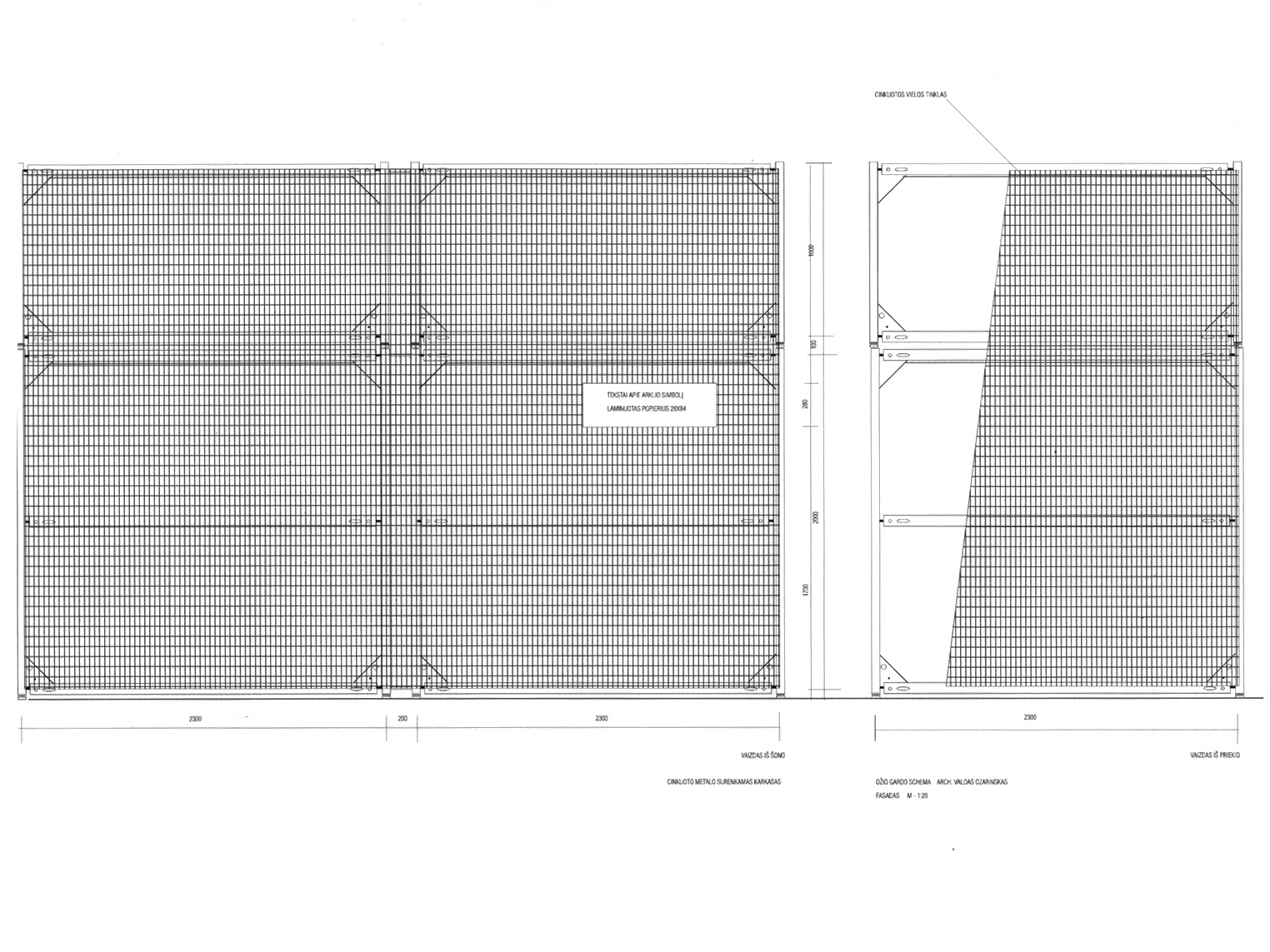
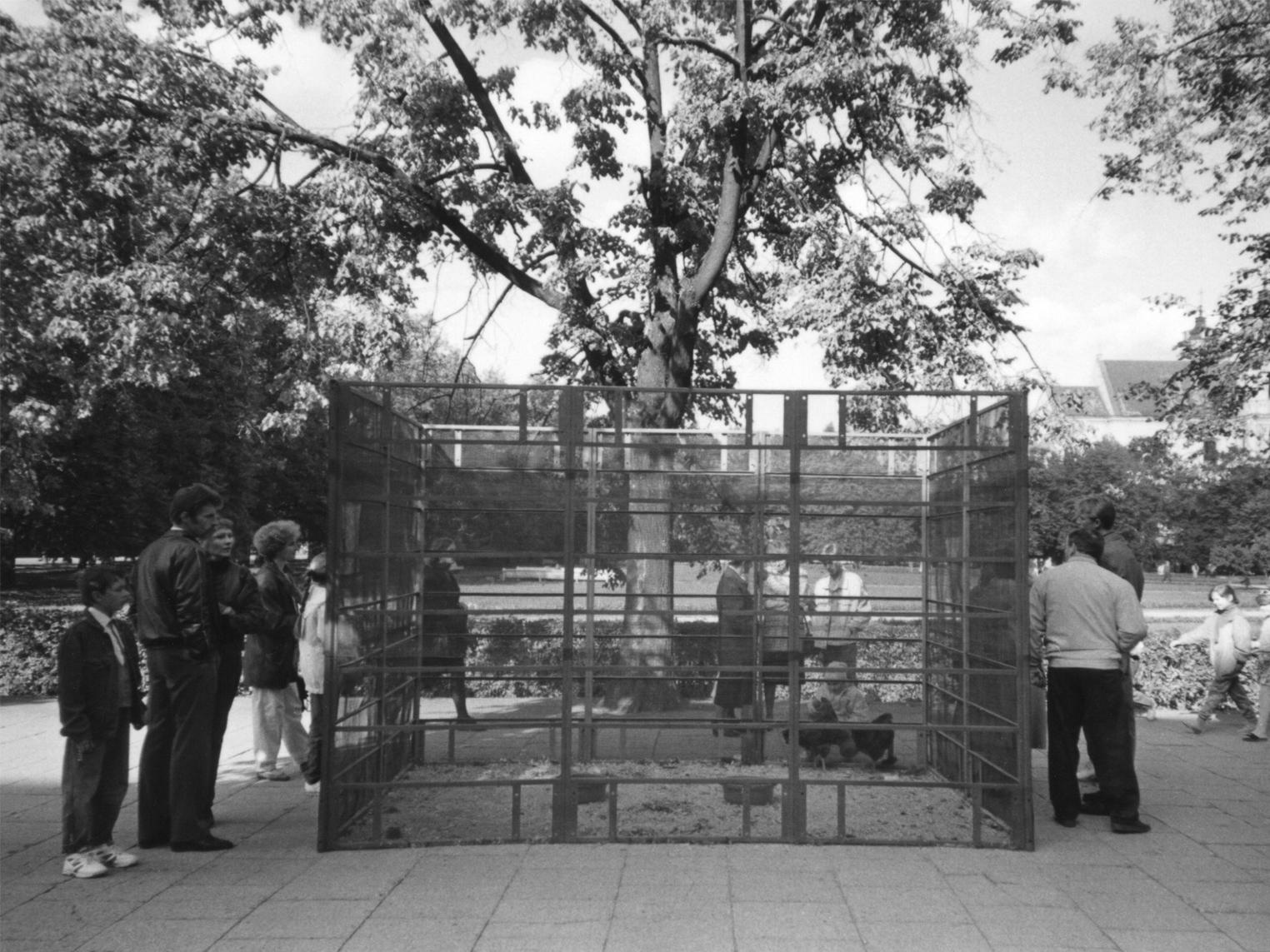
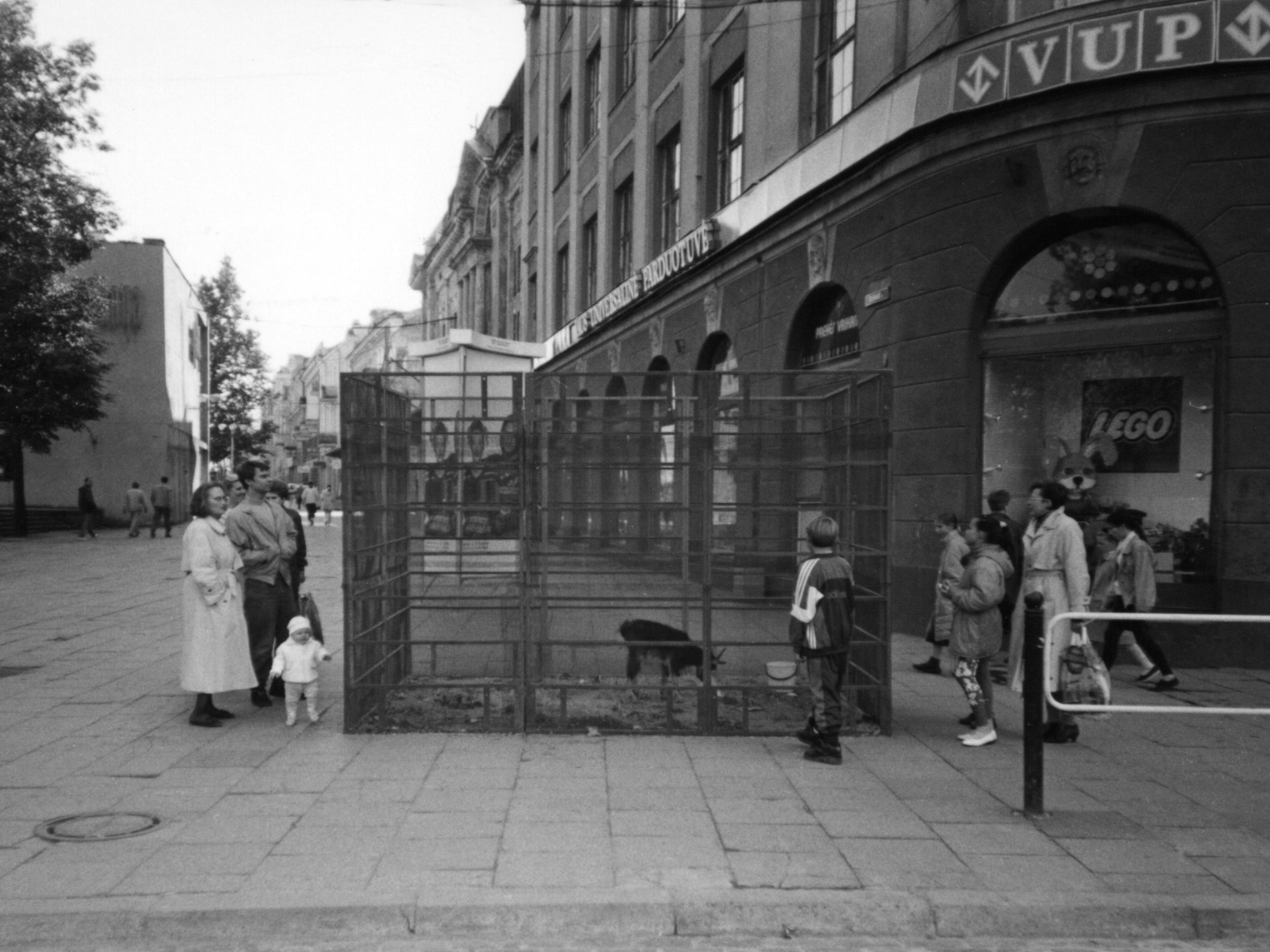
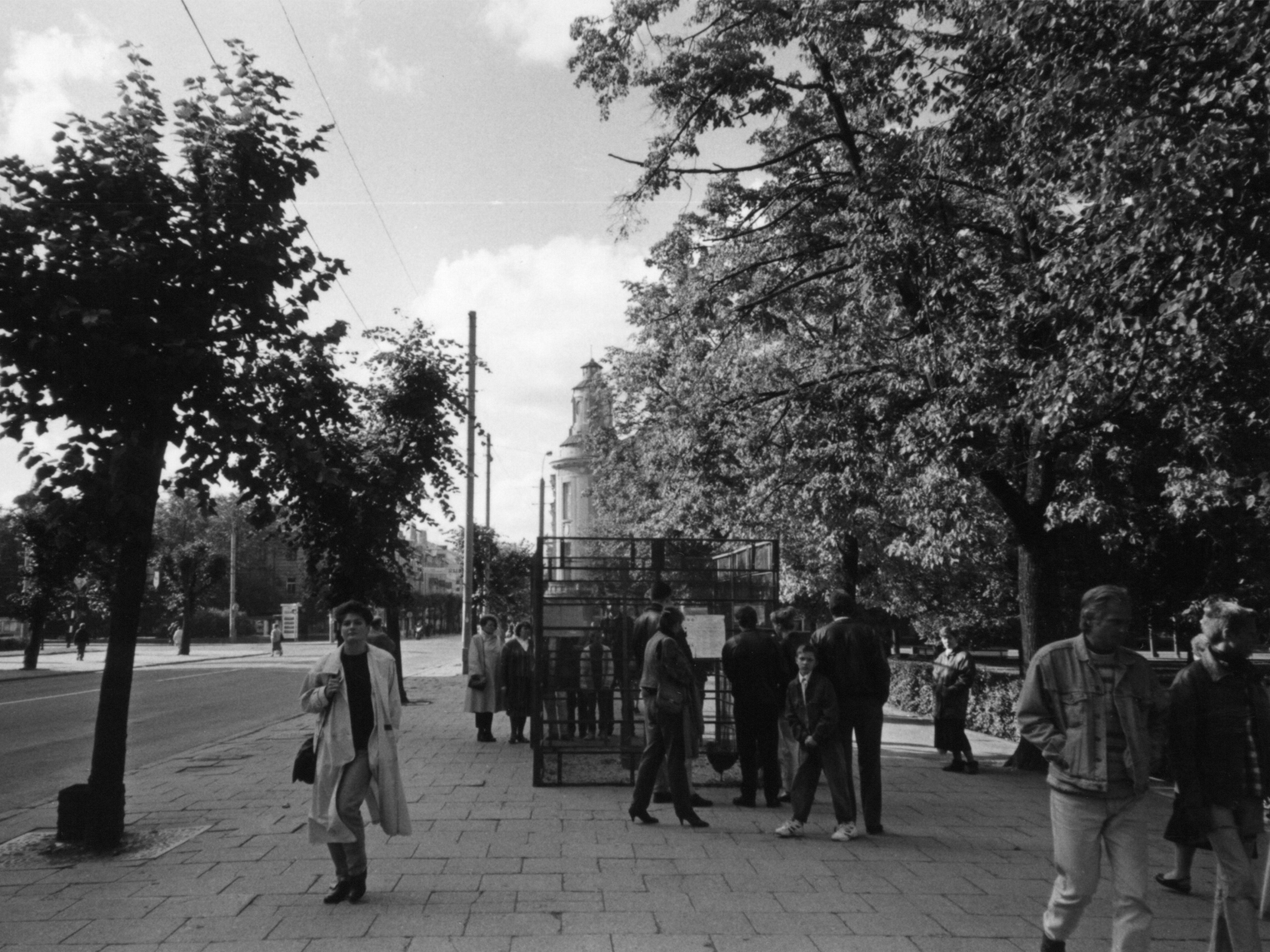
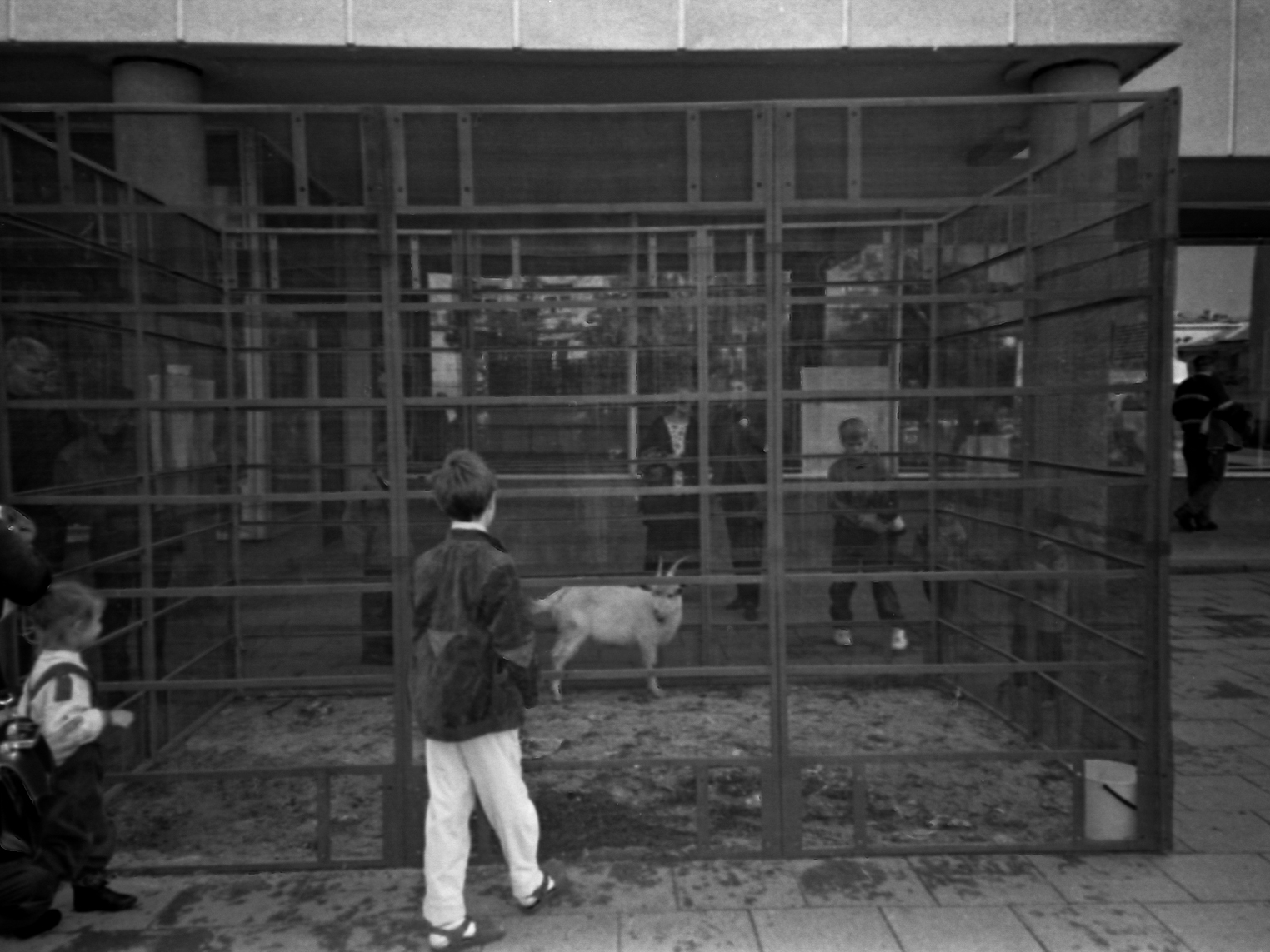
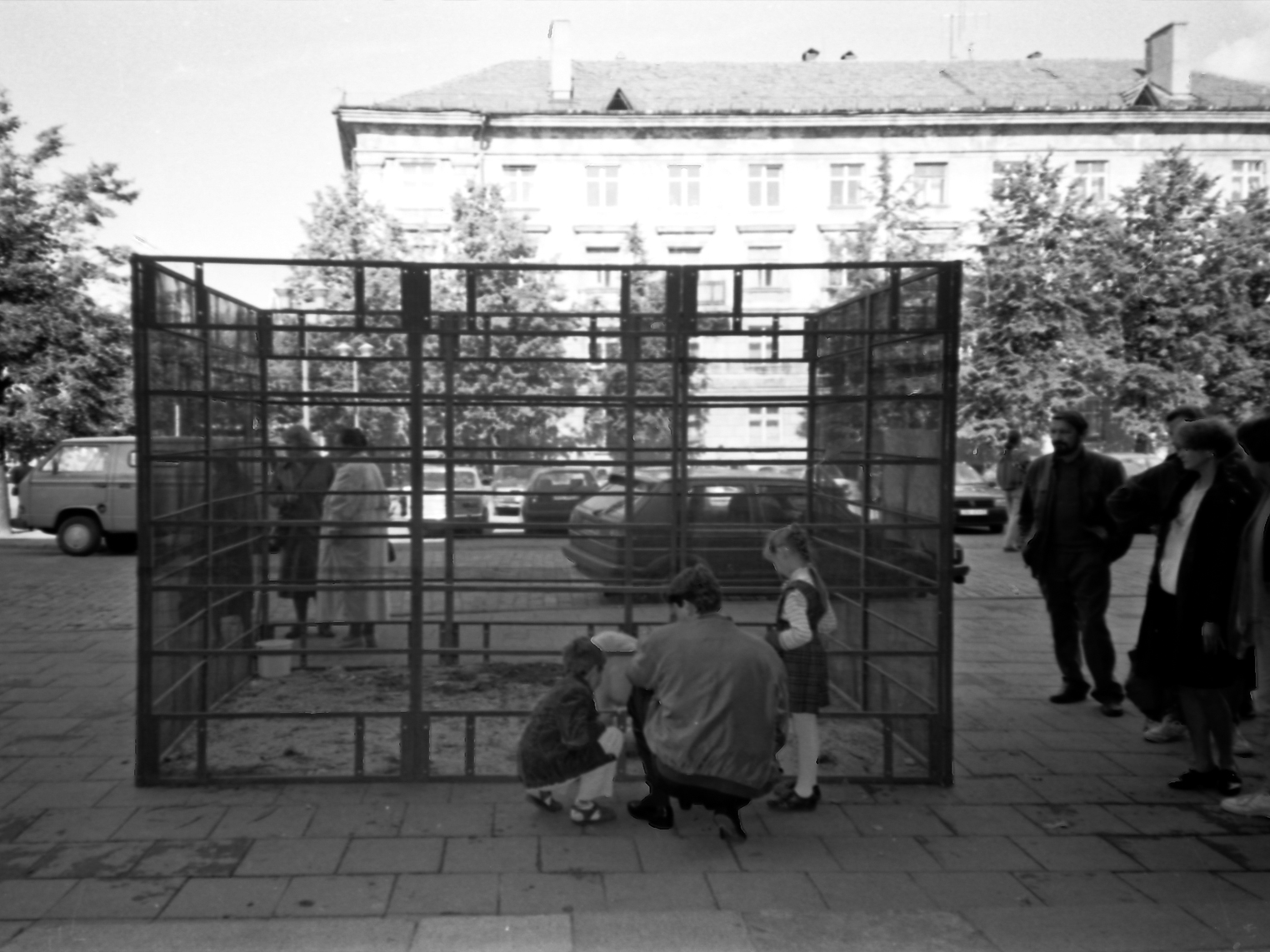
Installation at the Sostinės dienos festival, 1995
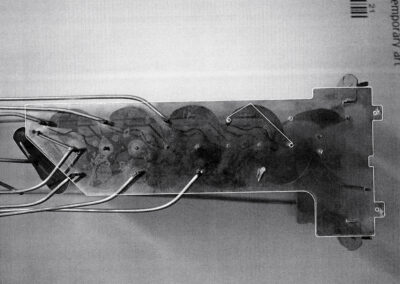
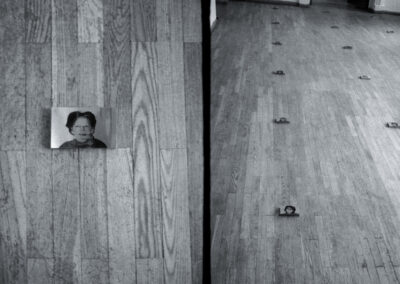
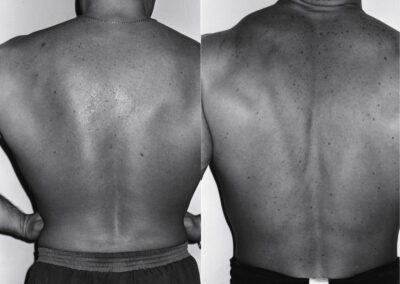
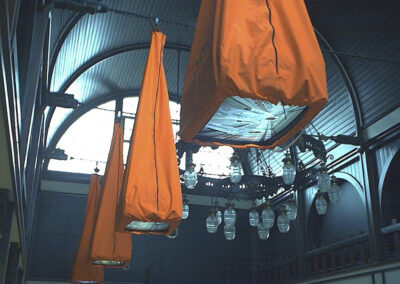
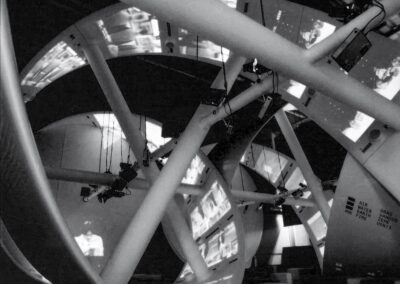
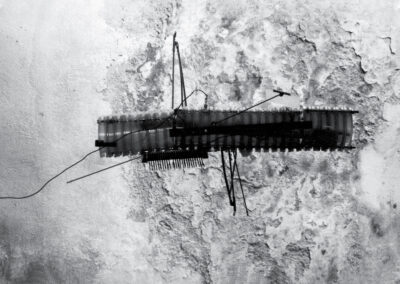
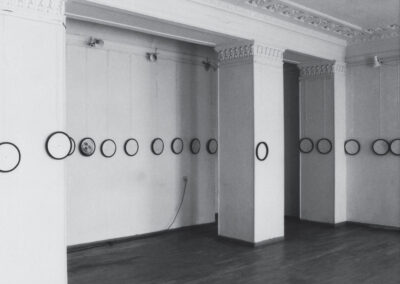
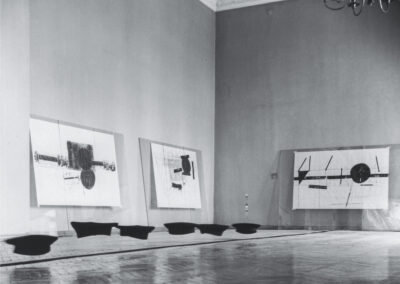
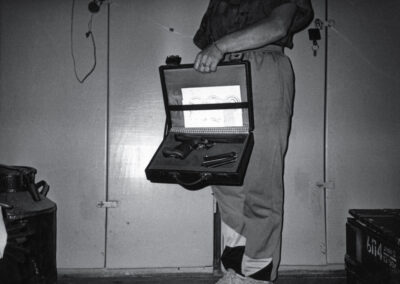
Invited to create an attraction for the general public at the first Sostinės dienos (Capital Days) festival (now Vilniaus dienos (Vilnius Days)), Ozarinskas installed cages containing live animals in several city squares. Cards attached to the cages presented stories explaining the symbolism of each animal. Given the format of the festival, the installation could initially be interpreted as an attempt to introduce urban residents – many of whom had grown up in the city – to animals associated with rural life, and more broadly to countryside culture that may have seemed distant or unfamiliar. However, Ozarinskas’s state of mind at the time, together with his concern about prevailing trends in Lithuanian architecture, suggests that this gesture was not accidental within the specific context of an urban celebration. He was highly critical of contemporary architectural tendencies that sought to revive ethnographic traditions and, through this project, publicly framed a city celebrating itself as a ‘capital’ as a rural village. What remained absent on the accompanying cards – but was widely known – was that the names of these animals (rooster, ram, goat, and others) are commonly used as swear words and insults in Lithuanian. In this way, the architect used the festival as a platform for a pointed critique of Vilnius and its cultural politics.
– Virginija Januškevičiūtė
ACTION AND ACT
‘An act today is a necessary substitute for a discredited work of art, or, more precisely, an alternative, as an act should not replace the work of art and the system of aesthetic categories in this way inheriting its connotations. It should under no circumstances not need to be allocated a place in the aesthetic category system, for this is a more general concept (political, social, sexual, civil, military, etc. act), which
can be placed among several systems. An act, unlike a work, does not indicate substance, invariability, meaning; it signifies action, deed, confrontation, a fleeting or continuous statement. It indicates a relation, but not an essence. It is an act of stating, expecting no utterance. An act may be specified as a situation, pretext, action, creation of circumstance, event, doubt. The artist who follows this strategy, does not create but provokes, offers, intervenes, comments, identifies, infiltrates, initiates, etc.'[1]
That, which in Lithuania is given the term social plastic, usually takes place in the form of an act (continuous or momentary).
[1] Raimundas Malašauskas, ’80–117′, Mare Articum Magazine, 1997, No. 1.
– Raimundas Malašauskas, 1999.
Author: Valdas Ozarinskas
Photographer: Valdas Ozarinskas
Art Projects