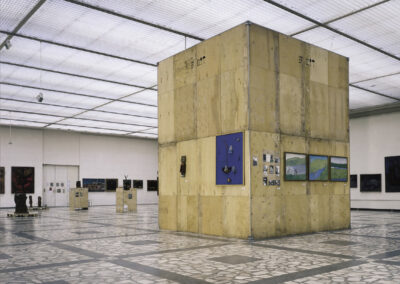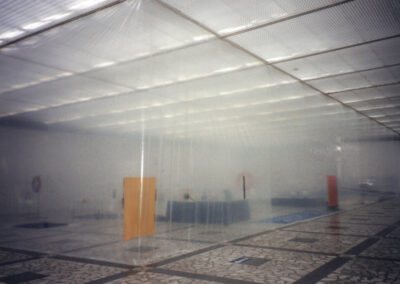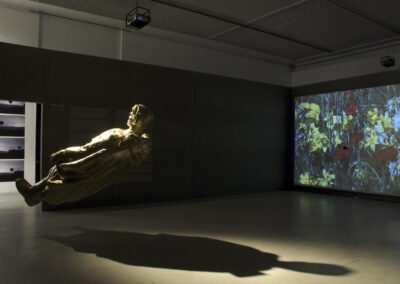
Liberated Objects, 1998
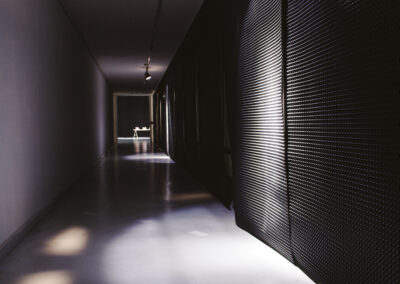
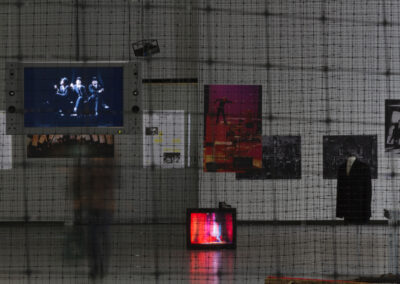
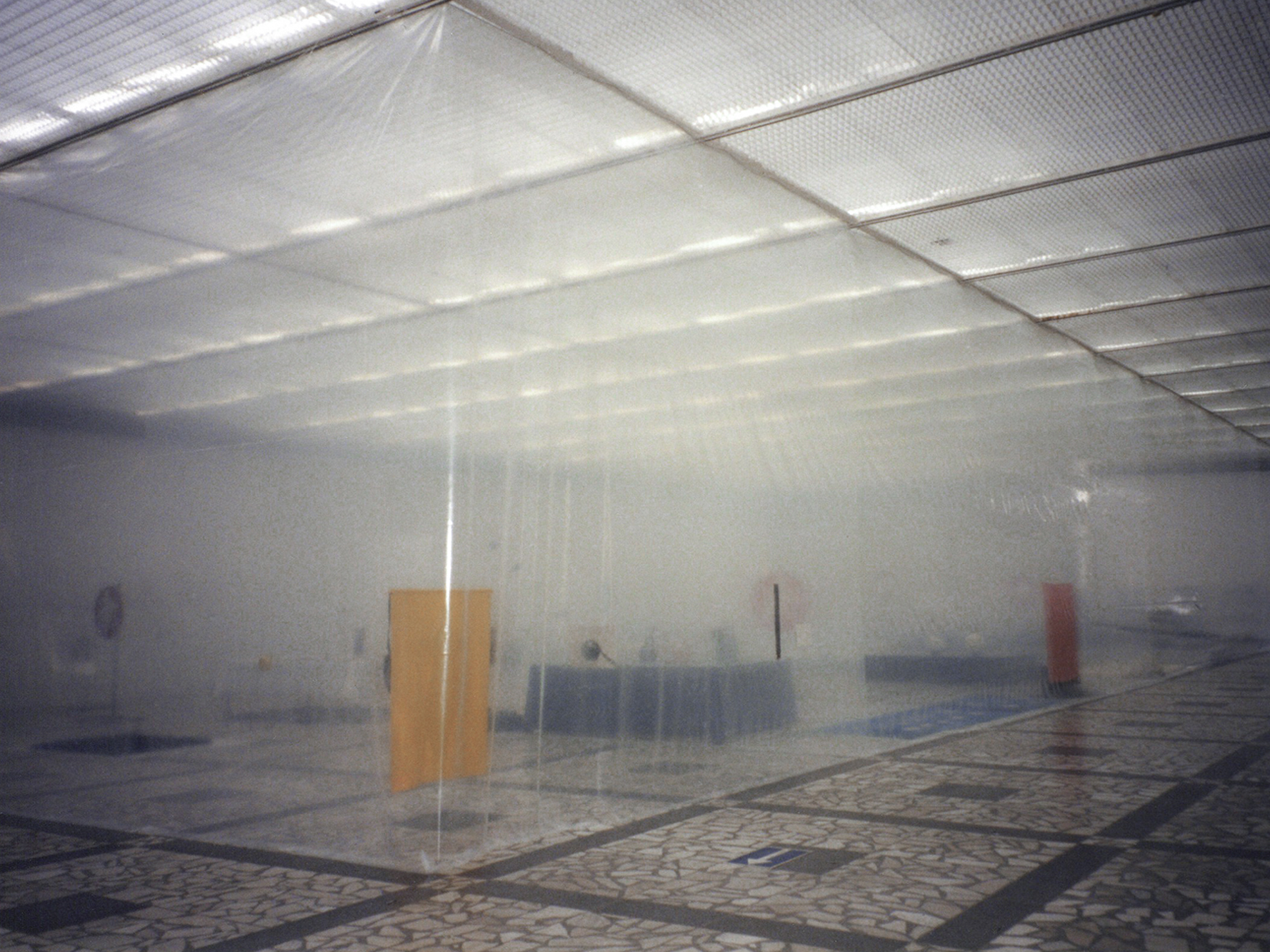
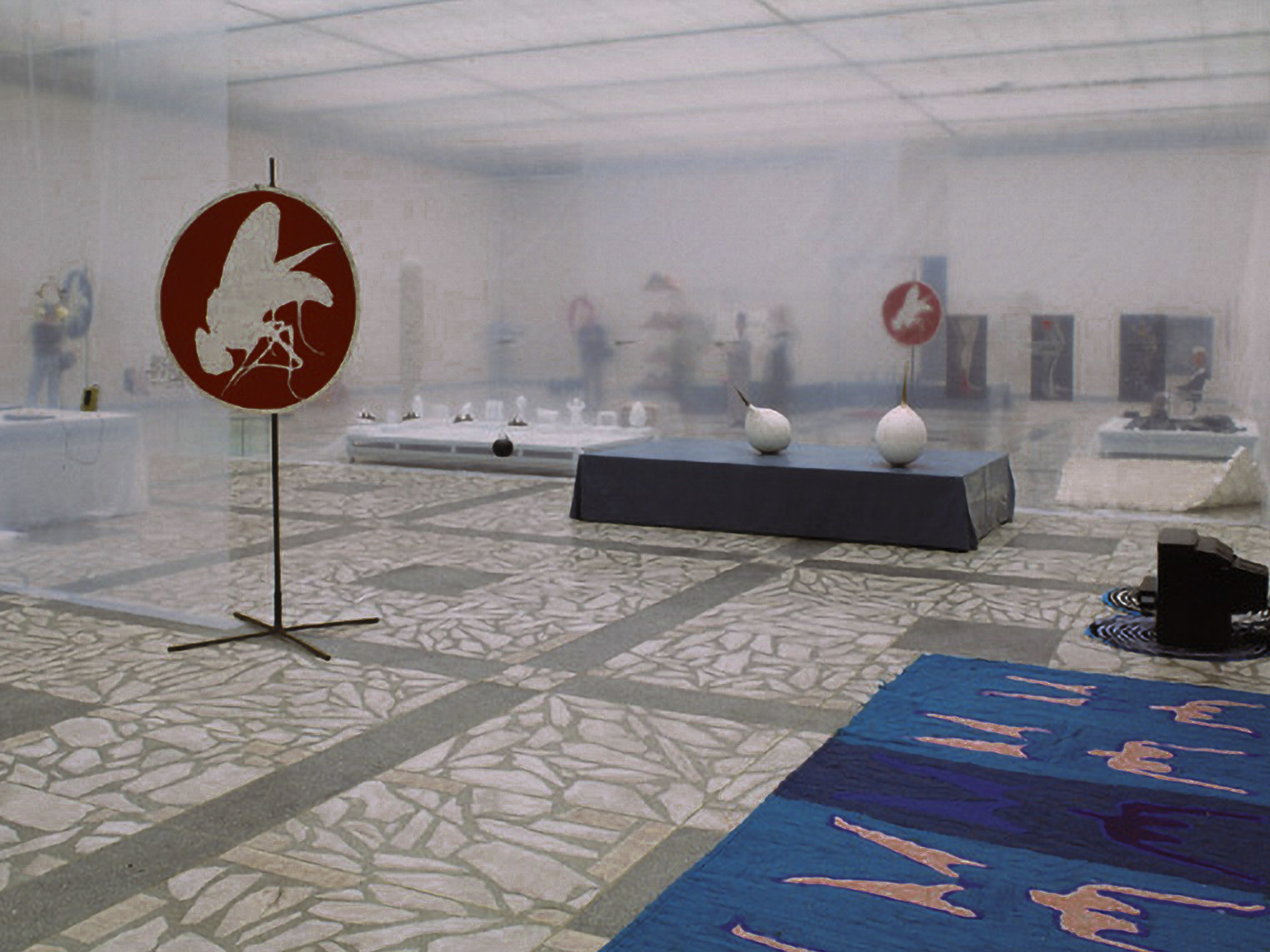
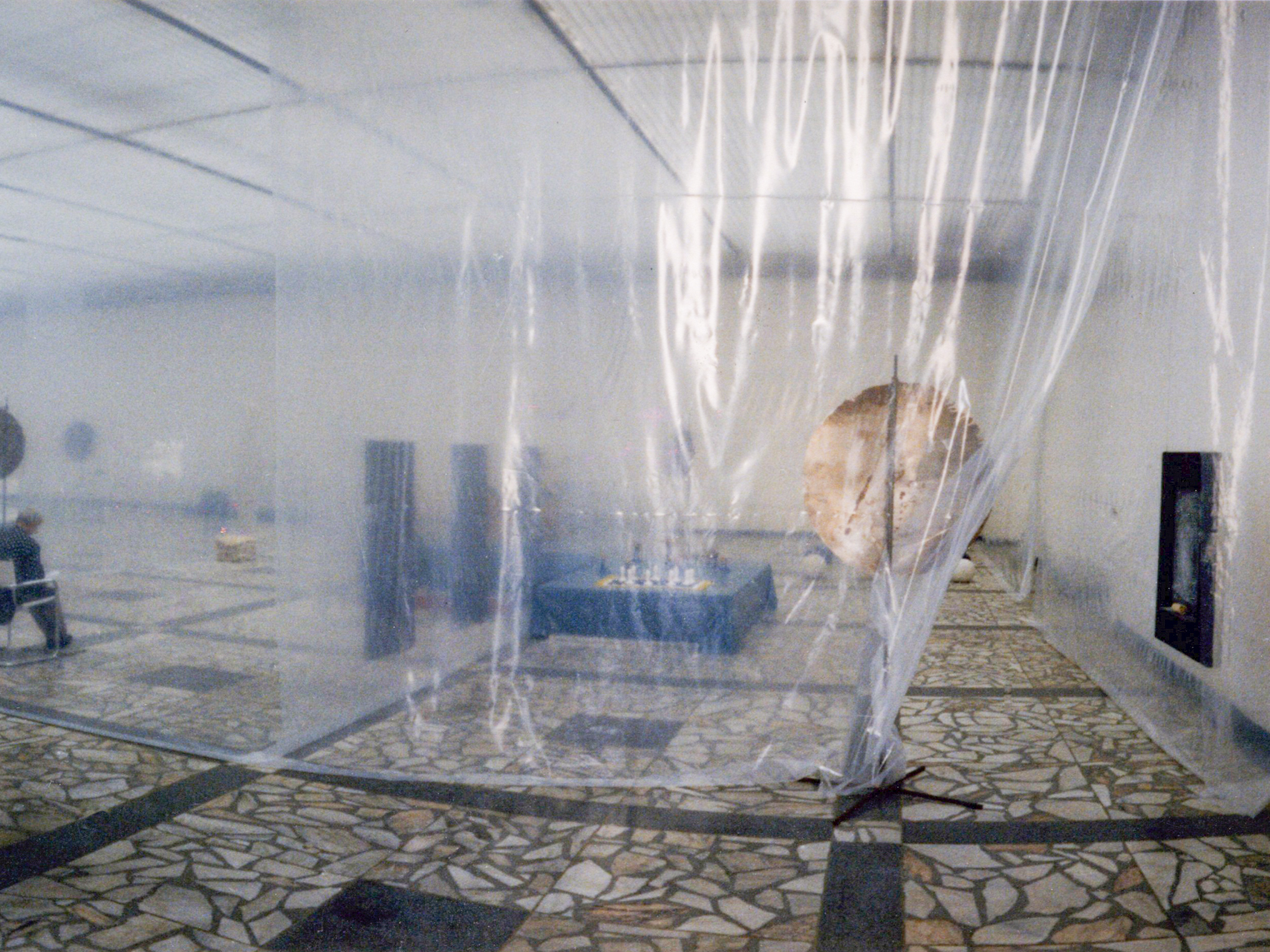
One of the exhibitions Ozarinskas designed was the large 1998 survey Liberated Things. In it he continued an experiment started for the exhibition New Lithuania in Gdańsk and partitioned the Great Hall of the CAC with polyethylene sheet. It was a particularly pragmatic solution, since the cheap and easy-to-fasten polymer provided a way of managing the vast room. It also provided a way of neutralising the aesthetics of the works on display, which may have contrasted with the architect’s taste.
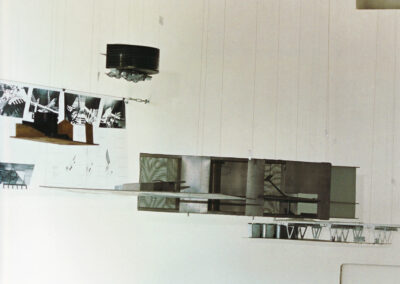
Valdas loved displaying architectural models freely floating in space as if they were in a state of weightlessness [he also curated this part of the exhibition], as if emphasising that architectural ideas don’t need foundations, pedestals or any other type of support. Architecture that doesn’t rest on anything is Ozarinskas’s maxim, which brings us back to de Saint-Exupery’s idea – what would flying aeroplanes be like if there was no Earth and therefore no risk of falling.
– Virginija Januškevičiūtė, ‘Exhibition Design’, in Architect without Architecture? A Retrospective of Valdas Ozarinskas: exhibition guide, ed.: Virginija Januškevičiūtė, Vilnius: Contemporary Art Centre, 2018, p. 34.
Exhibition halls with nothing on the walls. That is the impression one gets when glancing at the large and southern halls of the Vilnius Contemporary Art Centre, where last week the applied arts and architecture exhibition Liberated Objects settled in. […]
‘Settled in’ is probably the most accurate way to describe it. First, we encounter the architectural part of the exhibition: in the centre of the hall, objects hang in the most unusual ways, many of which can only be recognised as architectural models upon closer inspection.
A whole array of materials is used – wood, plastic, metal, small found details, or even… an aeroplane wing.
Everything is suitable for inventive architects whose daily creative impulses have at last broken free from the besmearing shackles of clients, and now hang as independent works of art – objects – in the Contemporary Art Centre.
The curator of the architectural section, and the architect of the entire exhibition Liberated Objects, is the well-known artist Valdas Ozarinskas. His idea to suspend these works in mid-air evokes the real situation of creative professionals in the field: because of still poorly educated clients, the ideas of architects who work in non-standard ways quite literally ‘hang in the air’. Yet during the opening, it becomes clear that the situation is changing, even if very slowly. It is quite possible that even some of the ‘unidentified objects’ suspended in the exhibition hall, marked only with numbers, will one day take tangible form and enliven the country’s landscape currently wasted by areas such as Pilaitė[1]. […]
So far, it is clear that the plastic house project, created by the architect in the Art Centre’s main hall, truly enlivens the traditional panorama of art exhibition strategies. Huge sheets of transparent film hang from the ceiling, forming an imaginary house with an entrance hall, a bathroom, a kitchen, a master bedroom, a children’s room, and even the ‘luxury’ of a typical apartment – a little dark room (skladukas).
In this entirely transparent house, whose walls are constantly moving, one feels as if inside the lungs of a giant urban whale.
It is a somewhat uncomfortable sensation, particularly on a hot summer day, when the ‘whale’ seems to breathe all the air out of the hall, leaving only the unpleasant smell of polyethylene.
The improvised house resembles a sea creature even more in that, once you enter through the ‘mouth’, you can exit only through the ‘tail’ […].
[1] Pilaitė is a residential area in Vilnius, mostly consisting of Soviet-era apartment blocks – translator’s note.
– Rūta Mikšionienė, ‘Keisčiausi namai – išlaisvintų daiktų karalija’. Mūzų malūnas, arts supplement of Lietuvos rytas, 16 June 1998.
Exhibition architect: Valdas Ozarinskas
Exhibition curators: Rūta Pileckaitė, Valdas Ozarinskas
Contemporary Art Centre, Vilnius
Photographs: CAC Archive
Other sources:
Audronė Jablonskienė, ‘Kuklus nenaudingų daiktų žavesys’, Respublika, 13 June 1998.
‘Laisvos vaizduotės išlaisvinti daiktai’ [Interview with the exhibition curator], Kultūros barai, 1998, No. 6.
Skaidra Trilupaitytė, ‘Apie išlaisvintus…’, 7 meno dienos, 10 July 1998.
Exhibition Architecture