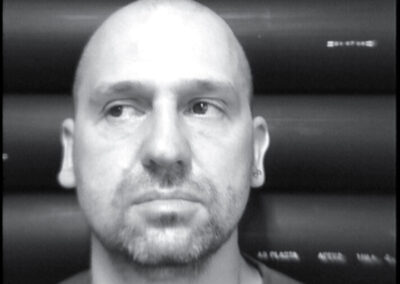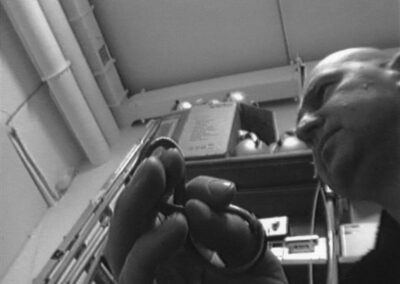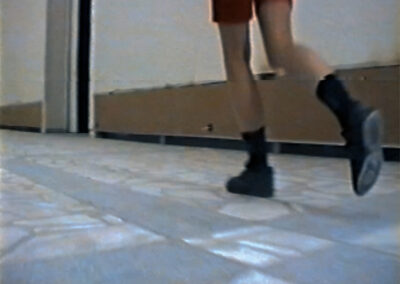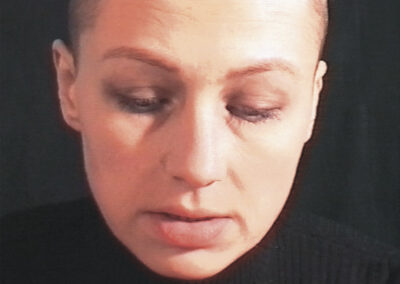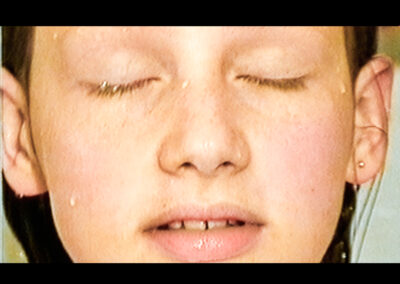
Red, 1997
What kind of music does he like to listen to at home? At some point Ozarinskas favoured Fatboy Slim, but never shook the habit of watching French movies in their original language despite having no comprehension of the dialogue. He listens to the sound of the language as he follows the editing cuts and observes the interior details. A shower runs in the middle of the living room, blocking the sound of the TV. The softly rendered corners of the space move closer to the custom made lamps. We are in the apartment of Oze and Aida Čeponytė in Vilnius. A natural stop after intergalactic travel, home is an extension of their practice. Oze, a designer of things rather than an architect, retains the integrity of his lifestyle: the couple’s Porsche 924, is the same colour as their video installation, “Red“, presented at the Contemporary Art Centre, Vilnius in 2000, and the initial red tan of the EXPO pavilion.
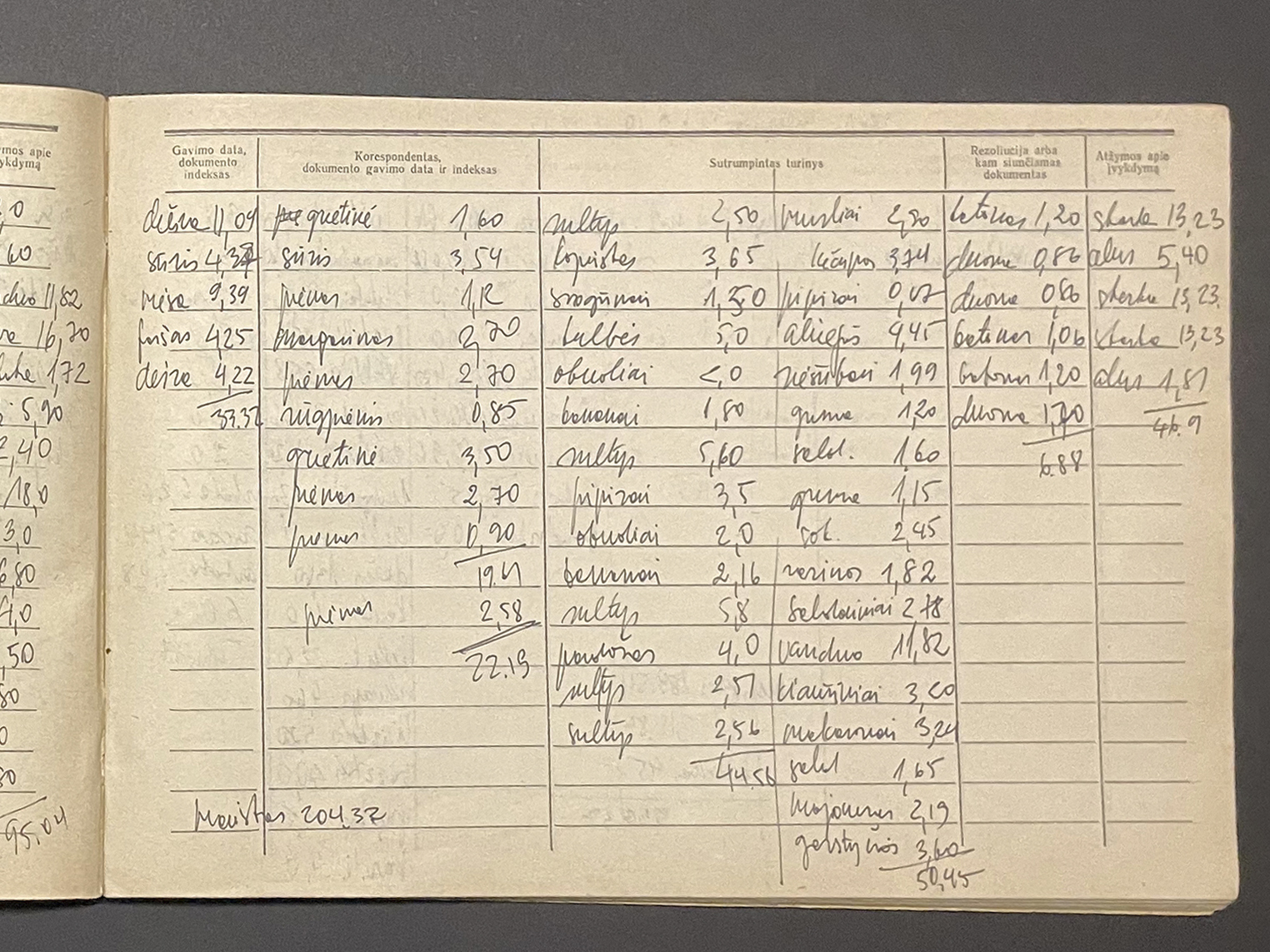
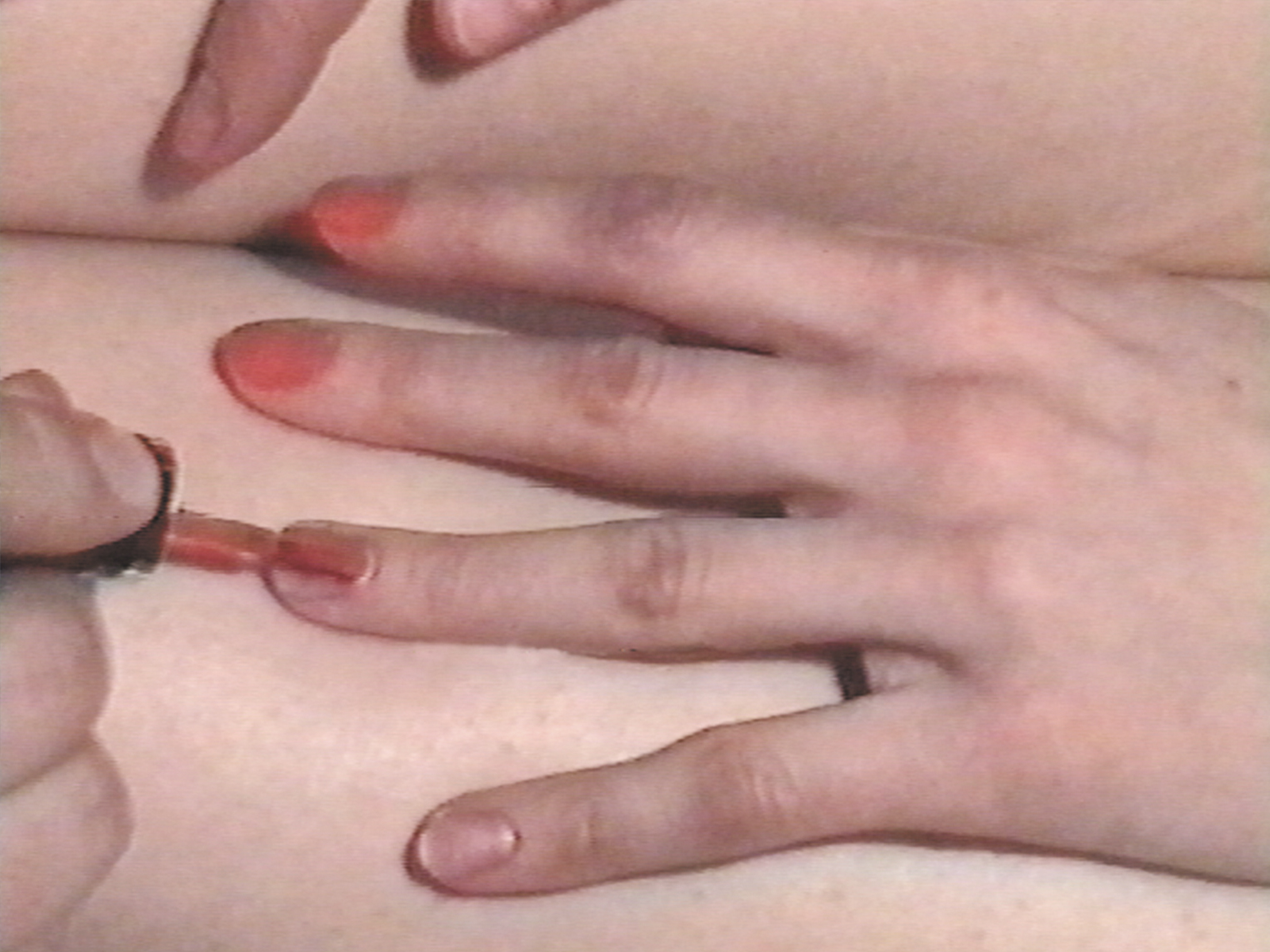
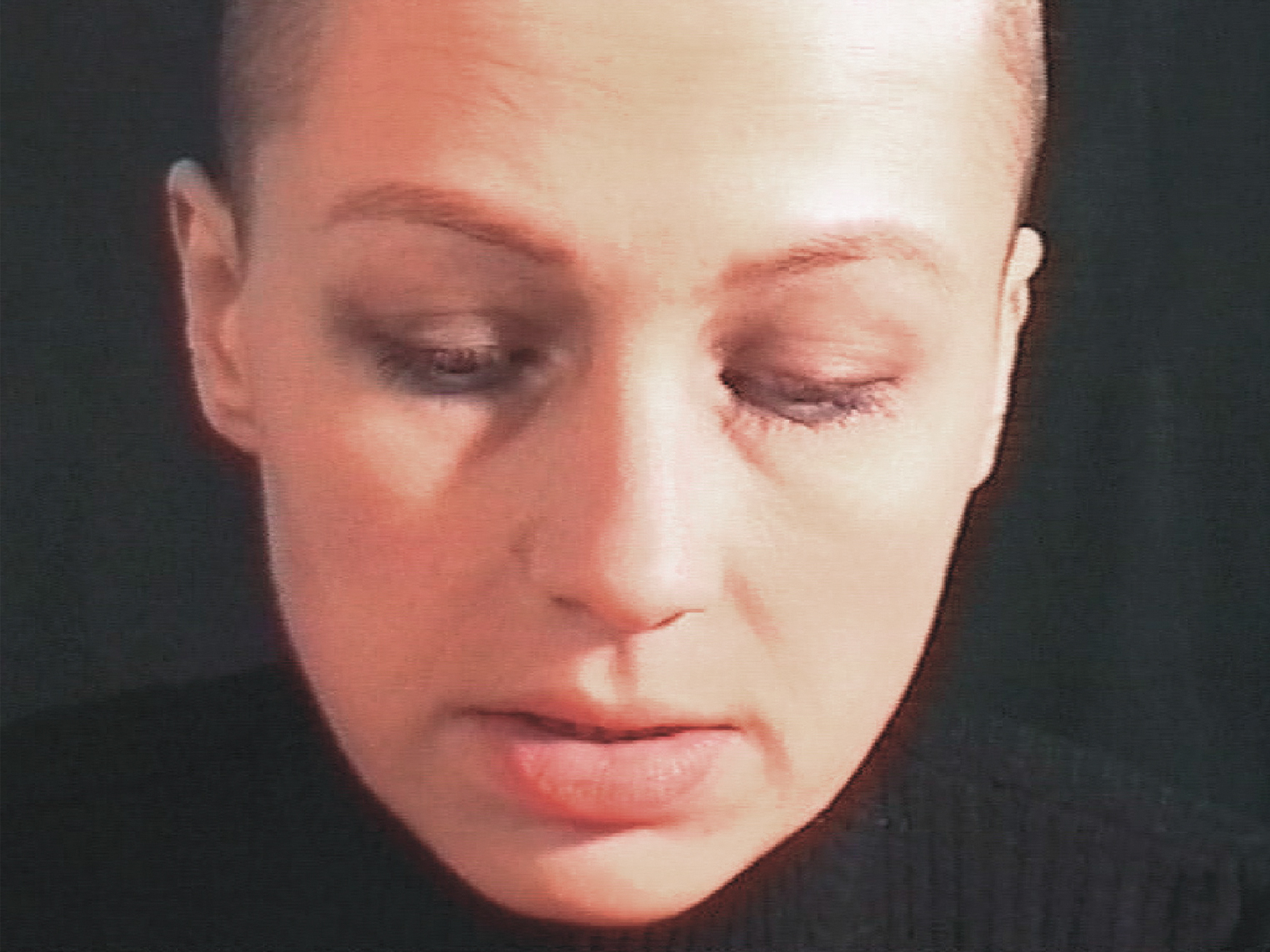
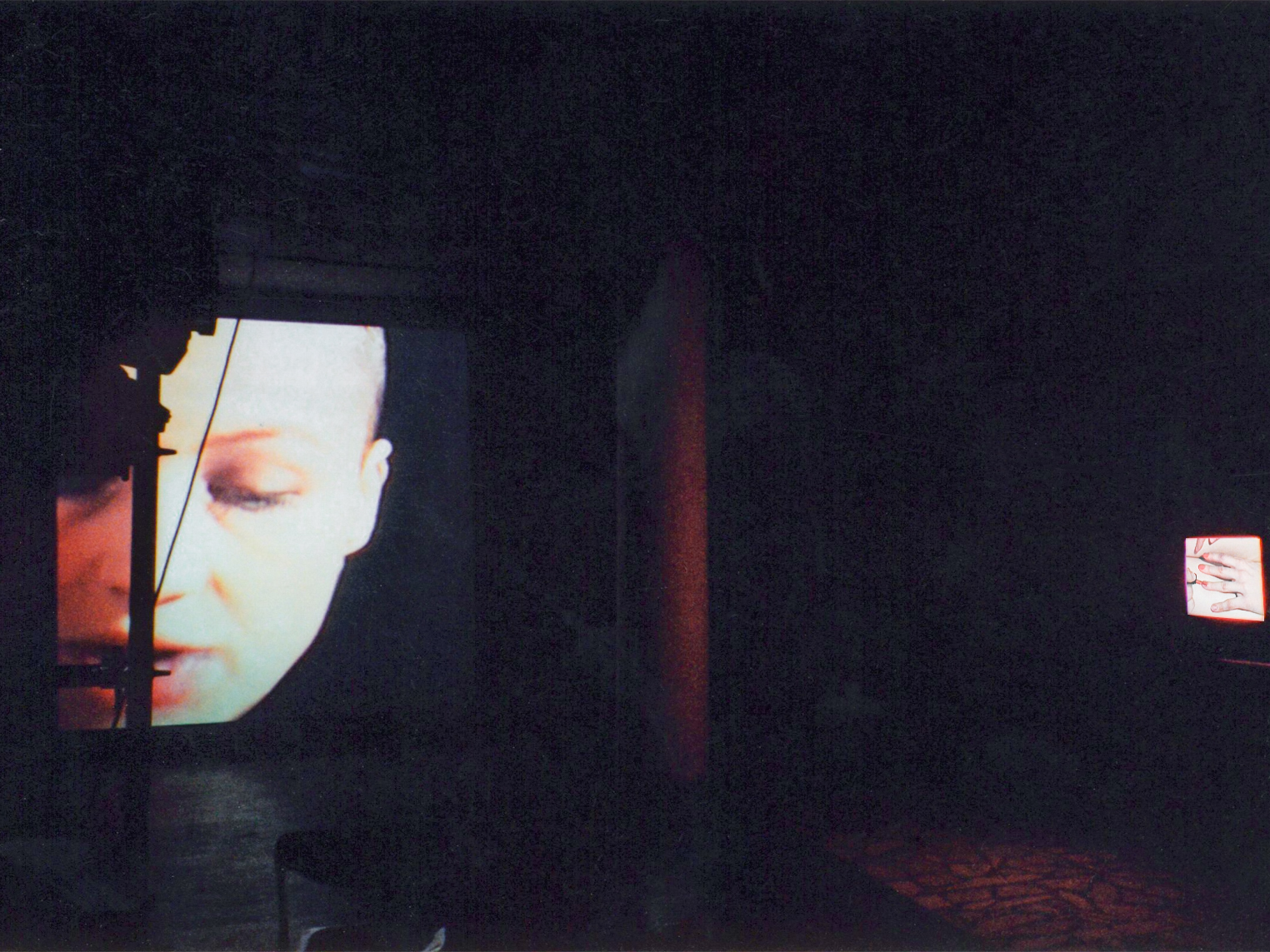
“Red“ was conceived at home like much of Oze’s and Aida’s work. In a two-channel video installation Aida reads the “home book” of expenses and income, meticulously recorded for years. “Bread – one litas, sausage – three litas, milk – one litas…” she recites. On the second screen her fingernails are painted in red nail polish.
– Raimundas Malašauskas, „A Waiter from the Restaurant of Vilnius Bahnhof Made the Most Colourful Statement in EXPO 2000“, in Nu, 2002.
I am trying to recall instances where a man gets his hands on a woman’s beauty rituals. I am not counting those who do it as a profession, such as hairdressers, beauticians, or masseurs, because they are usually seen as genderless confidants, and we trust them with the secrets of our bodies. All other cases are marked by bleak fatalism. Pygmalion, who shaped the form he desired with his consumerist hands; The Burial of Helen, where the hero takes pleasure in ‘deconstructing’ the woman who disobeyed him; finally, the man who applies makeup to his wife for her final journey… Usually, a man only puts makeup on a woman when she is unable to do so herself and is completely dependent on him. He only dares to commit this crude intervention when preparing her for a ritual, preparing her for a sacrifice, taking away even the smallest modicum of freedom in shaping her own appearance.
Combining these two images into a single idea of a woman defeated by frozen time, her arms limp at her sides, being made up in blood (?) by an anonymous figure, we can interpret them as follows: ‘A hateful, vengeful, cruel celebration; the active masculine principle thirsting for blood and spilling it, liberating the helpless feminine principle from the tortuous desert of misfortunes of frozen time; holding a torch and escorting her into a new existence like a bride.’
– Kristina Sabaliauskaitė ‘Raudona’, Šiaurės Atėnai, 15 December 1997
The latter is implied in Čep-Oz-aurs’ installation by a number of things. Here is what is particularly striking: she pours the ashes of everyday life (i.e., not of passion) over herself (the tired face on the big screen, the monotony of the voice, the prices of socks, sausages, newspapers, cheese, shoes, etc.). She herself glows in the embers of celebration (i.e., passion) (those hands, that blood-like varnish). Pulsing in a refined and subtle way. So refined and so subtle that, first, you can no longer tell which is more enticing – the day-to-day (i.e., non-passion) or celebration (i.e., passion). And second, you realise that nothing would exist without a connection between them.
– Alfonsas Andriuškevičius, ‘Minimalistiškai optimali raudona’, Šiaurės Atėnai, 13 December 1997
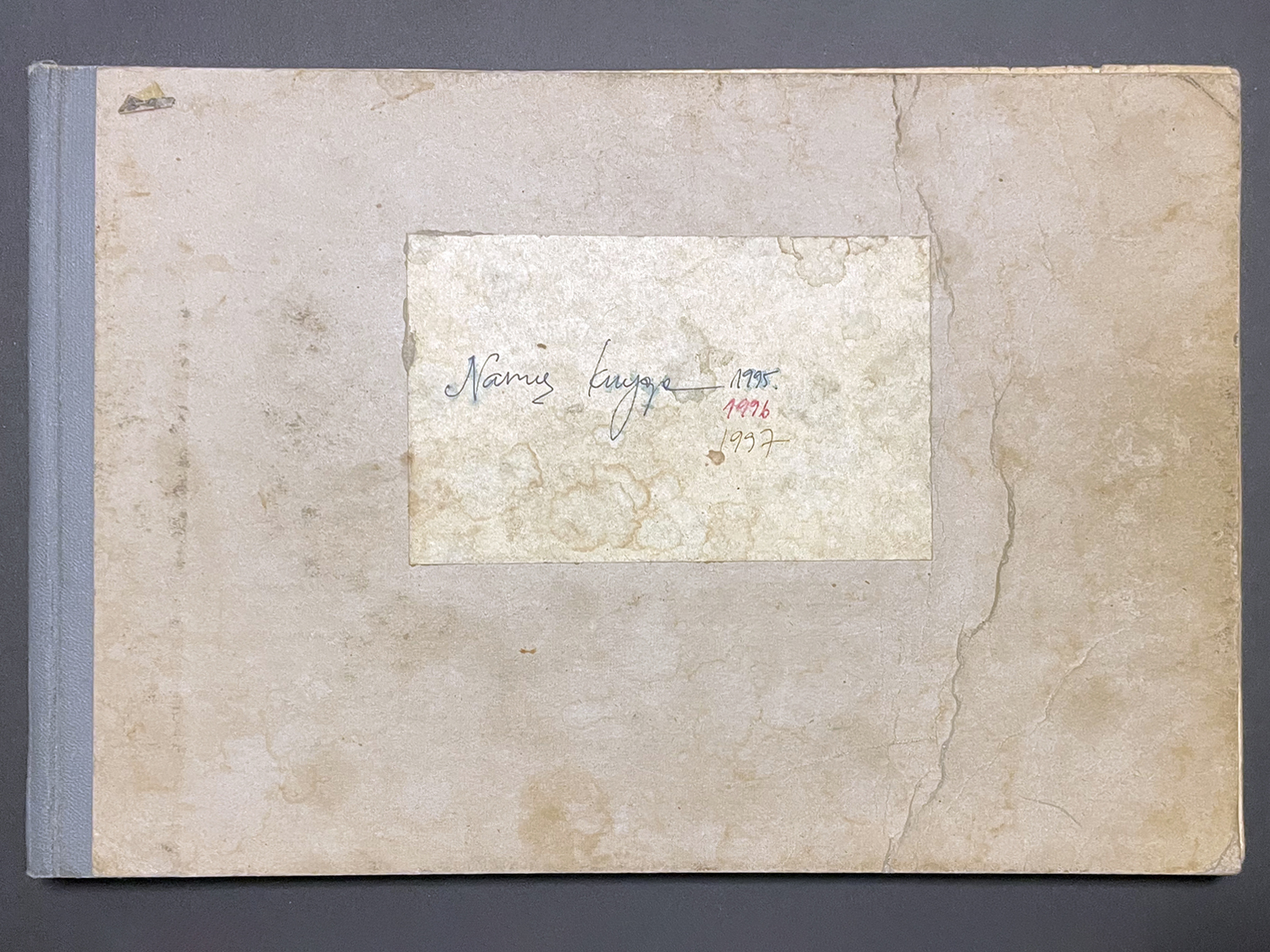
Artists: Aida Čeponytė, Valdas Ozarinskas
Reading, video projection, duration: 63 min
Applying Varnish, video on monitor, duration: 63 min
Exhibited at the Contemporary Art Centre, Vilnius,1997 and 2018
Photographs courtesy of the artists
Video installation photograph courtesy of the Contemporary Art Centre archive
Other sources
Skaidra Trilupaitytė, ‘Kiek kainavo batonas, šokoladas ir citrina?’, 7 meno dienos, 4 May 1997, No. 17.