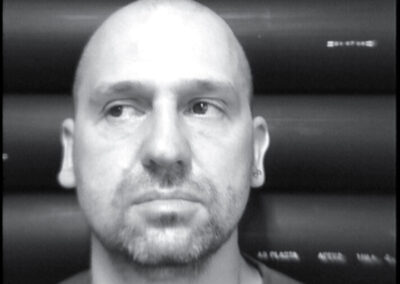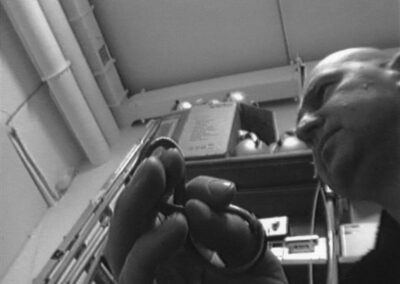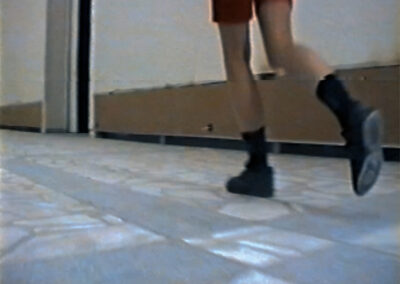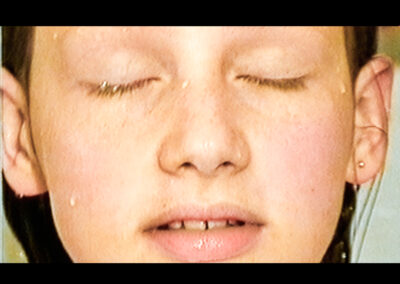
Rowing; Rowing 2, 1997
Truly knowing something is impossible. One can name appearances, feel the atmosphere, uncover the sense of absurdity in different societies, spaces, or situations. Be it here or somewhere out there, life follows the same rhythm; scenery changes, the rhythm persists. Day after day: dreary, monotonous life, identical situations.
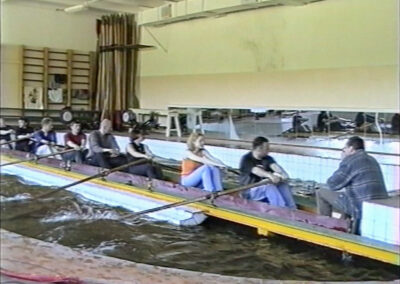
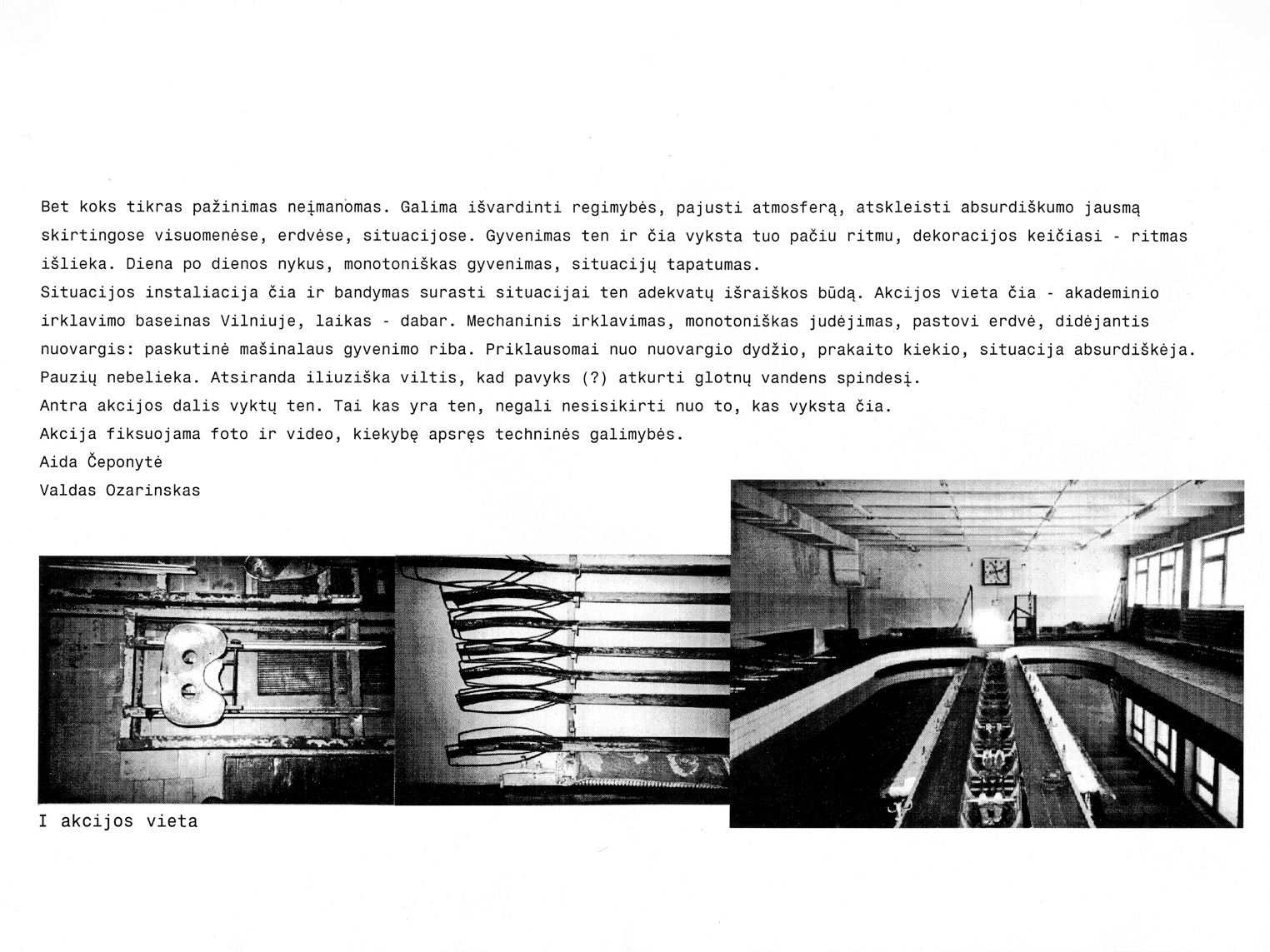
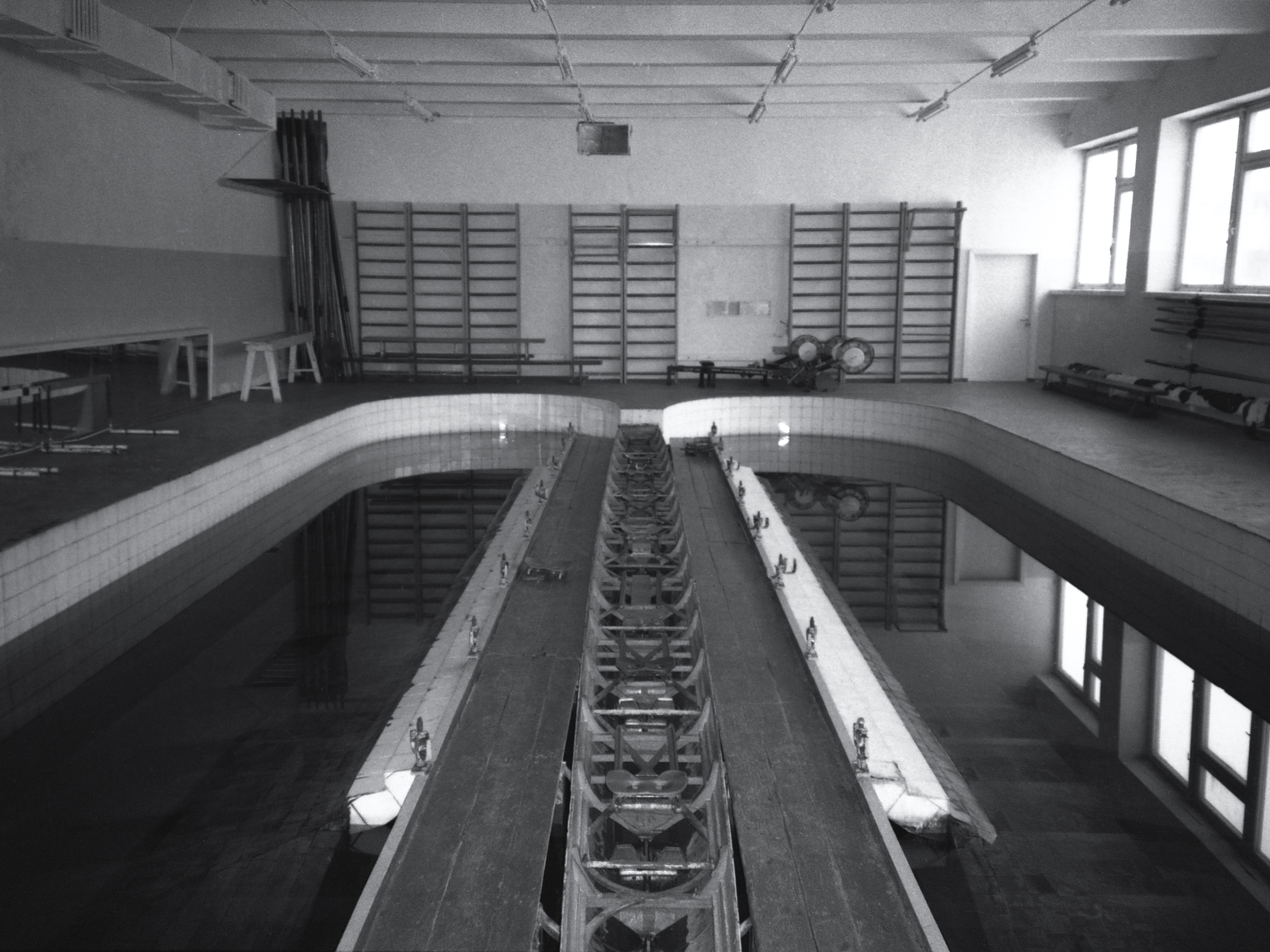
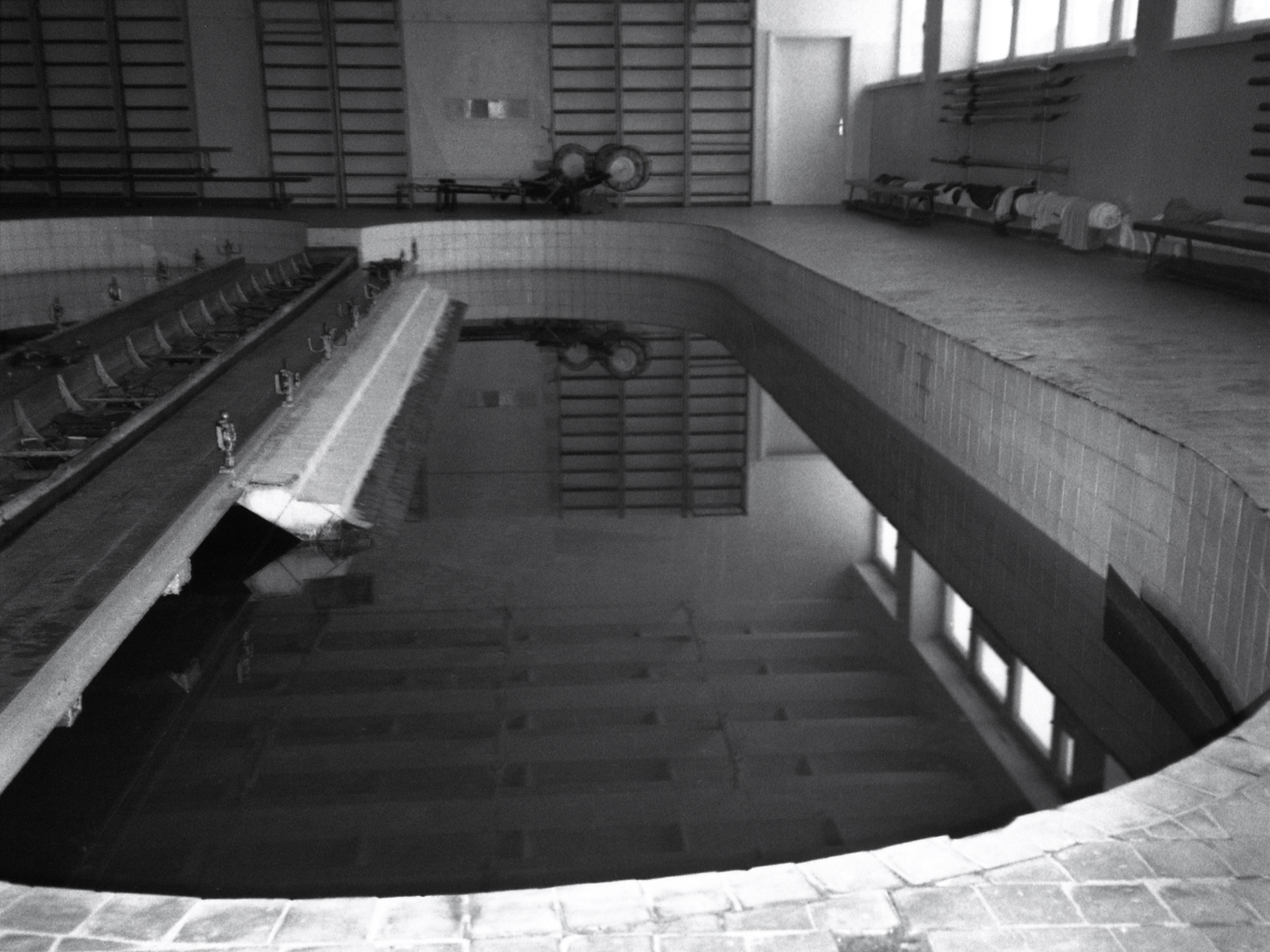
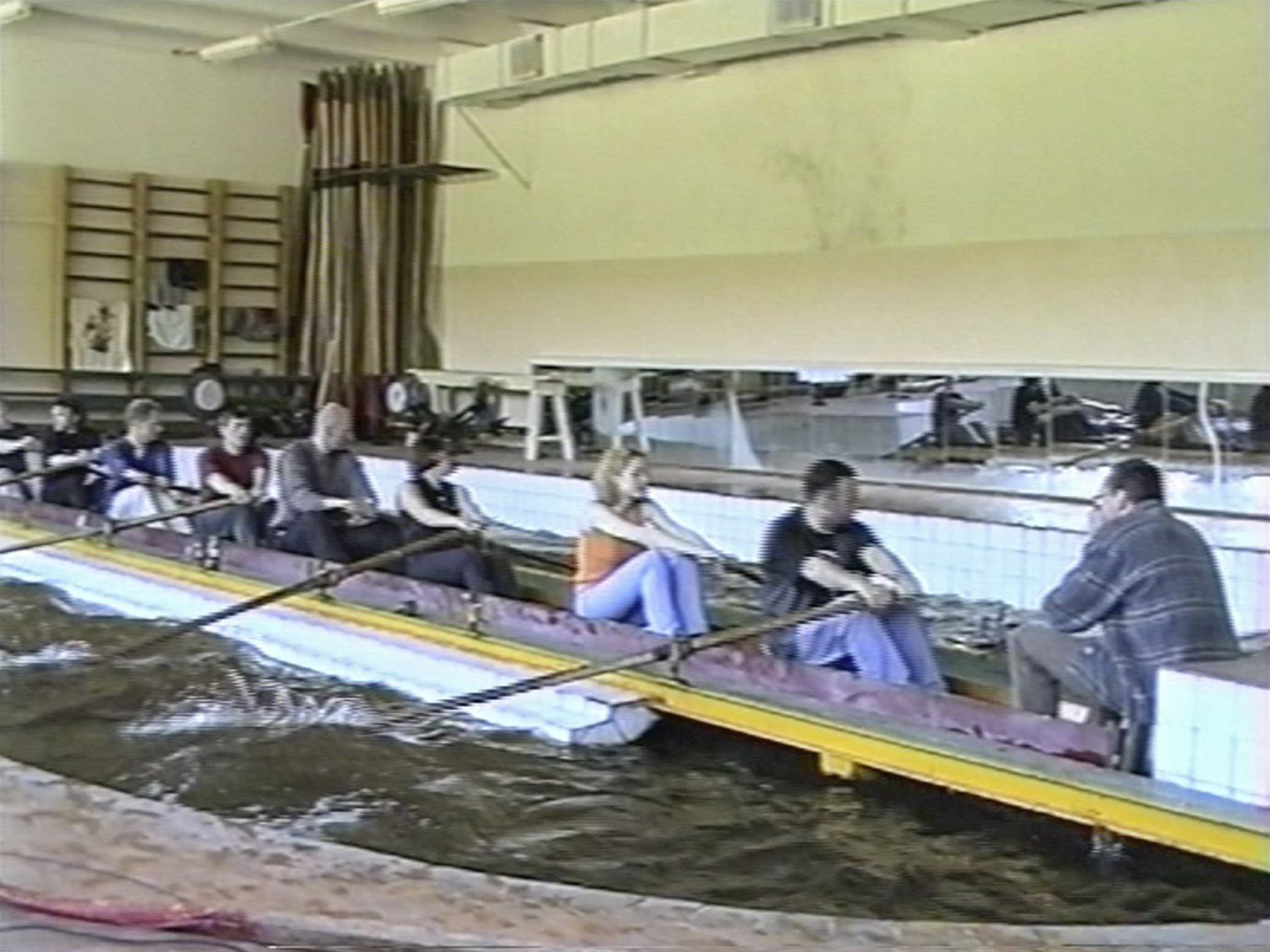
The situational installation located here also serves as a search for an adequate way to express the situation out there. Here, the location of the action is the academic rowing pool in Vilnius, and the time is now. The mechanical rowing, the monotonous motion, the immutable space, the increasing fatigue – this is the final frontier of mechanical life. Depending on the level of fatigue and the amount of sweat, the situation becomes increasingly absurd. No more pauses. A false hope of successfully (?) restoring the smooth glimmer of water emerges. The second part of the action would take place out there. What happens out there cannot be separated from what happens here.
– Project statement
In this work, a static camera documents an art performance. We see a group of the duo’s friends paddling together in a stationary rowing simulator at the Vilnius Academic Rowing Base. This video was intended for an exhibition in London, where the duo participated together with several other Lithuanian artists, and marked the beginning of a series consisting of four videos. The footage and the intervention itself were presented as a comment on the sameness and dullness of everyday life, the inevitable cycle of constant movements; at least, this is what the text imbued with an existential sadness on the flyer with the location and time of the performance suggests.
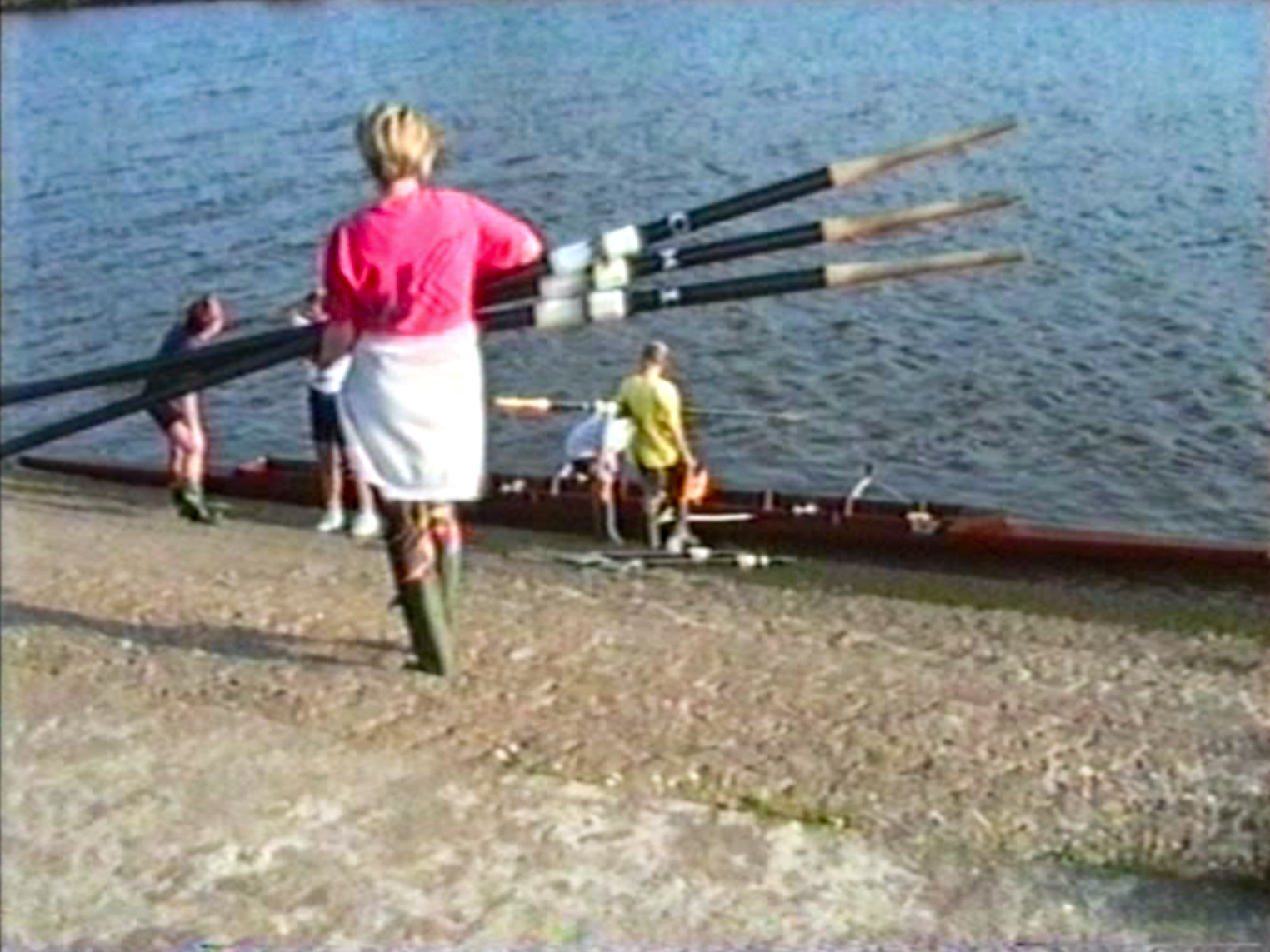
The second part of the series was filmed in London, and created an entirely different semantic field. The juxtaposition of the much more professional-looking British athletes rowing on the Thames and the stationary rowing simulator in Vilnius highlights the sharp difference between ‘here’ and ‘there’, East and West, Lithuania and Great Britain, in an insistent way. For those familiar with the work of the duo, this juxtaposition easily translates as a commentary on the appalling state of Lithuanian art, architecture, and even politics, at the time: at around the same time, Ozarinskas was participating in the culture wars of architecture, and expressed his resentment about the direction of the development of Lithuanian architecture and cultural policy in several art projects. Therefore, after acquiring a British companion, the first part of Rowing acquired the same conceptual rigour characteristic of [some of the other duo’s works]: razor-sharp, capacious and laconic.
[…]
Although these films lack the strict laconic form characteristic of the duo’s other works, they have another distinct quality: they consist primarily of documentary material. In addition, there is a certain ambition in these videos which invokes parallels between the ‘landing’ of artists on the Thames Embankment and the mythical landings on the American continent, on the Moon, etc. In these tapes, East and West meet: they are a historical document, unique material, even though the camera’s eye captures inexpressive images, and the viewer who does not know the context only has access to the rather boring reality of the meeting of worlds.
– Virginija Januškevičiūtė, ‘“Fixations” by Aida Čeponytė and Valdas Ozarinskas: Restored Works of Early Lithuanian Video Art at the Meno Avilys Cinematheque’, Nemunas, 2024, no. 10, pp. 14–15. The text and its translation were commissioned by Meno Avilys as part of Sinemateka.lt, a project dedicated to the digitisation and restoration of Lithuanian audiovisual heritage.
True knowledge of any kind is entirely impossible. One can list the appearances, feel the atmosphere, reveal the feeling of absurdity in different societies, spaces, and situations. Life here and there is happening at the same rhythm, the scenery is changing — the rhythm remains. Day after day, dull and monotonous life, and identical situations. […] The action will be captured in photography and video.
– excerpt from the invitation card.
Artists: Aida Čeponytė, Valdas Ozarinskas
Rowing, duration: 90 min
Rowing 2, duration: 59 min
Exhibited in Ground Control at Jutempus, Vilnius; Beaconsfield, London; and Baltic Flour Mill, Gateshead, UK, 1997
Rowing and Rowing 2, Sinemateka.lt,
https://www.sinemateka.lt/videomenas#valdas-ozarinskas-ir-aida-ceponyte-menininku-duetas.
Other sources:
‘Ground Control: Vilnius–London. Discussion “In the Digital Video Lodge”, 12 June’ (“Ground Control”: Vilnius–Londonas. Diskusija “Skaitmeninėje vaizdo ložėje birželio 12 d.”), 7 meno dienos, 27 June 1997.
Video