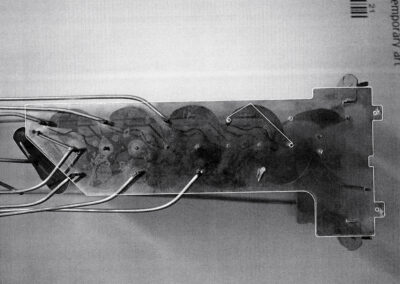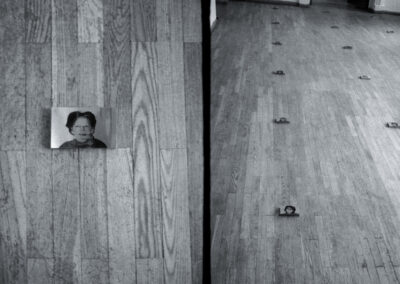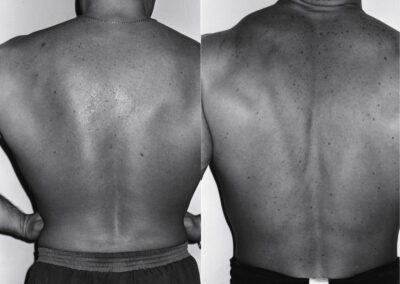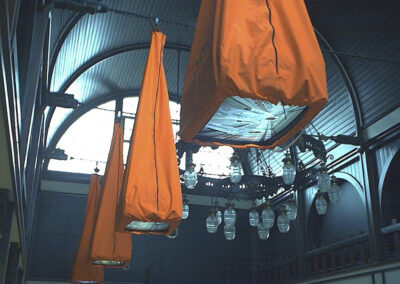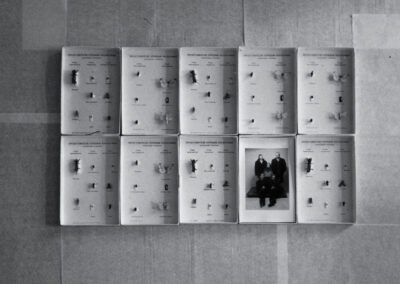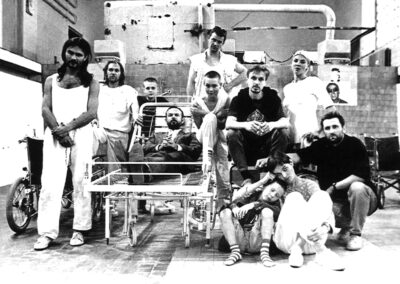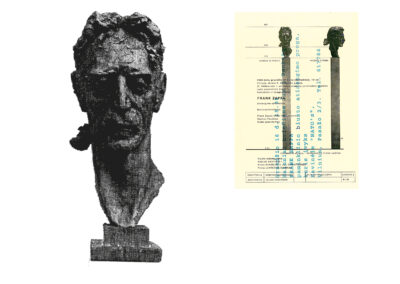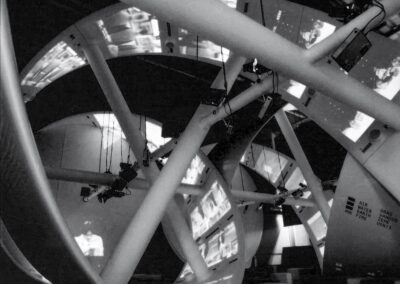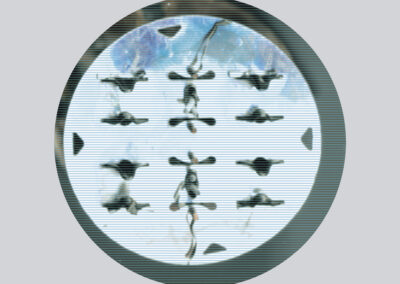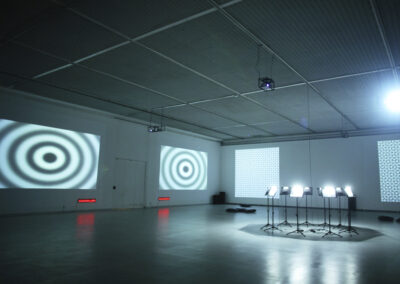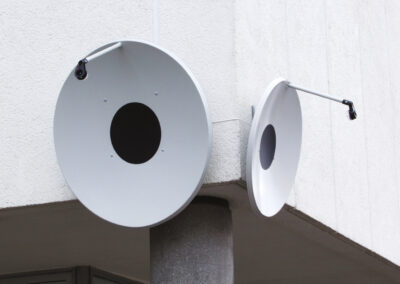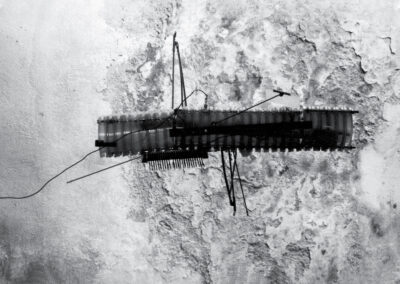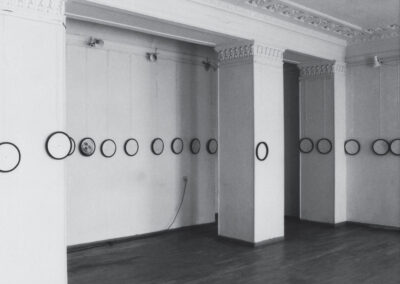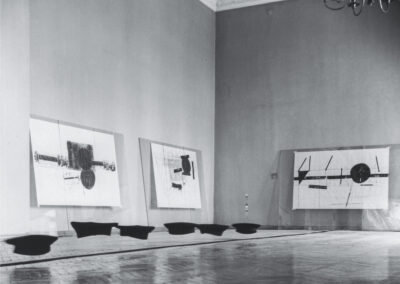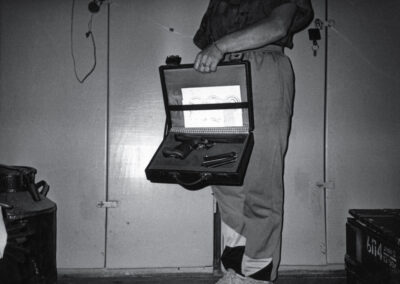
Used in Lithuania, 1997
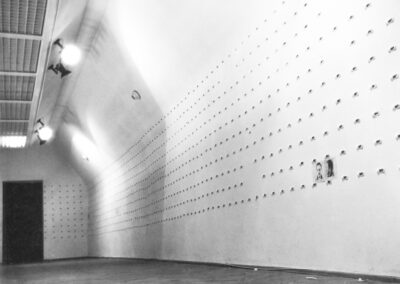
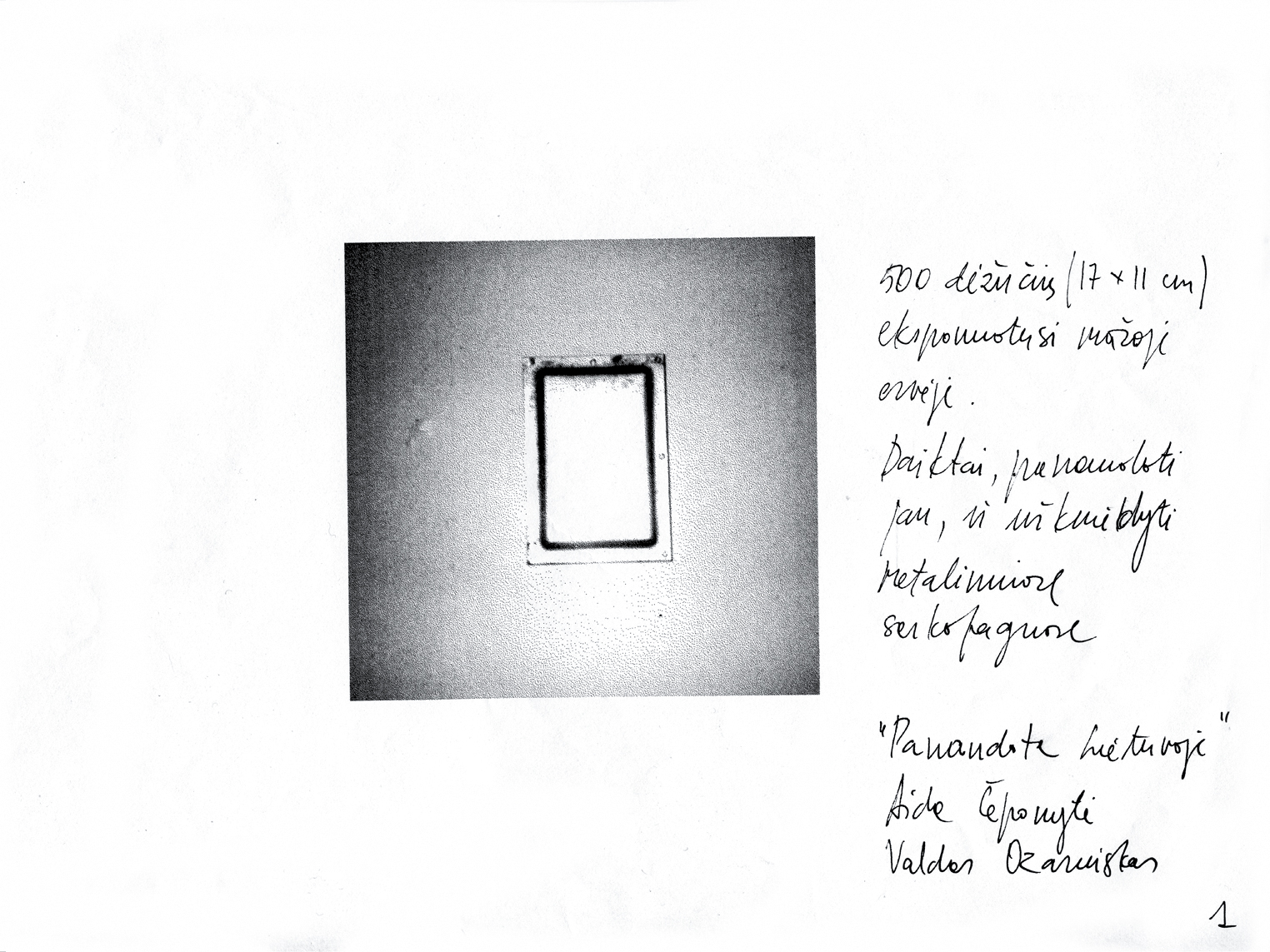
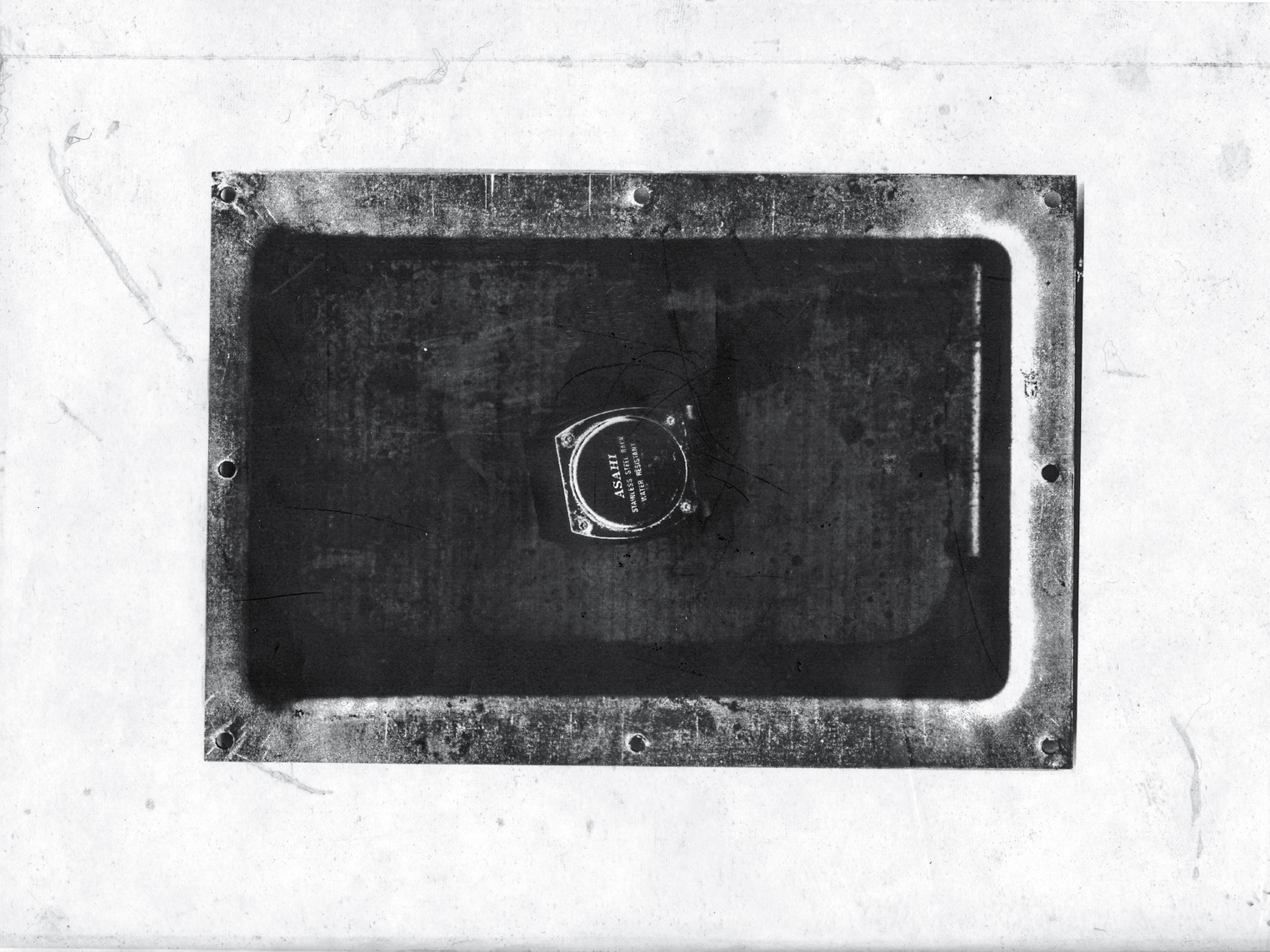
Given Ozarinskas’s passion for all kinds of industrially produced objects and devices, there is no doubt that reproducible, mostly identical attributes of the industrial environment became the material for this work. ‘I try to buy as many of the same item as possible. I have bought various primitive elements of specialised medical equipment, 100 pairs of ice skates, two boxes of galoshes, accordion cases, buttons, folding cots, etc. A multitude of objects evokes different thoughts than a single object; quantity somehow grows into quality, abundance and repetition give rise to a peculiar magic of things’[2], the artist has said.
The conceptual perspective of the object analysed here is grounded not (only) in the specific signifying quality of readymades or their associative potential. The potentially endless (open) series of modules functions as an agent of a ‘hard’, rational system based on repetition. It is a system established through modernist architecture and the industrial construction methods it came with, undoubtedly very familiar to the artist-architect, and at the same time it serves as a kind of higher principle governing how all modernity is constructed and disseminated, and even the mechanics of life within it. In the end, there is nothing unique or individual – only elements and parts of a series or system.
[1] Lolita Jablonskienė, Evaldas Stankevičius (ed.), Nauja Lietuva / Nowa Litwa / New Lithuania, Vilnius: Contemporary Art Centre, 1996, p.16.
[2] Erika Grigoravičienė, ‘Plieninis pabučiavimas’, 7 meno dienos, 14 April 1995
– Lolita Jablonskienė, ‘Prieštaringumas: Valdo Ozarinsko kūryba’, Acta Academiae Artium Vilnensis, March 2024.
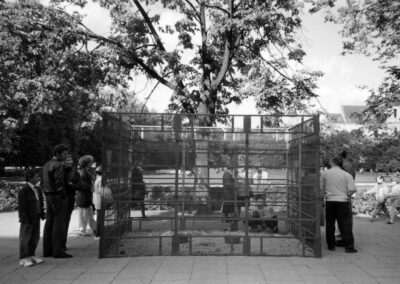
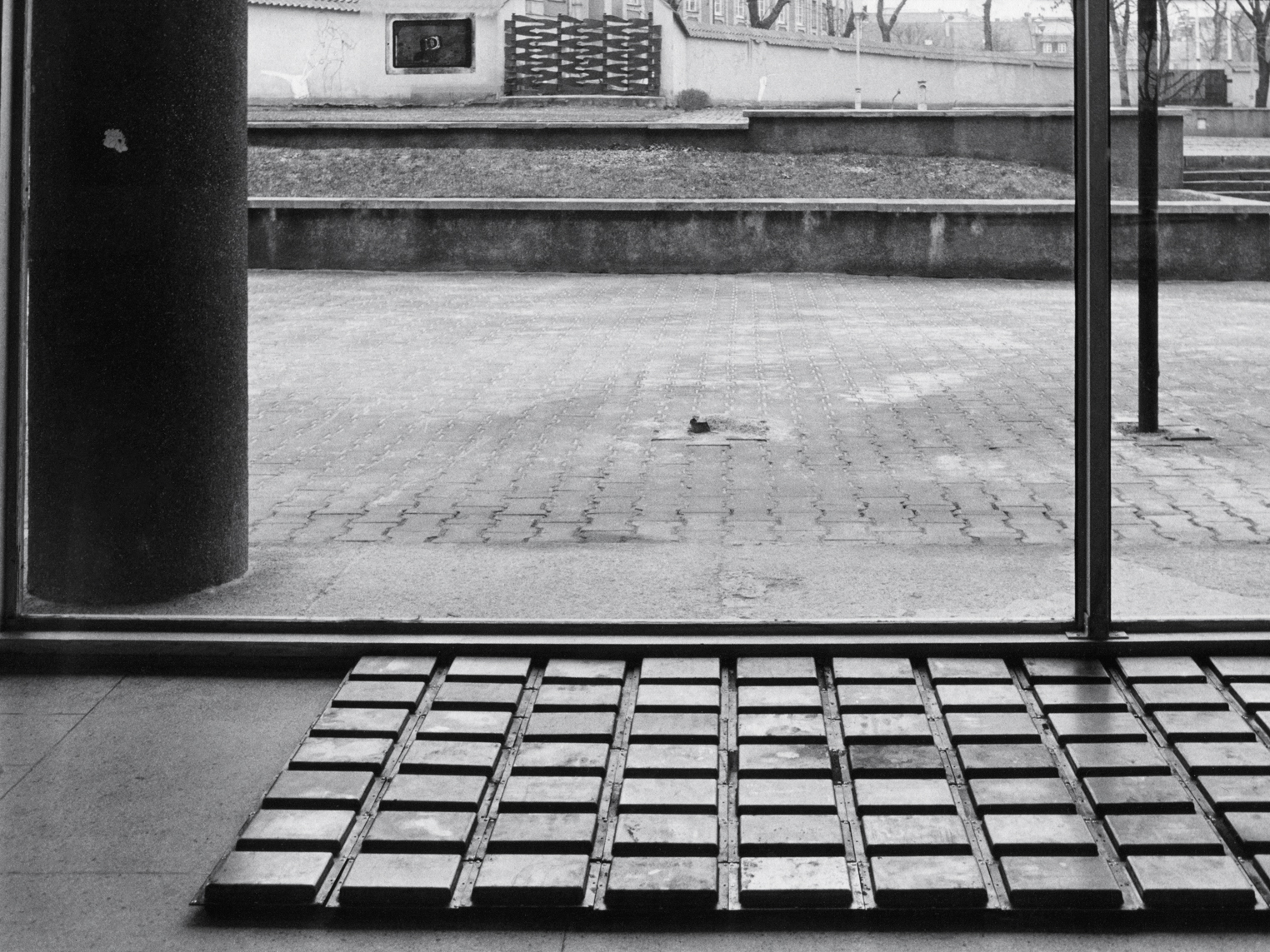
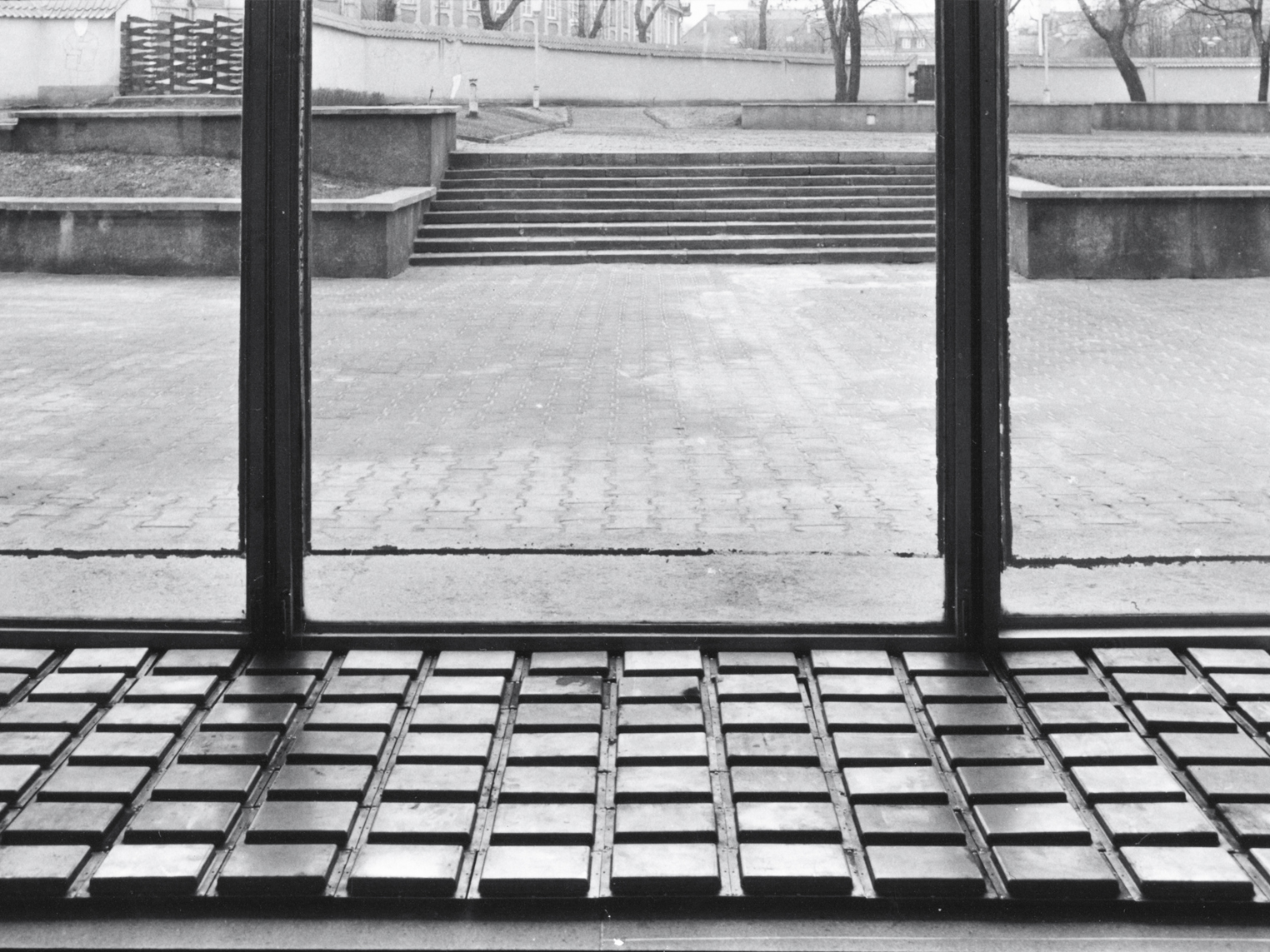
During the period of our closer acquaintance, at the first major international exhibition of contemporary Lithuanian art, Nowa Litwa – which took place in Gdańsk in 1996 and where, together with his long-time partner and creative collaborator Aida Čeponytė, he exhibited the remnants of his everyday life and creative activity in metal containers (Used in Lithuania) – I encountered an unrelenting dualism:
an endless desire to disappear, to hide, to erase myself, to deregister, to ‘rivet myself shut’, and a simultaneous programmatic stubbornness, as the Americans say, not to give up an inch in the execution of his ideas:
those stacked containers occupied a rather considerable amount of valuable exhibition space; they could, for example, have been stacked one on top of another, which would have been visually effective, but fat chance – Valdas would not even discuss it.
It was either the way we’ve arranged them, or thanks for your attention.
Now, from the perspective of time and death, this arrangement of containers
resembles nameless gravestones.
The US military cemetery was his idea of an ideal genre:
white, reinforced-concrete crosses set in grass.
Or simply a plaque.
‘Ozė, son of nothingness.’
This either-or became the motto of his life and work.
The engine and the brake.
A road sign without a road.
That is why so many of his brilliant ideas remained unused in Lithuania.
To disappear.
To retreat not merely to the margins, but even further – to the margins of the margins.
To live in a state of marginality.
Without hierarchies.
Where analogies are impossible in principle.
Therefore, attempts to ‘tie’ him to a generation, an era,
or to any of his peers, for whom he was supposedly a ‘Buddhist’ blank slate, led only to a dead end.
Only his own footprints remain on that slate,
imprinted as deeply as the soles of a cosmic myth:
the spaceship flew away, and the passenger either stayed behind at the hotel bar
or remained the operator of an experiment unknown to us.
Therefore, attempts to ‘tie’ him to a generation, an era,
or to any of his peers, for whom he was supposedly a ‘Buddhist’ blank slate, led only to a dead end.
Only his own footprints remain on that slate,
imprinted as deeply as the soles of a cosmic myth:
the spaceship flew away, and the passenger either stayed behind at the hotel bar
or remained the operator of an experiment unknown to us.
– Rolandas Rastauskas, ‘(Un)used in Lithuania’, Nemunas, 2020, No. 6, p. 44.
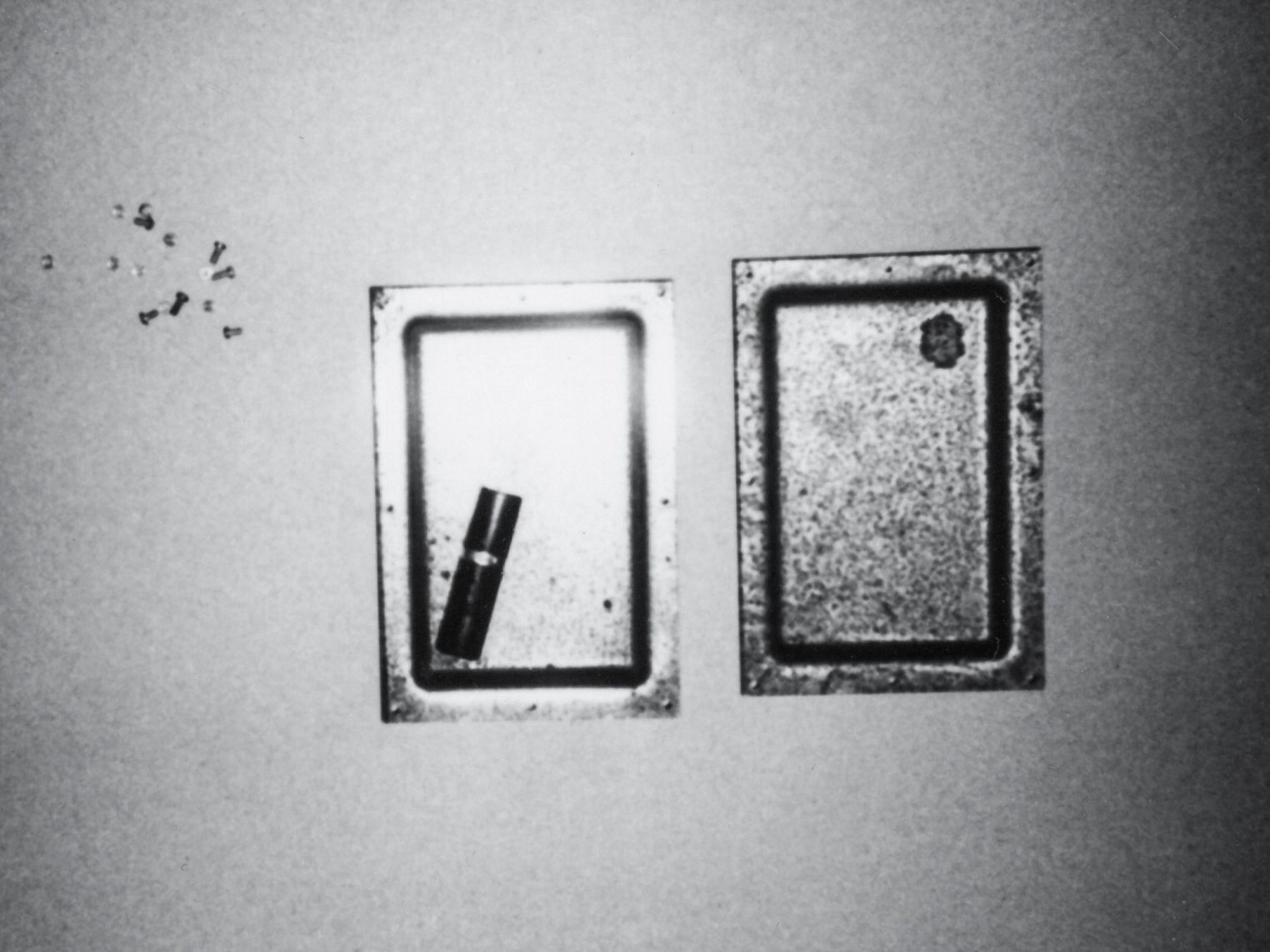
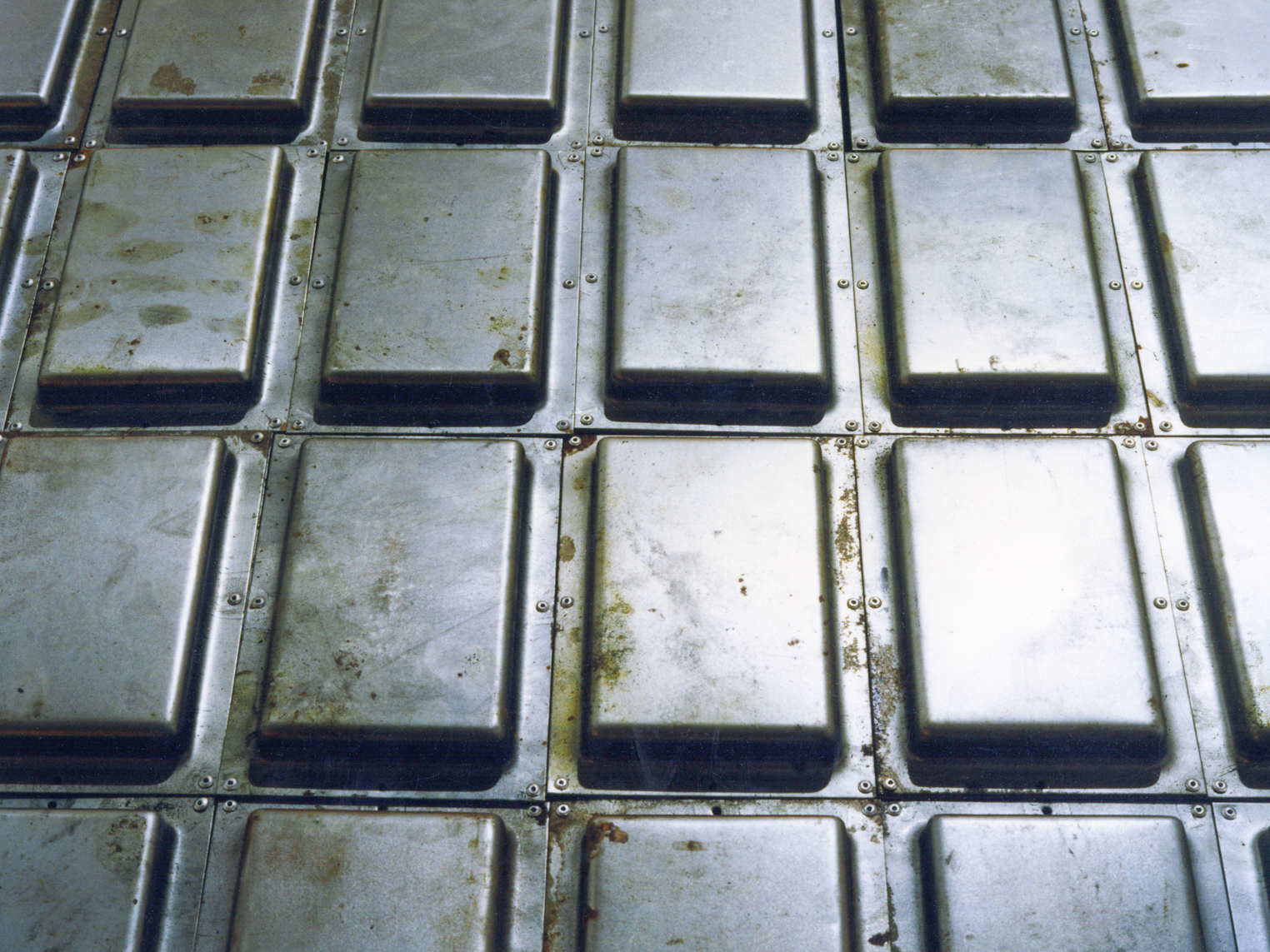
Artists: Aida Čeponytė, Valdas Ozarinskas
Photographer: Gintautas Trimakas
Exhibited in Nowa Litwa, Gdańsk, Poland, 1997, and From Outside to the Side, Bergkamen, Germany, 1998
Art Projects